

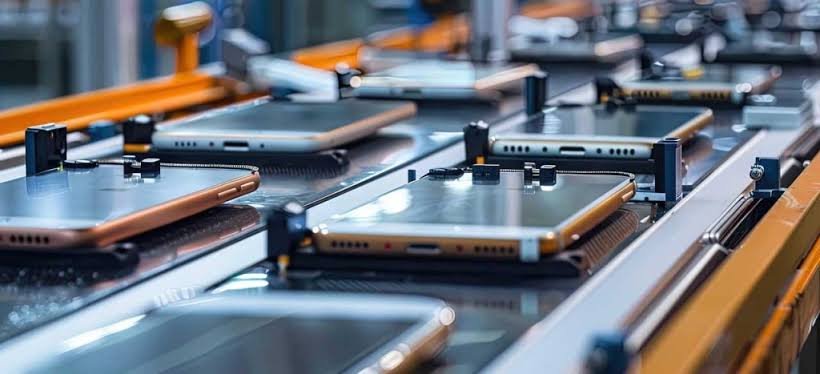

The Union Cabinet has approved a new ₹62,500 crore Mobile Phone Manufacturing Scheme, succeeding the production-linked incentive programme that transformed India into the world’s second-largest mobile phone manufacturer over the past five years. Announcing the decision, Union IT Minister Ashwini Vaishnaw said the scheme is designed to push India beyond assembly and toward building homegrown smartphone brands, indigenous design and intellectual property, a shift in emphasis from the volume-focused strategy that defined the programme’s first phase.
From Assembly Hub to Export Leader
The scale of what the earlier PLI scheme achieved sets the backdrop for this second phase. Mobile phone production in India more than doubled from ₹2.14 lakh crore in FY 2019-20 to over ₹5.5 lakh crore in FY 2024-25, while exports grew nearly eightfold over the same period, climbing from ₹27,000 crore to ₹2 lakh crore. That momentum carried into 2025, when smartphones became India’s single largest exported product category by value, at ₹2.62 lakh crore, overtaking long-standing export leaders such as diesel fuel and cut diamonds. Apple accounted for the largest share of this figure, driven primarily by iPhone manufacturing through suppliers including Foxconn, Tata Electronics and Pegatron.
India now manufactures 99.2 per cent of the mobile phones used domestically, and the government credits the original Production Linked Incentive Scheme for Large Scale Electronics Manufacturing, which formally concluded on March 31 this year, with playing a transformative role in reaching that position. The new scheme is intended to build on that base rather than simply extend it unchanged.
How the New Incentive Structure Works
The Mobile Phone Manufacturing Scheme will run for five financial years, from 2026-27 through 2030-31, offering manufacturers incentive support on eligible sales at differentiated rates ranging from 2.25 per cent to 5 per cent. A further incentive of up to 1.5 per cent has been built in specifically for domestic sourcing of key components and sub-assemblies, a design choice aimed at deepening India’s component ecosystem rather than rewarding final assembly alone, which has historically been the weaker link in the country’s electronics manufacturing chain.
Officials expect the scheme to generate around 60,000 direct jobs and support cumulative production worth ₹39 lakh crore over its five-year run, figures that, if realised, would represent a substantial expansion even from the record levels already achieved under the outgoing programme.
Chasing Brands, Not Just Volume
What distinguishes this phase most clearly from its predecessor is the explicit focus on encouraging Indian-owned mobile phone brands and domestic research and development, rather than measuring success purely through assembly output. The government has framed this as a necessary next step for supply chain resilience, arguing that a manufacturing base dominated by contract assembly for foreign brands leaves India’s electronics sector structurally dependent on decisions made elsewhere, whereas homegrown brands and intellectual property would anchor more of the value chain domestically.
The Cabinet noted the initiative builds on the broader Make in India programme, under which electronics manufacturing has grown sevenfold and exports have increased elevenfold since FY 2014-15, positioning the mobile scheme as one component of a longer-running industrial policy rather than a standalone intervention.
A Piece of a Larger Electronics Push
The mobile phone scheme was cleared on the same day the Cabinet approved the ₹1.27 lakh crore second phase of the India Semiconductor Mission, underscoring a coordinated push to strengthen India’s electronics manufacturing ecosystem from chip design through to finished consumer devices. Whether the new scheme succeeds in shifting India’s position from the world’s assembly floor toward genuine brand and design leadership will likely depend on how effectively domestic component sourcing scales over the next five years, an area where India has made progress but still imports the vast majority of high-value semiconductor content used in the phones it assembles.
