

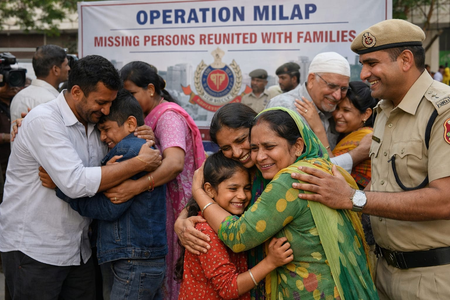
The Criminal Investigation Department of the Gujarat Police has concluded a high-intensity statewide tracing initiative, successfully locating 500 missing children and adults during a specialized ten-day enforcement push. The humanitarian operation, organized under the extended banner of Operation Milap, utilized technical data-carving systems, real-time geolocation tracking, and seamless interstate law enforcement networks to resolve complex abductions. The breakthrough campaign culminated in high-profile cross-border operations, including the tactical rescue of a young teenager who had been hidden inside a regional religious center for months.
Registration Begins for FutureCrime Summit 2026, India’s Largest Cybercrime Conference
The Institutional Identity Shift and the Shivamogga Temple Tracking
The operational capabilities of the specialized Anti-Human Trafficking Unit were severely tested during the tracking of a 14-year-old girl who vanished from the Chhani sector of Vadodara on December 18, 2025. Local precinct teams initially exhausted standard field intelligence channels, prompting senior commands to transfer the file to specialized human trafficking units to deploy advanced technological surveillance.
The tracking units managed the cross-border interception and subsequent rescue through three continuous operational phases. The operation initiated with the data-carving phase, where digital surveillance teams intercepted the electronic footprint and communication channels of the primary suspect, identified as Sunilkumar Kesarisinh Bariya. Moving immediately into the tactical infiltration phase, investigators discovered that the suspect had executed a sophisticated identity deflection scheme, completing a priesthood training program in Jaipur to alter his public profile before taking up a position as a regular priest at a Jain temple in Shivamogga, Karnataka. Finally, the sequence culminated in complete target containment; a five-member specialized field team traveled to Karnataka, established a continuous forty-eight-hour physical stakeout around the religious campus, and executed a synchronized 4 AM raid on the third morning, successfully arresting the suspect and securing the minor before she could be relocated.
Extended Campaign Metrics and Demographic Rescues
The wider tactical push materialized as an extension of an initial enforcement block that ran from May 7 to June 5, where regional commands tracked down 1,478 individuals. Recognizing the high volume of unresolved missing-person files, the Additional Director General of Police for the CID Crime Women Cell authorized an additional ten-day operational window from June 12 to June 21, 2026, to clear pending registry cases.
During this extended phase, specialized field units traced 500 individuals across various district jurisdictions, returning them directly to their primary domestic networks. The demographic breakdown of the recovered individuals included 288 women, 88 minor girls, 21 boys, and 103 men. Legal divisions are actively processing formal chargesheets against multiple detained handlers, cross-referencing the rescue files with active regional abduction registries to determine whether organized trafficking syndicates were operating systemic transit corridors across state lines.
Forensic Tracking Frameworks and Institutional Safeguards
The successful execution of Operation Milap has prompted national child welfare boards and tech-defense panels to advocate for the permanent integration of automated identity tracking systems within local police cells. Cyber crime analysts emphasize that missing-person investigations must pivot away from historical passive reporting methods, moving instead toward rapid technical surveillance and automated facial recognition cross-matches across public transit databases.
To permanently insulate vulnerable demographics against cross-border trafficking loops, safety panels are advising regional transport hubs and hospitality centers to implement rigid identity verification barriers. Future state compliance frameworks will mandate real-time data sharing between interstate border checkpoints and central human trafficking databases, ensuring that any anomalous transit patterns involving minors trigger immediate automated alerts. Gujarat enforcement commands maintain that all unresolved missing-person files remain under active technological review, advising local stations to maintain open digital communication lines with central monitoring cells to locate missing individuals at an early phase.
