
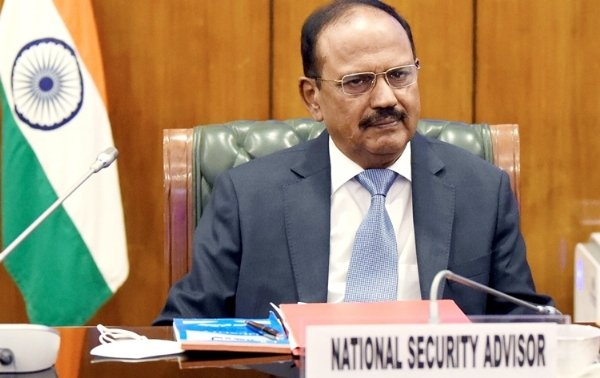

Geopolitics has long been dictated by borders, maritime trade routes, and military hardware. Yet, as the representatives of the world’s most prominent emerging economies gather in New Delhi, the primary battleground under discussion is entirely invisible. India is set to host the high-profile BRICS National Security Advisers’ Meeting on June 22 and 23, under the chairship of National Security Adviser Ajit Doval.
The two-day summit marks a critical juncture for the grouping, which has officially expanded its traditional economic mandates to confront what the Ministry of External Affairs describes as “non-traditional security challenges.” At a time when critical infrastructure is increasingly vulnerable to sophisticated state-sponsored cyber espionage and ransomware syndicates, the assembly underscores a collective realization: economic resilience is impossible without digital sovereignty.
The Shift to the Digital Frontline
For years, the BRICS coalition was viewed primarily as an alternative economic engine, built to counterbalance Western financial hegemony. However, as India assumes the BRICS chairship for the fourth time, the strategic priorities of the bloc are shifting rapidly toward defensive synchronization.
The focus on non-traditional threats signals a departure from purely physical military coordination. In modern statecraft, an adversarial nation can cripple a rival’s power grid, financial systems, or logistics networks without deploying a single troop. By prioritizing the security of Information and Communication Technologies (ICT), the New Delhi summit acknowledges that the next great geopolitical crisis will likely be fought in lines of code, targeting civilian populations and national data centers.
Managing Friction in an Expanded Bloc
The challenge of establishing a unified cybersecurity framework is amplified by the sheer scale and internal friction of the newly expanded bloc. Now comprising 11 member nations—including newly admitted powers like Egypt, Ethiopia, Indonesia, Iran, Saudi Arabia, and the United Arab Emirates alongside founding members Brazil, Russia, India, China, and South Africa—the group represents a complex matrix of geopolitical interests.
High-profile attendees, including Chinese Foreign Minister Wang Yi and Russian NSA Sergei Shoigu, bring distinct cyber capabilities and geopolitical agendas to the table. While member states frequently find themselves on opposing sides of global digital governance debates, the shared threat of transnational cybercrime, systemic software vulnerabilities, and algorithmic disinformation targeting domestic stability offers a rare point of convergence. Doval’s primary objective will be to steer these diverse factions toward a cooperative protocol that protects common critical infrastructure without infringing on individual state data policies.
Securing the ICT Supply Chain and AI Risk
Central to the deliberations will be the formal review of outcomes from the recently concluded BRICS Joint Working Groups on Counter-Terrorism and ICT Security. Rather than speaking in broad generalities, security chiefs are expected to dissect technical vulnerabilities within global supply chains, specifically regarding the deployment of artificial intelligence.
The weaponization of generative AI—used to orchestrate hyper-realistic phishing campaigns, automated malware generation, and deep-seated social engineering attacks—presents a fresh challenge for defenders. By focusing on the “rapidly evolving nature of national security challenges,” the framework intends to move beyond historical data breach assessments. Instead, the focus will be on building an early-warning intelligence sharing matrix, ensuring that a zero-day exploit detected in one member country can be mitigated across the collective network before widespread economic fallout occurs.
Follow for daily updates on cybercrime, corporate fraud, DFIR, hacking, investigations, and digital forensics
