
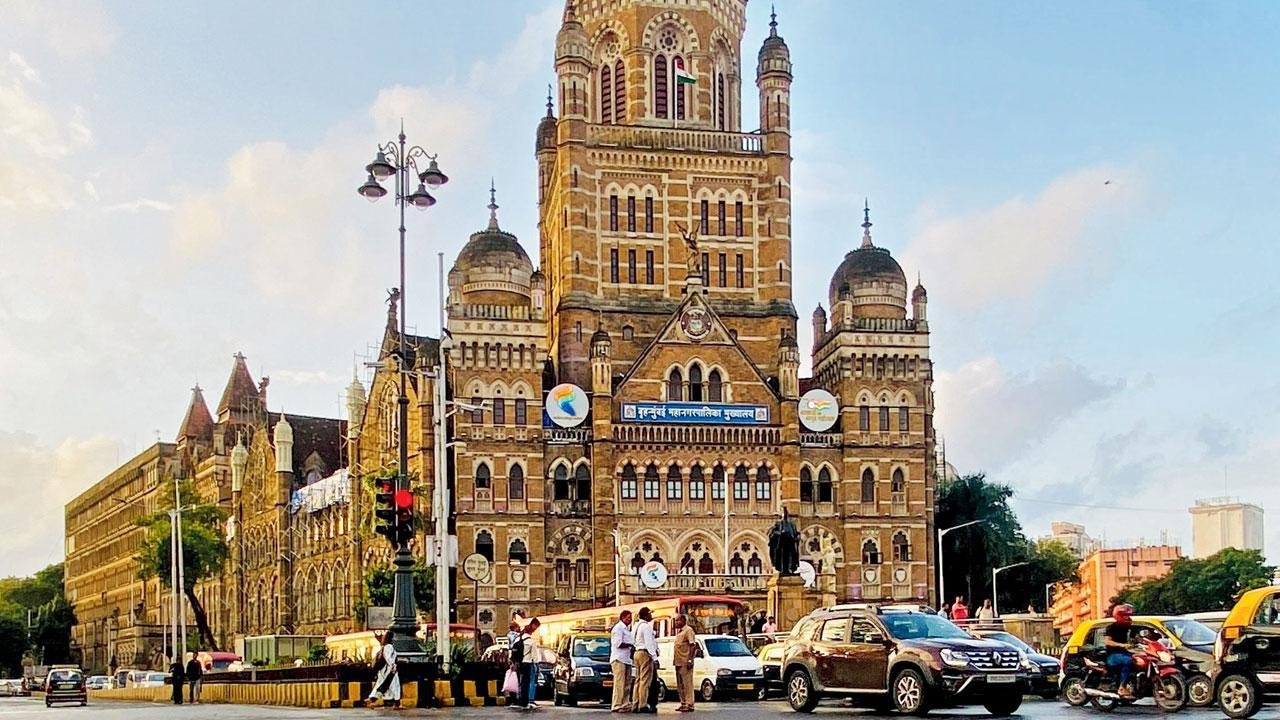
An artificial intelligence (AI)-based monitoring system deployed to oversee Mumbai’s pre-monsoon drain desilting operations has uncovered a series of significant irregularities, prompting the Brihanmumbai Municipal Corporation (BMC) to impose penalties exceeding ₹9.25 crore on contractors involved in the work. The action follows the detection of discrepancies in records, photographs, videos, and other digital evidence submitted as proof of completed desilting activities.
According to the civic body, the penalties were imposed for a range of violations, including the repeated use of the same photographs for multiple work reports, mismatches between official records and actual field activities, failure to submit mandatory video documentation, inconsistencies in vehicle-related records, and deficiencies in project documentation. Officials said the move was aimed at safeguarding public funds and ensuring that Mumbai’s drainage infrastructure is adequately prepared ahead of the monsoon season.
Registration Begins for FutureCrime Summit 2026, India’s Largest Cybercrime Conference
BMC stated that out of the total penalty amount, approximately ₹8.99 crore was levied on the basis of irregularities identified by the AI-powered monitoring system. Of this, around ₹6.11 crore related to minor drains, ₹1.39 crore to major drains, and ₹1.48 crore to desilting works carried out in the Mithi River. In addition, a further penalty of approximately ₹26.46 lakh was imposed at the rate of ₹1,000 for each defective desilting trip identified during the review process.
Officials said the entire amount would be recovered from pending payments due to the contractors. The municipal administration believes that financial accountability is essential to maintaining quality and transparency in large-scale public infrastructure projects, particularly those directly linked to flood prevention and urban safety.
The AI-based monitoring platform was introduced last year to strengthen oversight of desilting activities across Mumbai’s drainage network and the Mithi River. The system analyses photographs, CCTV footage, and videos uploaded by contractors and compares them with project records to verify whether work has actually been completed at designated locations and according to prescribed standards. The technology was adopted to reduce dependence on manual inspections and improve evidence-based verification.
The investigation revealed that in several cases, identical photographs had allegedly been reused to represent different desilting operations. Authorities also found instances where mandatory videos were not submitted, while vehicle records and site activity reports failed to match actual work details. In some cases, required photographic evidence was missing altogether, and progress records were found to be incomplete or inconsistent.
The municipal corporation’s scrutiny extended beyond digital documentation. Officials also identified operational shortcomings at project sites, including inadequate deployment of machinery and manpower, failure to provide workers with mandatory safety equipment, improper disposal of excavated silt, and delays in completing assigned work within scheduled timelines. These findings contributed to the overall penalties imposed on contractors.
Urban infrastructure experts say the use of AI in monitoring public works can significantly enhance accountability and transparency. Traditional inspection methods often face limitations due to manpower constraints and the possibility of human error, whereas AI systems can process large volumes of data quickly and identify anomalies that may otherwise go unnoticed.
Mumbai faces recurring challenges of waterlogging and urban flooding during the monsoon season, making timely desilting of drains and waterways a critical civic responsibility. Authorities view effective drain-cleaning operations as a key component of flood mitigation efforts and urban resilience planning.
BMC officials emphasised that the objective of the action is not merely punitive but corrective. By enforcing strict compliance and imposing financial consequences for irregularities, the civic body aims to ensure that contractors adhere to prescribed quality standards and operational guidelines in future projects.
The municipal corporation has also warned that stricter measures may follow if similar violations are detected in upcoming inspections. Officials indicated that technology-driven oversight mechanisms would continue to be strengthened to improve transparency, efficiency, and accountability in public infrastructure projects, particularly those with a direct impact on public safety and city preparedness.
