
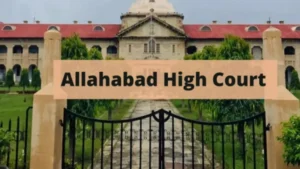
The Allahabad High Court has quashed all Central Bureau of Investigation (CBI) criminal proceedings against the directors of the now-dissolved edible oil manufacturing firm, Shree Basant Oils Limited. The court ruled that since a comprehensive One-Time Settlement (OTS) had been finalized with the complainant bank, allowing the criminal prosecution to drag on would represent a clear abuse of the judicial process.
The common judgment marks a major legal conclusion to a high-profile multi-crore corporate credit dispute spanning multiple years.
The Anatomy of the Credit Collapse
The underlying financial dispute dates back to 2016, when Shree Basant Oils Limited availed substantial commercial credit facilities totaling ₹82.68 crore from Andhra Bank (which has since been amalgamated into the Union Bank of India) to finance a new refining facility. The corporate account deteriorated over the subsequent years, officially slipping into a Non-Performing Asset (NPA) classification in November 2019.
Following internal administrative reviews, the bank formally classified the non-paying account as a corporate fraud case in July 2021, setting the stage for federal law enforcement intervention.
CBI Intervention and Document Deficiencies
Acting on a formal complaint lodged by the bank’s regional leadership, the CBI registered two separate FIRs in May 2022, initially invoking severe charges of criminal conspiracy, cheating, forgery, and falsification of accounts under the IPC, alongside provisions of the Prevention of Corruption Act. However, following its extensive field investigations, the central agency dropped all anti-corruption charges as no public servants were found to be involved.
The subsequent legal proceedings faced additional structural setbacks when a Special CBI Judge in Ghaziabad observed that the forgery allegations under Section 471 IPC were not prima facie sustainable, given that the agency had failed to collect specimen signatures or submit the disputed documents to a Central Forensic Science Laboratory (CFSL) for verification.
Final Liability Discharge and Corporate Dissolution
The definitive turning point for the case emerged after the erstwhile directors—Gagan Agarwal, Pramod Agarwal, and Ayush Agarwal—entered into a formal settlement pipeline. The Union Bank of India issued a formal Liability Discharge Certificate on June 12, 2024, releasing all active collateral securities and personal guarantees after confirming the full and final settlement of all outstanding dues. The bank subsequently filed a formal No Objection Certificate (NOC) and notified the CBI that it retained absolutely no grievances against the accused.
Separately, the corporate entity itself was officially dissolved under the Insolvency and Bankruptcy Code (IBC) by the National Company Law Tribunal (NCLT), Allahabad.
Preventing the Abuse of Judicial Resources
Disposing of five connected applications filed under Section 528 of the Bharatiya Nagarik Suraksha Sanhita (BNSS), Justice Deepak Verma quashed the two underlying FIRs, the 2023 chargesheet, the cognizance directives, and a prior revision order from the special court. The High Court emphasized that when a banking dispute is fundamentally commercial and private in nature, a complete financial settlement leaves no remaining utility for public prosecution.
Legal observers note that the decision underscores a growing judicial policy to halt prolonged, expensive trials once the affected financial institutions have successfully recovered their public capital.
