

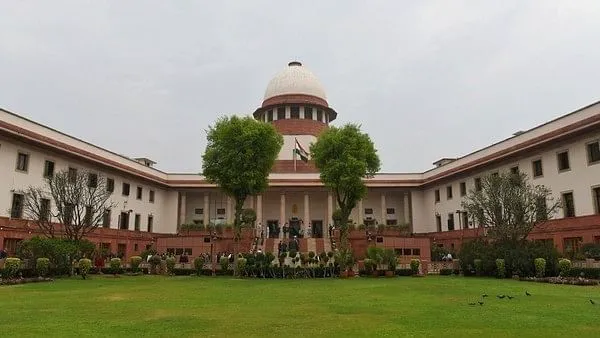
New Delhi : The Supreme Court of India has observed that denying an accused access to documents forming part of a charge sheet may seriously violate the constitutional right to a fair trial. The court underlined that transparency and procedural fairness are fundamental to criminal justice, and that an accused person must be provided relevant documents even in cases involving sensitive or classified material.
Plea Linked To Official Secrets Act Case
The observation was made by a bench comprising Justice J.K. Maheshwari and Justice A.S. Chandurkar while hearing a 2007 case registered under the Official Secrets Act, 1923. The matter involved a plea filed by retired Major General V.K. Singh, who sought copies of certain documents that were part of the charge sheet but had not been supplied to him during trial proceedings.
Registration Begins for FutureCrime Summit 2026, India’s Largest Cybercrime Conference
The Supreme Court noted that the prosecution’s argument—that the documents were “highly confidential” and their disclosure could affect national security—cannot automatically override the rights of the accused if those documents are being relied upon in the case. The court emphasized that when material is part of the charge sheet and is used against the accused, denying access to it can undermine the fairness of the trial.
Fair Trial Rights Reaffirmed
The bench reiterated that the right to a fair trial is an essential component of Article 21 of the Constitution, which guarantees the right to life and personal liberty. It observed that criminal justice cannot function properly if an accused is prevented from examining evidence being used against them in court proceedings.
During the hearing, the court sought to balance the competing concerns of national security and fair trial rights. It asked the prosecution to propose a workable solution. In response, the law officer appearing for the CBI suggested that typed copies of the documents could be provided to the accused, subject to strict conditions preventing their public disclosure.
Typed Copies Allowed With Safeguards
Accepting this proposal, the Supreme Court directed that typed copies of the relevant documents be furnished to the accused for the limited purpose of preparing his defence. However, it imposed strict safeguards, stating that the documents must not be shared publicly in any form, including electronic media, print platforms, or social media.
The court further required the accused to submit an undertaking before the trial court confirming that the material would not be circulated or disclosed. It also modified the earlier order of the High Court and directed that the documents be provided within two months.
Balance Between Security And Justice
The case originates from a 2007 FIR in which allegations were made that V.K. Singh, a former RAW official, had disclosed sensitive information through the publication of his book. A charge sheet was subsequently filed in 2008 under provisions of the Official Secrets Act and the Indian Penal Code, along with a request to keep certain classified documents sealed.
In its ruling, the Supreme Court reaffirmed that fairness in criminal proceedings cannot be compromised, as it forms the foundation of the justice system. It held that while national security concerns are important, they must be balanced against the fundamental rights of the accused to ensure a just and transparent trial process.
Legal experts have described the judgment as a significant reinforcement of fair trial protections, particularly in cases involving classified or sensitive government material.
