
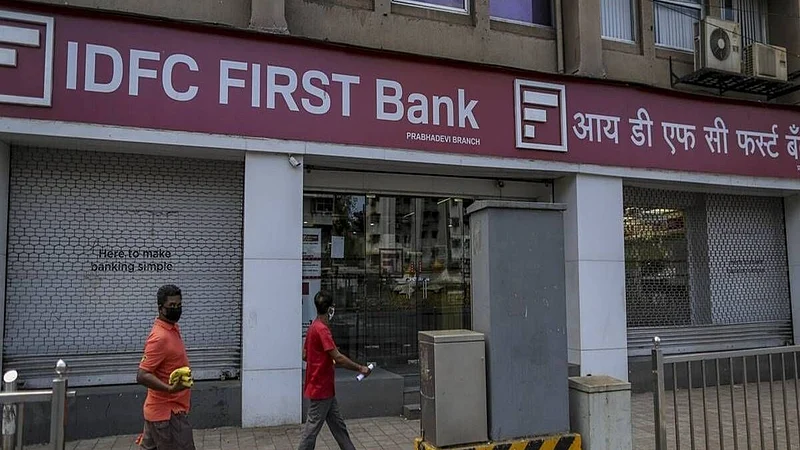
A detailed forensic investigation conducted by external auditing giant KPMG has concluded that the ₹646-crore financial fraud at IDFC First Bank’s Chandigarh branch was entirely an isolated incident. The independent audit findings confirm that the operational breakdown did not represent a systemic risk to the lender’s wider network, restricting its definitive impact to an internal set of government accounts managed at the local hub.
The formalization of the forensic audit dossier follows weeks of extensive cross-verification executed alongside central enforcement divisions.
Registration Begins for FutureCrime Summit 2026, India’s Largest Cybercrime Conference
Anatomy of the Localized Collusion Ring
According to the published regulatory filings and forensic summaries, the multi-crore embezzlement was executed via an internal collusion ring that deeply breached localized security filters. The key architects of the operation included the branch’s former relationship management staff, who systematically conspired with specific regional government employees and private external actors.
The syndicate specialized in the siphoning of significant public capital reserves, specifically targeting high-value institutional accounts belonging to the Haryana state government, the Chandigarh administration, and two prominent private schools operating in Chandigarh and Panchkula.
The Mechanics of Fake Fixed Deposit Receipts
The underlying fraudulent pipeline relied heavily on traditional signature forgeries and the manufacture of synthetic documentation. To prevent immediate detection by the bank’s administrative oversight desks, the rogue employees fabricated fake Fixed Deposit Receipts (FDRs) to mirror genuine state deposits.
Once the institutional funds were secured, the conspirators utilized forged checks to execute unauthorized migration instructions. The embezzled capital was subsequently routed through an intricate web of third-party shell entities—such as Capco Fintech Services—before being channeled into commercial jewelry businesses to rapidly convert the digital balances into hard cash for distribution among the conspirators.
Full Restitution to Affected Client Accounts
In response to the preliminary audit disclosures and in line with its public commitment to protecting customer assets, IDFC First Bank moved decisively to settle all outstanding client claims. The private sector lender disbursed a total net principal amount of ₹645 crore to fully reinstate the compromised government and school accounts, successfully clearing all active liabilities linked to the specific breach.
The bank’s financial compliance units confirmed that a final, comprehensive reconciliation of all regional books has been executed, with absolutely no secondary discrepancies or unaddressed claims remaining on the registers.
Enforcement Escalations and Asset Recovery Channels
While the internal banking environment has stabilized, multi-agency enforcement operations remain highly active under the Prevention of Money Laundering Act (PMLA). The Enforcement Directorate (ED) has executed multiple high-profile arrests in connection with the laundering track, taking key bank employees and prominent regional real estate developers into custodial detention.
Federal investigators have already frozen dozens of mule accounts and initiated property attachment actions against luxury real estate assets financed through the siphoned capital. The market regulator and banking watchdogs continue to monitor the asset recovery tracks to ensure the full clawback of the liquidated cash balances.
