

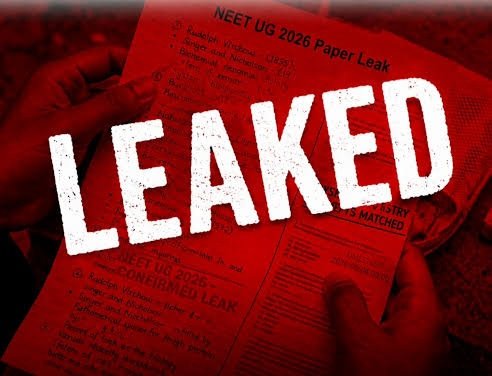

New Delhi. The NEET UG 2026 paper leak controversy has triggered a major nationwide debate, prompting the Central Government to take a strict stance against the spread of fake information and rumours on social media and messaging platforms. Union Education Minister Dharmendra Pradhan chaired a high-level review meeting on Wednesday, where the security of the examination system and the credibility of upcoming exams were thoroughly reviewed. The meeting placed special focus on social media channels that circulate false claims such as paper leaks before or during examinations. Officials stated that several Telegram channels and other online groups remain actively engaged in spreading misleading claims, fake question papers, and clickbait content, creating confusion and panic among students and parents.
The ministry issued clear directions to identify such networks and take immediate steps to block and remove them. It was also emphasized that enforcement agencies and relevant departments must work together to dismantle the broader misinformation ecosystem operating around competitive examinations. The Education Minister stated during the meeting that the integrity of the examination system is a top government priority, and no form of misinformation or rumour will be tolerated. He instructed officials to identify potential vulnerabilities in advance and strengthen preventive measures to safeguard the examination process.
Government Orders Crackdown on Digital Misinformation Networks
Reports suggest that several Telegram channels become highly active ahead of major exams, circulating fake paper leaks, unofficial answer keys, and fabricated updates. These links often redirect users to automated bots and unverified groups, where false information spreads rapidly across networks. The ministry also highlighted the need for closer coordination with major social media companies, including Meta, Google, and Telegram, to ensure swift action against such activities. In a parallel discussion with representatives of these platforms, authorities stressed the importance of technical safeguards and policy-level interventions to curb misinformation.
It has also been reported that, following allegations of a paper leak and other irregularities, the NEET UG 2026 examination has been scheduled for a re-examination on June 21, 2026. The government has stated that all necessary steps are being taken to ensure transparency and strengthen security in the examination process. Officials acknowledged that rumours during examination periods not only affect students’ mental well-being but also raise serious questions about the credibility of the entire testing system. As a result, the focus has now shifted from preventive action alone to real-time monitoring and rapid response mechanisms.
Focus Shifts to Real-Time Monitoring and Rapid Response
Experts point out that this incident highlights the growing misuse of digital platforms, particularly encrypted messaging services like Telegram, for spreading misinformation at scale. Anonymous groups and automated bots enable rapid dissemination of false content, making it difficult for authorities to track and control. Government officials have stated that stricter monitoring of exam-related misinformation will continue in the future, and legal action will be taken wherever necessary. Students and parents have also been urged to rely only on official sources for accurate information.
The episode has once again sparked a broader debate on examination security, social media regulation, and the rising threat of digital misinformation. The government maintains that it is actively working to make the examination system more secure, transparent, and technology-driven to prevent such incidents in the future. The coordination between enforcement wings and digital platforms aims to ensure that future examination cycles remain free from speculative disruption.
Authorities Push for Tech Coordination and Systemic Reforms
With the re-examination date officially set for June, the immediate priority remains the elimination of rogue channels that profit from student anxieties. The Ministry of Education has indicated that systemic reforms will include stricter digital surveillance during the lead-up to national tests. Technical interventions discussed with social media representatives are expected to deploy automated detection tools to flag suspicious links before they achieve viral reach. By establishing these swift response protocols, the administration seeks to restore complete trust among stakeholders and insulate vulnerable candidates from organized misinformation networks.
