
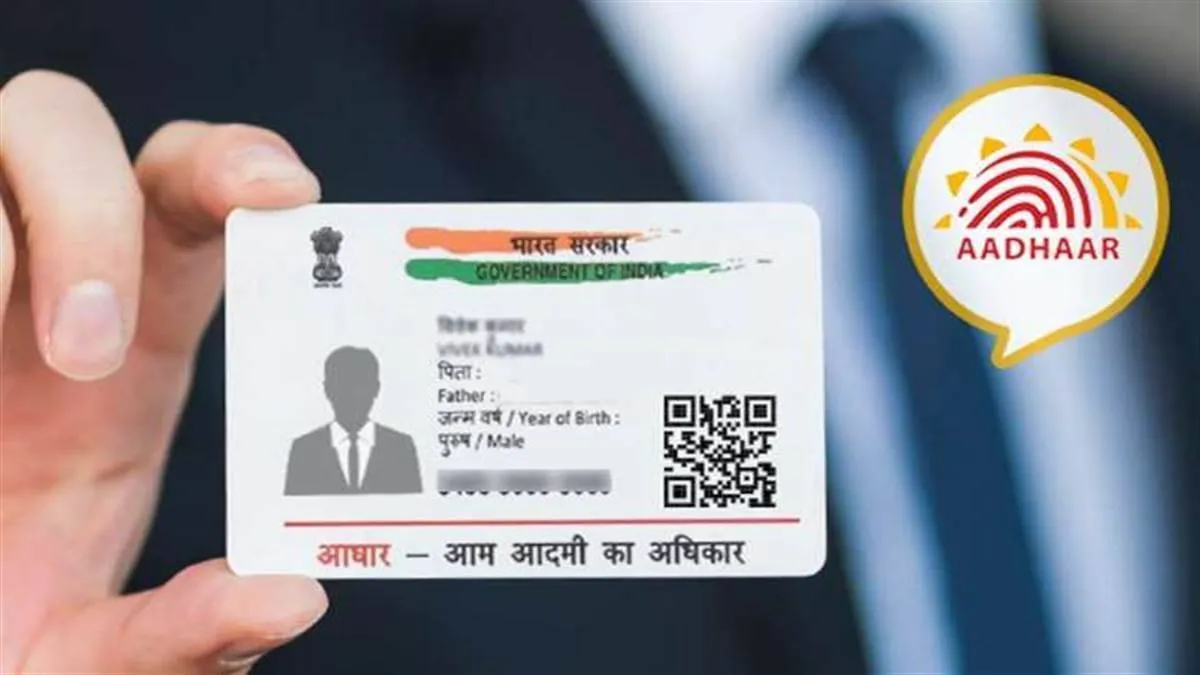
A major Aadhaar fraud network operating from inside a post office in Ghaziabad has been uncovered, with investigators alleging that forged identity documents were being created and official Aadhaar records illegally altered through collusion with a postal employee who had access to the system.
Cyber Police Expose Post Office Linked Identity Fraud
The case came to light after cyber police acted on intelligence inputs and arrested two accused, Deepak Kumar and Vikas Kumar, both residents of Dhaulana in Hapur. Authorities said the arrests were made in connection with a racket operating out of the Navayug Market post office and a fake service centre named Balaji in the Thapar Building area of Panchwati.
Police recovered four mobile phones, two laptops, 42 forged army pension documents and several fake birth certificates from the accused. Preliminary investigation suggests the network had been active for nearly a year and was systematically tampering with identity records using both physical and digital means. The seized devices have been sent for forensic examination to identify wider links and possible accomplices.
According to investigators, people were charged between Rs 3,500 and Rs 4,000 for Aadhaar updates and document corrections. These forged papers were then allegedly used to alter sensitive identity details such as name, address and date of birth in official records.
Registration Begins for FutureCrime Summit 2026, India’s Largest Cybercrime Conference
Postal Employee’s Role Comes Under Scrutiny
A significant part of the investigation now centres on the alleged role of a female postal department employee identified during interrogation as Komal. Police suspect she misused her official access to upload forged documents into the Aadhaar system and allegedly received Rs 250 for each Aadhaar update processed in this manner.
She is currently absconding, and efforts are under way to trace her. Investigators believe her access may have been crucial to giving the fraudulent updates an appearance of legitimacy within the system. The alleged collusion has heightened the seriousness of the case because it points to misuse of official access within a sensitive identity infrastructure.
Police said the case is no longer being viewed as a routine cyber fraud matter. Intelligence agencies have also stepped in, as the alleged tampering involves national identity records and the possible misuse of digital systems meant for citizen authentication.
Forged Templates and Fake QR Codes Used
Investigators said the gang used sophisticated methods to make forged documents look genuine. Among the 42 recovered papers were templates of retired army pension forms, gas connection receipts and age certificates. These were allegedly modified to generate new fake documents for use in Aadhaar related changes.
To make the documents appear more convincing, the accused also added counterfeit QR codes. Police said these codes looked genuine at first glance but failed when scanned. One of the notable recoveries was a forged birth certificate in the name of a woman identified as Munni Devi, allegedly showing her year of birth as 1938.
The case was broken after ADCP Crime Piyush Singh said police received confidential inputs and launched a decoy operation. An officer posed as a customer seeking Aadhaar correction services. The accused allegedly demanded Rs 4,000 without proper documentation and later agreed to do the work for Rs 3,000. Once the transaction was confirmed, the police team raided the site and arrested both men. Authorities are now analysing financial transactions, digital trails and document records, with investigators expecting that the probe may uncover a broader network involved in similar identity fraud operations across multiple locations.
About the author – Ayesha Aayat is a law student and contributor covering cybercrime, online frauds, and digital safety concerns. Her writing aims to raise awareness about evolving cyber threats and legal responses.
