

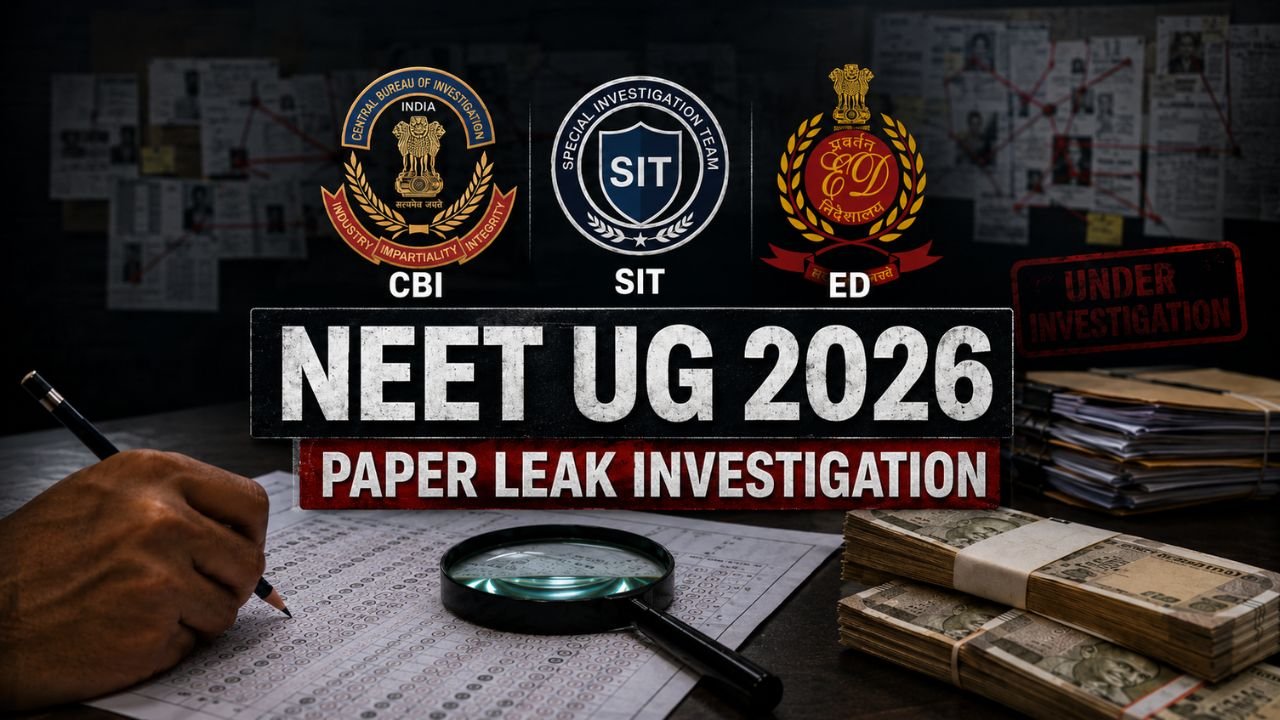

New Delhi | The alleged NEET-UG 2026 paper leak controversy has triggered a nationwide debate over examination security and the integrity of India’s education system. Following the Centre’s decision to cancel the medical entrance examination and conduct it again, the investigation has now intensified at multiple levels. The National Testing Agency (NTA) had conducted the examination on May 3, 2026, but after allegations of question paper leaks and complaints emerging from several states, the matter was handed over to the Central Bureau of Investigation (CBI).
According to government sources, investigators are now trying to determine whether the alleged leak was limited to a few local centres or linked to a larger inter-state organised network. Agencies are also examining the possible involvement of coaching institutes, dummy candidate syndicates, technical experts and insiders allegedly operating as part of a coordinated racket.
Registration Begins for FutureCrime Summit 2026, India’s Largest Cybercrime Conference
Experts say examination fraud investigations in India are rarely handled by a single agency. Instead, multiple agencies work simultaneously according to their jurisdiction and expertise. At the initial stage, State Special Investigation Teams (SITs) generally take charge of local operations. These teams conduct raids, interrogate suspects, track solver gangs and identify individuals allegedly linked to paper leak networks at the regional level.
However, once a case expands across multiple states or involves digital communication, hawala transactions and organised criminal links, the role of the CBI becomes crucial. The central agency is responsible for investigating larger conspiracies involving interstate coordination, cyber intrusion, encrypted communication channels and systemic manipulation of examination processes. In several previous recruitment and entrance examination scams, the CBI had uncovered nationwide networks operating through multiple states and financial channels.
The possible involvement of the Enforcement Directorate (ED) is also being closely watched in the NEET controversy. If investigators establish that huge sums of illegal money were generated through paper leaks or fraudulent promises of guaranteed admissions, the ED may initiate a parallel probe under money laundering laws. The agency has powers to trace financial transactions, monitor suspicious bank accounts and attach properties allegedly purchased using proceeds of crime.
Sources indicate that inputs gathered from different states point towards organised groups that allegedly contacted students and parents before the examination, promising access to question papers or unfair assistance in exchange for large payments. Investigators are now analysing call records, encrypted chats, digital payment histories and suspicious financial transactions to establish possible links between various accused individuals.
Education experts believe the allegations surrounding India’s biggest medical entrance examination highlight not only technical vulnerabilities in the examination system but also the growing influence of organised criminal networks in competitive exams. They warn that repeated incidents of paper leaks and impersonation scams could severely damage the confidence of lakhs of genuine students preparing through legitimate means.
Cybercrime specialists associated with examination fraud investigations say modern examination rackets have evolved far beyond traditional cheating methods. Encrypted messaging platforms, fake identities, proxy candidates, mule bank accounts and digital payment systems are increasingly being used to evade law enforcement scrutiny. This has forced agencies to rely more heavily on cyber forensics, financial surveillance and advanced data analysis during investigations.
The Centre has maintained that there will be zero tolerance towards any compromise in the fairness of national examinations and has assured strict action against those found guilty. Meanwhile, lakhs of students and anxious parents across the country are closely watching whether investigative agencies can quickly expose the full extent of the alleged examination racket and whether long-term reforms will finally be introduced to prevent such controversies from recurring in the future.
