

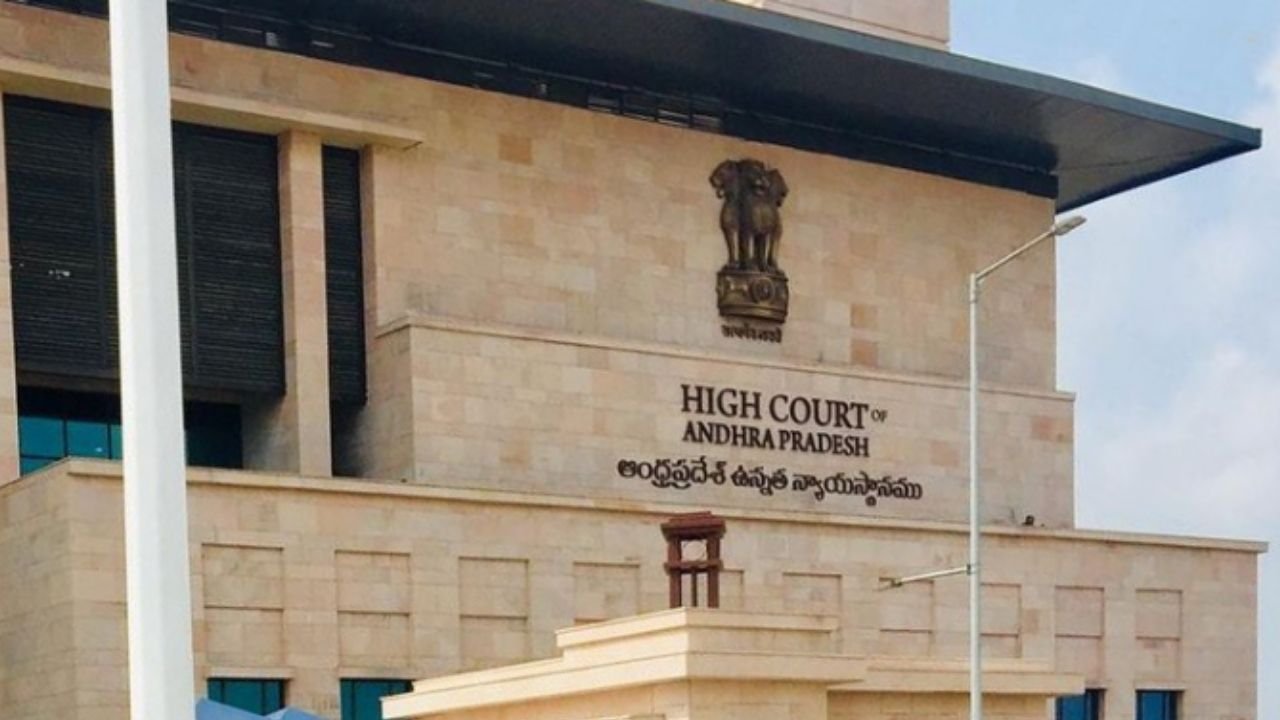

New Delhi | In a significant ruling related to banking accountability and departmental discipline, the Andhra Pradesh High Court has made it clear that courts cannot interfere in every disciplinary action taken by financial institutions. The court dismissed a petition filed by a former State Bank of India (SBI) employee who had challenged his termination over allegations of financial embezzlement and misconduct.
The High Court observed that the power of judicial review can be exercised only in exceptional circumstances where there is serious illegality, procedural irregularity, or a situation severe enough to “shock the conscience of the court.”
Registration Begins for FutureCrime Summit 2026, India’s Largest Cybercrime Conference
Justice Harinath N was hearing the plea of a former SBI Customer Relationship Officer who had sought to overturn his dismissal from service. The employee was accused of being involved in financial irregularities in connivance with an assistant manager at an SBI branch.
In its order, the court said that judicial intervention in departmental inquiries must remain limited. If an inquiry has been conducted within the legal framework and the findings are supported by material available on record, courts cannot overturn disciplinary decisions merely because the employee disagrees with the outcome.
According to court records, the employee was initially appointed in 2008 on a contractual basis as a Customer Relationship Executive and was later redesignated as a Customer Relationship Officer in 2010. He first worked at SBI branches in Telangana and was later transferred to the Rajahmundry branch in Andhra Pradesh.
The controversy began in 2011 while he was posted at the Warangal branch, where allegations surfaced that he had embezzled funds in collusion with an assistant manager. Although the original complaint was later withdrawn, a preliminary report prepared by the bank’s Chief Manager reportedly pointed toward irregularities.
Following the preliminary findings, a formal departmental inquiry was initiated in December 2012. The inquiry officer found the employee guilty of misconduct, following which he was dismissed from service in November 2013.
The petitioner argued before the High Court that no direct witnesses had been examined to substantiate the allegations against him. He contended that the role of a Customer Relationship Officer was limited to assisting customers and did not include powers to sanction loans or independently operate customer accounts.
His counsel also argued that since he was functioning in a contractual role during the relevant period, the allegations did not align with the actual authority vested in him.
However, the High Court rejected these arguments and observed that departmental proceedings are not governed by the same strict evidentiary standards applicable in criminal trials. The court stated that if the available material and surrounding circumstances are sufficient for a “reasonable person” to conclude that misconduct occurred, the disciplinary authority’s action can be sustained.
The court also referred to several Supreme Court judgments while explaining the scope of judicial review in disciplinary matters. It reiterated that the purpose of judicial review is not to re-evaluate evidence or conduct a fresh inquiry, but only to examine whether the decision-making process suffered from illegality, mala fide intent, or violation of principles of natural justice.
Renowned cyber crime expert and former IPS officer Prof. Triveni Singh said the judgment reinforces the importance of accountability within banking and financial institutions. According to him, “Public trust is the foundation of the banking system. Whenever there are indications of financial misconduct or internal collusion, institutions must have the authority to take strict disciplinary action. Judicial support for institutional accountability strengthens public confidence in the financial system.”
The High Court ultimately concluded that the petitioner had failed to demonstrate any legal infirmity or procedural violation serious enough to warrant judicial interference. With this observation, the court dismissed the plea and upheld SBI’s decision to terminate the employee from service.
