
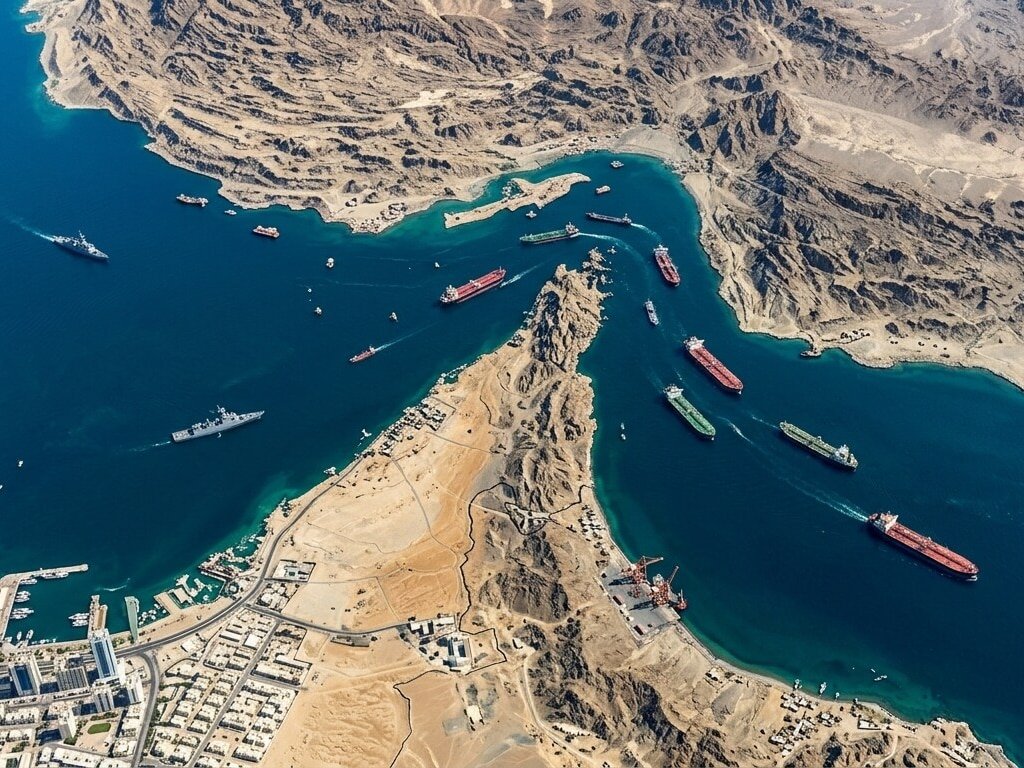
Tehran/Dubai: In a move that has triggered fresh concerns across global financial and technology markets, Iran has announced plans to assert control over critical undersea internet cable infrastructure passing through the Strait of Hormuz. The Iranian Revolutionary Guard Corps (IRGC) said foreign companies operating and maintaining seven major submarine fiber-optic cable systems in the region would now require Iranian permits and security-related payments.
Registration Begins for FutureCrime Summit 2026, India’s Largest Cybercrime Conference
Hormuz Emerges as a Digital Chokepoint
The announcement comes at a time of heightened naval tensions between Iran and the United States in West Asia. Analysts warn that if Tehran aggressively enforces the policy, the consequences could extend far beyond oil shipments, potentially disrupting global internet traffic, banking transactions, cloud services, and international digital communications.
The Strait of Hormuz has long been regarded as one of the world’s most strategically important energy corridors, with a significant portion of global oil exports moving through the narrow maritime route. However, the region is now emerging as a critical digital chokepoint as well. Major high-capacity submarine cable systems such as AAE-1 and FALCON run beneath these waters, linking Europe, Asia, and Gulf economies through high-speed data networks.
According to Iranian media reports, the IRGC has proposed three key conditions for foreign operators. First, all companies managing cable infrastructure in the Strait region would be required to obtain licensing approval from Iran. Second, international technology firms could face annual “protection fees” for operating in the zone. Third, and most significantly, all repair and maintenance work on the cables would be conducted only under Iranian supervision and control.
Undersea Cables Remain Critical to Global Internet
Technology experts say undersea cable systems continue to carry the overwhelming majority of global internet traffic despite the rise of satellite-based communication services. Fiber-optic networks laid across ocean floors offer significantly higher speed, stability, and bandwidth than satellite alternatives, making them indispensable for banking systems, stock exchanges, cloud computing platforms, and international data centers.
Security analysts have also warned that submarine cables are among the most vulnerable components of global digital infrastructure, particularly in conflict-prone maritime zones. Most cable damage worldwide is usually accidental, caused by fishing trawlers, ship anchors, or natural disturbances. However, military confrontations dramatically increase the possibility of deliberate sabotage or unintended disruptions.
Experts note that even a damaged vessel losing control in the Strait could drag anchors across the seabed and sever critical communication lines, potentially leading to widespread internet outages and disruption of financial systems within minutes.
India and Gulf Economies Face Exposure
Strategic affairs observers describe the development as part of an emerging era of “digital geopolitics,” where control over data infrastructure is becoming as important as control over oil routes and shipping lanes. Governments are increasingly recognizing that internet backbones, cloud infrastructure, and data transmission networks can serve as instruments of geopolitical leverage during international conflicts.
Countries such as India, the United Arab Emirates, Saudi Arabia, and several Southeast Asian economies could face significant exposure in the event of disruptions in the Hormuz corridor. India’s IT services industry, cloud providers, fintech platforms, and international banking networks rely heavily on global data routes connected through the region. Any interruption could affect digital payments, online trading platforms, video communication systems, and cross-border financial exchanges.
Cybersecurity experts believe future conflicts will not remain limited to land, air, and sea warfare, but will increasingly target data infrastructure and communication systems. According to a cyber expert associated with the Future Crime Research Foundation, “Undersea cables form the backbone of the modern digital economy. If geopolitical pressure intensifies around these networks, the impact could ripple through the global financial system within minutes.”
