
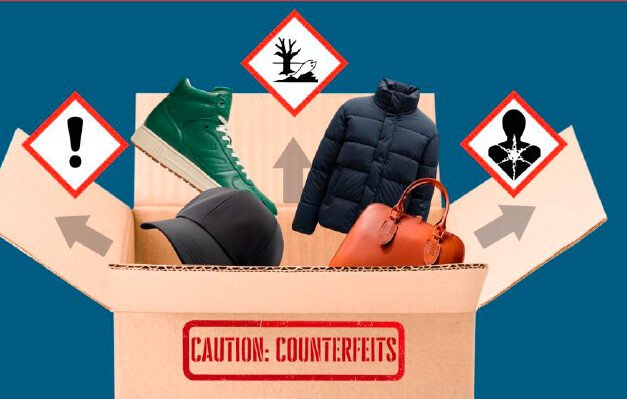
Today’s fashion market is witnessing a sharp rise in demand for branded apparel, sneakers, and luxury wear, especially among young consumers who increasingly view premium labels as a status symbol. However, behind this growing craze lies a parallel and highly organized counterfeit ecosystem that continues to expand at a rapid pace. A recent international report has exposed the scale of this problem with alarming figures that highlight how deeply fake products have penetrated the global fashion industry.
FCRF Academy Launches Premier Anti-Money Laundering Certification Program
Streetwear Brands Face Heavy Counterfeit Pressure
The report states that the share of counterfeit goods in the streetwear and luxury segment has reached a concerning level. Among the most affected brands is BAPE, where 85.19 percent of products were found to show signs of fraud or authenticity issues. Nike follows closely with 73.33 percent, while the Spider brand recorded 61.02 percent suspicious items. In terms of scrutiny volume, Nike alone accounted for 80.5 percent of the total checks, while Adidas stood at 8.5 percent.
Luxury Labels Also Hit by Fake Goods
Luxury fashion is also facing a similar crisis. High-end brands such as Louis Vuitton and Dior have reported counterfeit risk levels as high as 54.1 percent in sneakers and apparel. Balenciaga stands at 36.2 percent, Christian Louboutin at 27.9 percent, and Alexander McQueen at 19.2 percent of products showing risk indicators. This clearly shows that counterfeit penetration is not limited to low-cost markets but extends deep into premium fashion segments.
Major luxury labels such as Louis Vuitton, Gucci, and Prada remain primary targets for counterfeit manufacturers. Together, these brands accounted for 55.42 percent of all examined goods. In terms of value, Chanel leads with an estimated 9,095 crore rupees market size, although 5.7 percent of its products were found counterfeit. This highlights the scale of infiltration across premium global brands.
Stronger Brand Controls Show Signs of Success
Some brands have managed to maintain relatively strong control over authenticity. Off-White reported 94.49 percent genuine products, while Supreme stood at 85.03 percent authenticity, reflecting stronger supply chain monitoring and quality control systems. These figures indicate that stricter oversight can significantly reduce counterfeit penetration in the market.
The global streetwear and sneaker industry is currently valued at nearly 1 lakh crore rupees, with luxury and premium products contributing around 16.7 percent of the total market. The sector is growing at an annual rate of nearly 12 percent, making it highly attractive for both legitimate businesses and counterfeit networks.
Online Marketplaces Fuel Wider Counterfeit Reach
Experts warn that the rapid expansion of online marketplaces and social media selling platforms has significantly worsened the counterfeit problem. Fake products are often designed to closely resemble original items, making it extremely difficult for consumers to distinguish between real and fake. As a result, many buyers end up being deceived despite paying premium prices.
Industry specialists recommend that consumers should purchase branded products only from authorized stores or verified online platforms to avoid fraud. Strengthening supply chain transparency and implementing better tracking systems are also seen as critical steps to control the rising counterfeit threat. If current trends continue, experts believe the issue could become a major challenge for the global fashion industry.
Market analysts point out that the growth of counterfeit goods is closely linked to complex international supply chains and expanding digital marketplaces. Small distributors and unauthorized sellers are increasingly using e-commerce platforms and social media channels to reach consumers directly, making detection more difficult than ever before. In many cases, counterfeit packaging and branding are so sophisticated that even experienced buyers struggle to identify them at first glance.
Follow for daily updates on cybercrime, corporate fraud, DFIR, hacking, investigations, and digital forensics
