
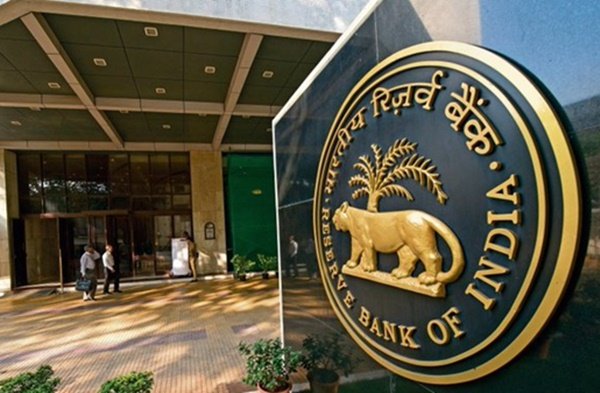
New Delhi. India’s rapid digital payments ecosystem, once celebrated for enabling instant and seamless transactions, is now facing a new challenge — its speed has become a tool for cyber fraudsters. In response to the sharp rise in scams, the Reserve Bank of India (RBI) is considering a series of measures that could deliberately slow down certain transactions to improve user safety.
Instant Payments Face Reality Check
In a recent discussion paper, the RBI highlighted how the same infrastructure that powers instant payments has also amplified risks. Since 2021, fraud cases have increased more than tenfold, with total losses surging to nearly ₹23,000 crore. A significant portion of these cases falls under “Authorised Push Payment” (APP) fraud, in which victims are coerced or deceived into voluntarily transferring money.
According to the RBI, fraudsters rely heavily on urgency and fear — common tactics include fake “digital arrest” threats, parcel scams, or warnings of account suspension. By introducing a slight delay in transactions, regulators believe users could get crucial time to reassess and potentially stop fraudulent payments.
FCRF Academy Launches Premier Anti-Money Laundering Certification Program
One-Hour Pause Could Stop Big Scams
One of the key proposals is the introduction of a one-hour “cooling period” for account-to-account transfers above ₹10,000. During this window, customers would have the option to cancel the transaction. The RBI noted that while such transactions account for around 45% of fraud cases by volume, they represent a staggering 98.5% of the total value lost, making this threshold particularly significant.
However, the proposal also raises concerns about convenience. Instant payments have become the norm, and any delay could disrupt time-sensitive transactions. To address this, the RBI is considering applying such delays selectively — for example, only for first-time payees or transactions flagged as unusual.
Another major proposal is the introduction of a universal “kill switch.” This feature would allow customers to instantly disable all digital payment channels — including UPI and internet banking — in case of suspected fraud. The facility could be accessed through mobile apps, internet banking platforms, call centres, or bank branches, ensuring quick action during emergencies.
Indians Lose ₹2,38,009 crore to Digital Fraud as RBI Plans Response
Kill Switch to Freeze Digital Access
In addition, the RBI is exploring ways to give users greater control over their digital payment access. Customers may soon be able to switch payment channels on or off based on their needs, rather than keeping all services active by default — a move aimed at reducing exposure to fraud.
Special safeguards are also being considered for vulnerable groups. For transactions above ₹50,000, senior citizens and persons with disabilities may be required to obtain additional authentication from a designated “trusted person.” While this adds a layer of protection, it also raises practical concerns, such as delays in urgent situations or challenges for individuals who manage finances independently.
The central bank is also evaluating a broader structural change in how bank accounts are categorised. New accounts could be designated as “low-credit-turnover” by default, with an annual credit limit of up to ₹25 lakh. Any amount exceeding this limit may be held as “shadow credit” and released only after verification. If the customer fails to justify the transaction within a specified period, the funds could be reversed.
Mule Accounts and Senior Citizens Under Watch
This measure is primarily aimed at curbing mule accounts — bank accounts used to route fraudulent money. However, it could also inconvenience legitimate users such as freelancers, small businesses, and individuals with irregular income patterns.
Experts believe the core challenge lies in balancing speed with security. While instant payments have significantly boosted economic efficiency and financial inclusion, the rising scale of cyber fraud demands a recalibration of priorities.
The RBI is currently seeking feedback from stakeholders on these proposals. If implemented, these measures could mark a significant shift in India’s digital payments framework — making it not just fast, but far more secure against evolving cyber threats.
