
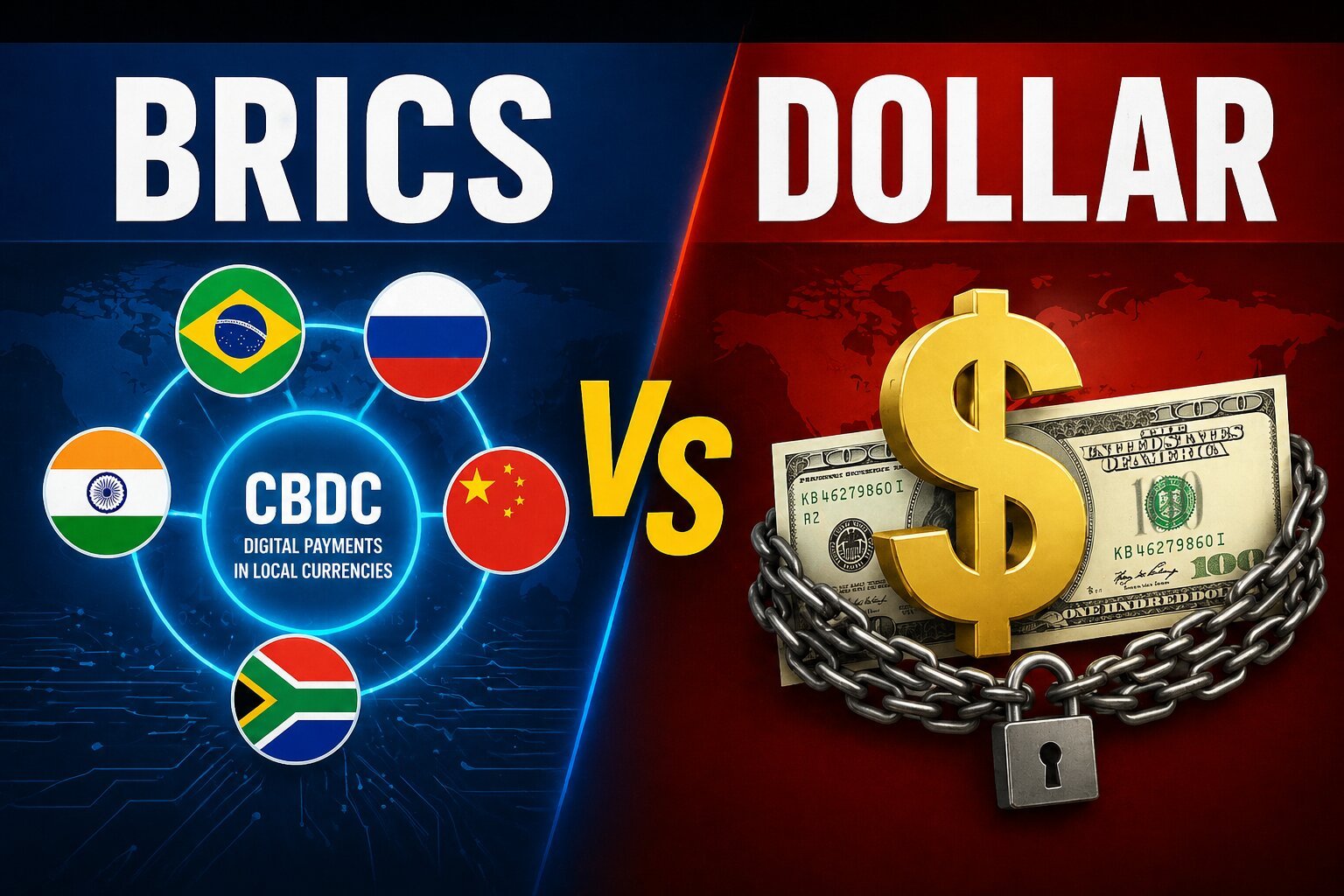

As geopolitical tensions escalate in the Middle East and global trade faces fresh uncertainties, BRICS nations are speeding up plans to reduce overreliance on the US dollar. India’s Reserve Bank has proposed linking the digital currencies of BRICS members Brazil, Russia, India, China, and South Africa to enable smoother cross-border payments in local currencies. This initiative, expected to feature at the 2026 BRICS summit hosted by India, aims to create interoperable digital rails for trade and tourism, cutting conversion costs and bypassing traditional dollar-dominated systems.
The timing is no coincidence. Recent events have highlighted the risks of excessive dependence on a single currency and payment network. In February 2026, the United States and Israel launched large-scale strikes on Iran under Operation Epic Fury, targeting military sites, nuclear facilities, and leadership, including the killing of Supreme Leader Ali Khamenei. Iran retaliated with missile and drone attacks across the region, leading to significant disruption in the Strait of Hormuz—a critical chokepoint for global oil flows. This conflict, involving direct US military action alongside Israel, has caused energy price volatility, supply chain shocks, and heightened concerns over weaponized financial tools and sanctions.
FCRF Academy Launches Premier Anti-Money Laundering Certification Program
Compounding these pressures is the unpredictable tariff policy under President Trump. Since taking office, the administration has announced sweeping country-specific and baseline global tariffs (initially 10%, later adjusted toward 15%), targeting imports from various nations, including allies like Canada and Mexico, and addressing issues from trade deficits to digital services taxes. These moves, justified as protecting American workers and rebalancing trade, have created uncertainty for exporters worldwide, disrupted established supply chains, and raised fears of broader trade wars. Critics argue such aggressive and fluctuating tariff actions amplify economic instability rather than resolve it.
For BRICS countries, particularly Russia and Iran—which have long faced Western sanctions—the proposed digital payment system offers a practical shield. By settling transactions directly in local currencies via linked CBDCs like India’s e-rupee and China’s digital yuan, nations can avoid repeated dollar conversions, reduce fees, and limit exposure to external political risks. India sees this as advancing rupee internationalization while enhancing trade efficiency with key partners.
Experts view the move as a step toward multipolar financial resilience rather than outright confrontation. While the dollar remains dominant due to its liquidity and trust, growing BRICS cooperation signals a desire for diversified options in an era of geopolitical friction and policy unpredictability. The Middle East conflict and tariff volatility have only accelerated calls for alternatives that promote stability and autonomy.
India faces the delicate task of balancing this economic initiative with its broader diplomatic and strategic relationships, including strong ties with the United States. If implemented carefully, the BRICS digital payment framework could strengthen intra-group commerce, cushion against external shocks, and contribute to a less concentrated global financial order—benefiting emerging economies seeking predictability amid great-power rivalries.
