
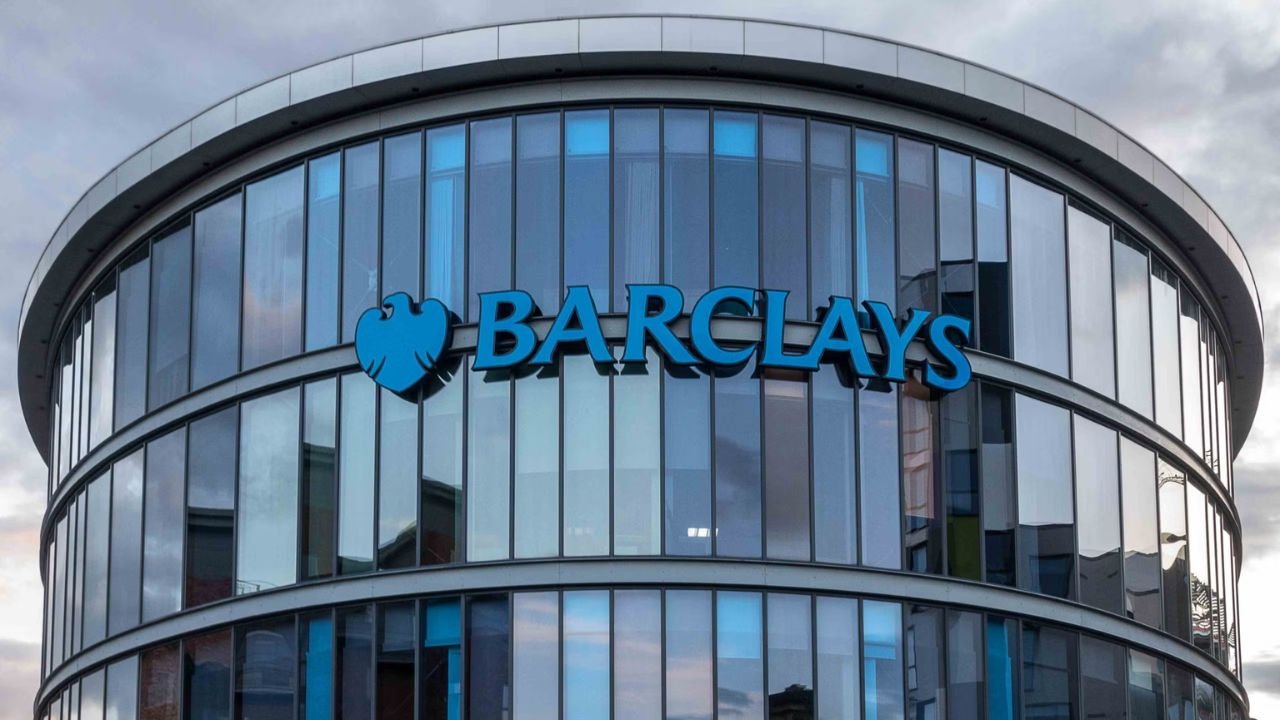

Amid rising fraud risks in the global banking sector, British banking giant Barclays has begun tightening its exposure to high-risk lending. The move comes after the bank suffered a loss of about £228 million (approximately ₹2,910 crore) following the collapse of UK-based mortgage lender Market Financial Solutions (MFS), prompting a strategic shift in its lending approach.
According to the bank, MFS collapsed in February 2026 amid allegations of fraud, after which regulatory authorities initiated a formal investigation. Barclays, which had been providing banking services to the firm, was directly impacted by the fallout. As a result, the bank’s total credit impairment charges for the first quarter of 2026 rose sharply to £823 million (around ₹10,563 crore), compared to £643 million (about ₹8,206 crore) during the same period last year.
FCRF Academy Launches Premier Anti-Money Laundering Certification Program
Barclays’ Chief Executive Officer C. S. Venkatakrishnan indicated that instances of fraud are becoming more frequent and increasingly difficult to detect in advance. He noted that the bank will now adopt a stricter stance when dealing with borrowers whose business models lack transparency or robustness. Particular scrutiny will be placed on entities that are unable to demonstrate strong financial controls and independent audit mechanisms.
Beyond MFS, Barclays has previously taken hits from other cases, including the collapse of US subprime auto lender Tricolor and issues surrounding auto parts company First Brands, both linked to allegations of fraud or mismanagement. These developments have raised broader concerns about the stability and credibility of the $2 trillion (approximately ₹25.52 lakh crore) private credit market.
Financial experts point out that this “shadow banking” segment often operates with limited transparency and complex structures, making it inherently riskier. Andrew Bailey has described the sector as a “relatively opaque world,” warning that without stronger oversight and stress testing, it could undermine confidence in the financial system.
In a related development, Barclays has also set aside an additional £105 million (around ₹1,340 crore) to compensate customers affected by the UK motor finance scandal. This brings the total provision under this head to £430 million (approximately ₹5,488 crore), reflecting the bank’s effort to address potential liabilities and protect customer interests.
Despite these setbacks, Barclays reported a relatively stable financial performance. For the first quarter of 2026, the bank posted a 3% increase in pre-tax profit to £2.8 billion (around ₹35,734 crore), while total revenue rose 6% to £8.2 billion (approximately ₹1,04,650 crore). Notably, income from investment banking crossed £4 billion (around ₹51,049 crore) for the first time, driven by a 16% rise in equities trading amid market volatility.
Analysts attribute this surge in trading activity to heightened global uncertainty, particularly due to ongoing tensions in the Middle East and rising energy prices. While such volatility has boosted trading revenues, prolonged high energy costs could pose risks to the broader global economy.
Bank officials have maintained that both businesses and consumers are currently in a stable financial position. However, there is a noticeable shift in consumer behaviour, with individuals prioritising essential spending and focusing more on repaying existing debt. This trend reflects caution in response to an uncertain economic environment.
Overall, Barclays’ latest move signals a growing awareness of fraud risks and structural vulnerabilities within the private credit ecosystem. By tightening lending standards and strengthening risk controls, the bank aims to safeguard its balance sheet while navigating an increasingly complex financial landscape.
