

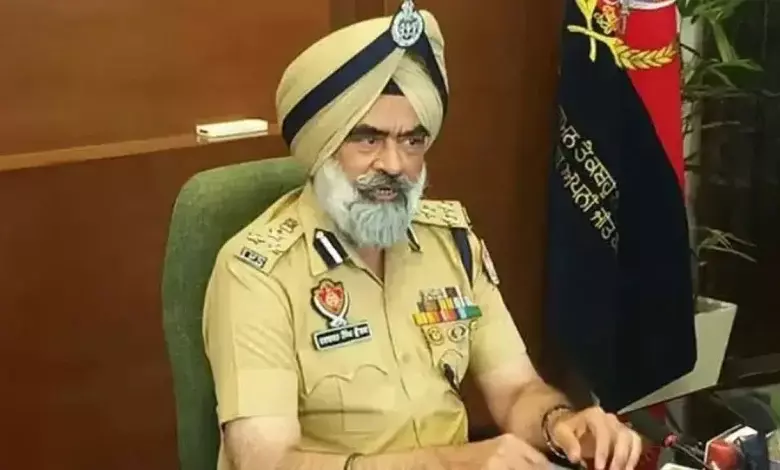
The investigation into the bribery case involving suspended Punjab DIG Harcharan Singh Bhullar has entered a more intensive phase, with the Central Bureau of Investigation (CBI) significantly widening the scope of its probe. Following a recent court order, the case is no longer confined to an alleged ₹8 lakh bribery trap but is now expanding into a broader inquiry into suspected corruption networks and financial linkages.
A special court, presided over by Judge Bhawna Jain, has granted permission to the CBI to transfer crucial materials seized during the trap operation—including cash, mobile phones, diaries, and electronic records—into a newly registered preliminary enquiry (PE). This fresh enquiry, initiated on February 19, is reportedly examining possible involvement of unidentified public servants and intermediaries connected to the main accused.
FCRF Academy Launches Premier Anti-Money Laundering Certification Program
Seized digital evidence becomes key focus
As per the court order, materials collected during the original trap case, including WhatsApp chats, mobile data, and documentary evidence recovered from co-accused Kirshanu Sharda’s premises, can now be used in the fresh preliminary enquiry.
The CBI had argued that the evidence was not limited to the initial bribery allegation but indicated a wider pattern of financial dealings and influence networks. Accepting the argument, the court observed that transferring the material would not prejudice the accused or affect the fairness of the ongoing trial.
Move towards fast-track trial
The court is also scheduled to hear on April 27 a separate CBI application seeking a day-to-day (fast-track) trial in the main bribery case under Section 4 of the Prevention of Corruption Act, 1988. If approved, the move could significantly accelerate proceedings against Bhullar and his associate Sharda.
How the investigation widened
Investigators stated that the fresh preliminary enquiry emerged after a detailed analysis of WhatsApp communications and a diary recovered during earlier raids. These materials were seized during searches conducted as part of the initial investigation.
A supplementary chargesheet had earlier indicated that Sharda allegedly played a role in facilitating undue favours and influencing decisions involving senior officials in exchange for illegal gratification. It also suggested that digital communications pointed towards monitoring of legal and investigative processes.
Authorities believe these findings indicate transactions involving multiple beneficiaries, varying timelines, and broader financial exchanges beyond the original ₹8 lakh bribery case.
Origin of the case
The case began on October 16 last year, when a trap operation led to the arrest of then Ropar Range DIG Harcharan Singh Bhullar and his associate Kirshanu Sharda.
Sharda was allegedly caught red-handed accepting ₹5 lakh from a complainant, which was part of a total ₹8 lakh bribe allegedly demanded for settling an FIR registered at Sirhind police station.
Defence objections rejected
Both accused had opposed the CBI’s plea to expand the probe, arguing that the additional material was not part of the original charge sheet and could prejudice ongoing legal proceedings. They also contended that jurisdiction in certain aspects should lie with the state police.
However, the court rejected all objections, noting that jurisdictional issues had already been settled in earlier orders passed in November 2025.
Court’s key observation
The court further observed that the documents being shifted to the new enquiry had not been relied upon in the main case. Therefore, it held that no prejudice would be caused to the accused and that the fairness of the main trial would remain intact.
Probe likely to expand further
The CBI is now examining additional financial records, digital communications, and electronic evidence to identify possible links with other officials. Investigators are also exploring whether more individuals within government departments may have been part of or benefited from the alleged network.
What began as a ₹8 lakh bribery trap case has now evolved into a wider corruption investigation involving suspected financial networks and digital evidence trails. With the court permitting expansion of the enquiry and a fast-track trial plea pending, the case is expected to enter a more aggressive investigative phase in the coming weeks, potentially leading to further revelations.
About the author – Ayesha Aayat is a law student and contributor covering cybercrime, online frauds, and digital safety concerns. Her writing aims to raise awareness about evolving cyber threats and legal responses.
