


In a landmark move towards future-ready law enforcement, the Directorate of Artificial Intelligence for Policing (DAIP)—a specialized wing of the Centre for Police Technology (CPT)—has been launched to redefine the way policing is conducted in an increasingly digital and complex world. This pioneering initiative marks a decisive shift toward data-driven, technology-enabled policing, placing artificial intelligence at the core of crime prevention, investigation, and national security.
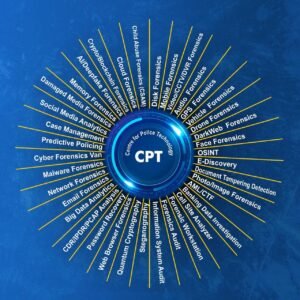
At the heart of DAIP’s vision lies the seamless integration of AI across critical policing domains. From tackling sophisticated cybercrimes to strengthening intelligence-led operations, the Directorate is set to revolutionize traditional approaches with advanced, scalable, and intelligent solutions.
One of the most impactful applications is in cybercrime investigation, where AI-powered tools are enabling faster identification of financial frauds, phishing campaigns, ransomware attacks, and dark web activities. Leveraging advanced Digital Forensics and Incident Response (DFIR) capabilities, law enforcement agencies can now analyze vast volumes of digital evidence, recover deleted data, and trace complex criminal networks across jurisdictions with unprecedented accuracy and speed.
In the realm of predictive policing, AI-driven models are transforming prevention strategies by analyzing historical crime data to identify hotspots, forecast potential criminal activity, and optimize resource deployment. This proactive approach significantly enhances situational awareness and improves emergency response mechanisms.
The Directorate is also advancing facial recognition and surveillance analytics, empowering agencies with real-time identification capabilities through integrated CCTV networks and intelligence databases. Coupled with behavioral analytics and AI-based threat detection systems, this enables more effective tracking of organized crime syndicates, repeat offenders, and potential terror threats.
Another key focus area is fraud risk management and financial intelligence, where AI algorithms are deployed to detect suspicious transaction patterns, uncover mule accounts, and dismantle large-scale cyber fraud ecosystems. These capabilities are crucial in combating the growing nexus of financial crimes in the digital economy.
Equally important is DAIP’s commitment to regulatory compliance, cyber law, and data protection, ensuring that the deployment of AI in policing remains ethical, lawful, and aligned with evolving legal frameworks. Robust governance mechanisms are being embedded to maintain transparency, accountability, and public trust.
Recognizing that technology is only as effective as the people who use it, DAIP places strong emphasis on training and capacity building. Through AI-powered simulation platforms, cyber ranges, and specialized certification programs, police personnel and investigators are being equipped with next-generation skills to stay ahead of rapidly evolving threats.
The initiative will be guided and mentored by Prof. Triveni Singh, Former IPS officer and Chief Mentor at Future Crime Research Foundation. His extensive experience in cybercrime investigations and policing innovation is expected to provide strategic direction and operational depth to the Directorate.
The Centre for Police Technology will play a pioneering role in driving innovation, fostering collaboration, and promoting the application of AI across every domain of policing. By bridging the gap between technology, policy, and enforcement, CPT aims to build a resilient and intelligent policing ecosystem for the nation.
As DAIP continues to expand its footprint, it stands as a bold testament to the future of law enforcement—where artificial intelligence not only enhances efficiency but also enables a proactive, predictive, and precision-driven approach to public safety.
Follow for daily updates on cybercrime, corporate fraud, DFIR, hacking, investigations, and digital forensics
