

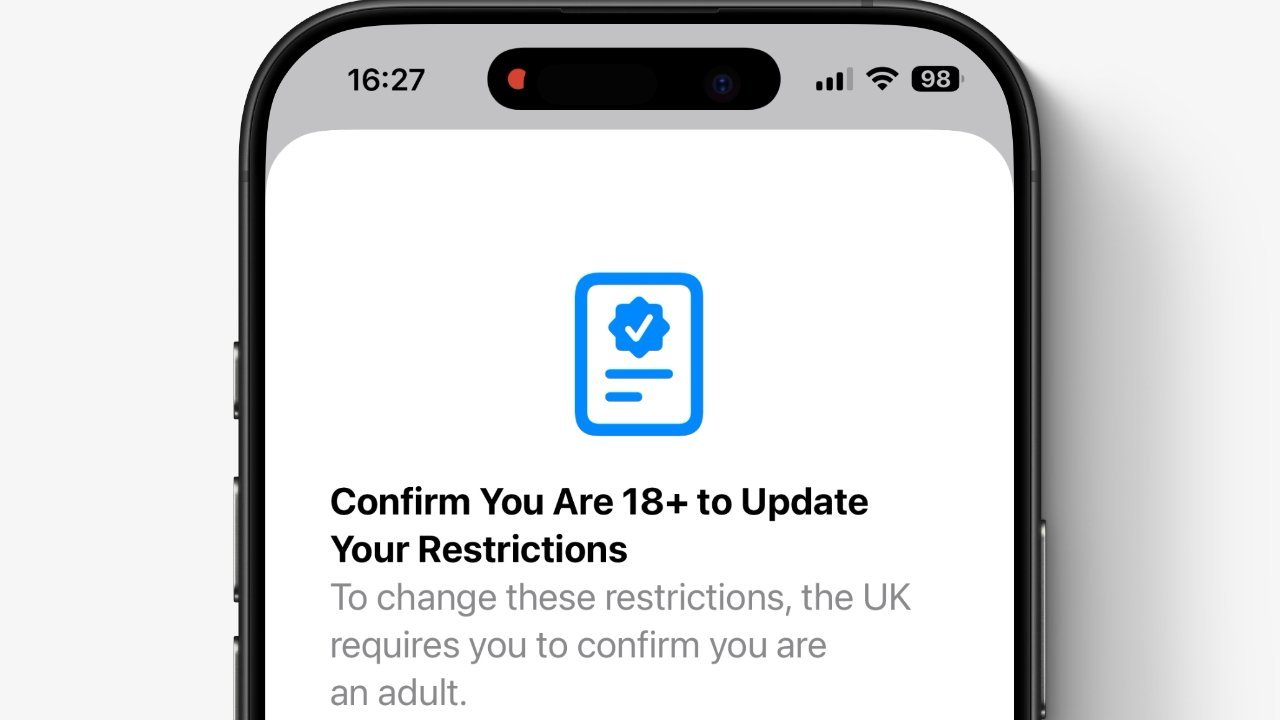

Online age verification does not have to be intrusive or cumbersome, and Apple’s implementation in the UK shows a more frictionless model than many existing systems, according to a published account reviewing the feature on iOS. The article, written by Andy Boxall and published on April 16, 2026, argues that while age checks are becoming increasingly common across websites and apps, Apple’s method stands out because it relies on information already held within a user’s account rather than demanding a credit card, selfie or personal identification document at the point of use.
The article says age verification is now becoming more common in different parts of the world, particularly in the UK, where many apps and websites require visitors to prove they are over 18. It notes that this is no longer confined to adult-only sites and now extends to services such as Reddit, Roblox, X, Bluesky, YouTube and, more recently, Apple’s iOS.
FCRF Returns With CDPO, Its Premier Data Protection Certification for Privacy Professionals
Apple’s System Presented as Faster and Less Intrusive
According to the account, users in the UK installing Apple’s iOS 26.4 or iOS 26.4.1 are shown a screen asking them to verify their age before continuing. If they do not, a web content filter is activated and Apple’s Communication Safety feature is turned on. The article also says users who do not verify their age may not be able to download apps or change certain settings, although the process can also be completed later through the Settings menu.
The writer describes the process as unusually simple. Rather than requiring a credit card, selfie or driver’s licence, the next page reportedly showed that Apple was satisfied the user was over 18 based on the length of time the Apple account had existed and the payment methods already saved to it. The article says this removed the need for additional proof and reduced concern about personal identification or selfies being exposed through a third-party site breach.
Comparison Drawn With Other Platforms and Apps
The article contrasts Apple’s approach with age verification methods used elsewhere. It says the same-day verification carried out in the Bluesky app required a choice between a credit card, ID, or a selfie processed by AI to estimate age. Although the process took only a short time, it required the user to visit a third-party site, and the article notes that even where such sites say they delete the information provided, users may still feel uneasy.
Similar concerns are raised about age verification systems used by X, Reddit and other apps, which the article says rely on different external sites for ID purposes. By comparison, Apple’s use of existing account information is described as less intrusive. The article says this approach was part of the arrangement made with Ofcom, the UK regulator linked to the push for online age verification following publication of the Online Safety Act in 2025.
Questions Remain Over Wider Adoption and Platform Gaps
The article says Android users are not currently subject to the same operating system-level age verification requirement. It states that Ofcom did not force Apple’s hand and that the move to introduce the requirement at the operating system level was Apple’s own decision in response to the Online Safety Act in the UK. It also says Google has guidance on how to meet age requirements, but that there is no OS-level mandatory age verification on Android in the UK at present.
That difference, the article argues, leaves users verifying their age repeatedly across multiple apps and systems, increasing both inconvenience and risk. It suggests a one-off operating system-level solution could have reduced controversy and offered broader coverage across apps and websites. While noting that not all users will have an equally smooth experience, the piece concludes that Apple’s system offers a glimpse of a more practical and less intrusive model for online age verification.
About the author — Suvedita Nath is a science student with a growing interest in cybercrime and digital safety. She writes on online activity, cyber threats, and technology-driven risks. Her work focuses on clarity, accuracy, and public awareness.
