

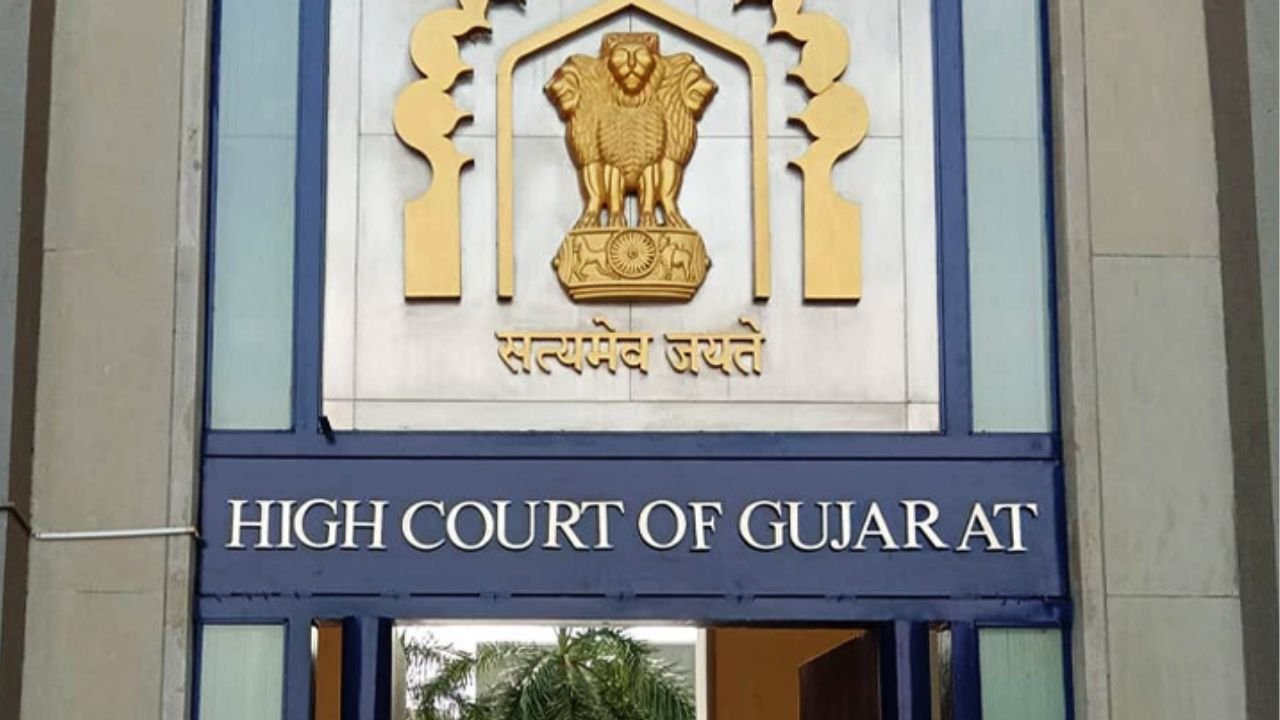

Ahmedabad | The Gujarat High Court has refused to grant anticipatory bail to a female LLB student accused of allegedly posing as an advocate and cheating multiple individuals of nearly ₹80 lakh, observing that custodial interrogation is necessary to unearth the full extent of the alleged conspiracy and identify other possible victims and co-accused.
The court made strong observations on the nature of the allegations, stating that the legal profession cannot be allowed to be tarnished through impersonation or fraudulent conduct. The bench noted that the materials placed on record indicated a prima facie case of systematic deception involving misuse of legal identity and official-looking documents.
FCRF Returns With CDPO, Its Premier Data Protection Certification for Privacy Professionals
The case originates from an FIR registered at Kadi Police Station in Mehsana district under multiple provisions of the Bharatiya Nyaya Sanhita (BNS), 2023. The charges include cheating, criminal breach of trust, forgery, and impersonation. According to the complaint, the accused, along with unidentified associates, allegedly misrepresented herself as a practicing advocate and induced victims to part with money under the pretext of legal assistance and case-related work.
During the investigation, authorities reportedly recovered several incriminating materials that strengthened suspicion of impersonation. These included an identity card allegedly issued in the name of the Bar Council of Gujarat, nameplates describing her as an advocate of the Supreme Court of India, seals resembling those used by police stations, notary seals, case registers, and other documents typically associated with legal practice. Investigators also claimed that multiple complaint statements suggested a wider pattern of similar transactions involving different victims.
It was further brought to the court’s notice that after the initial FIR was filed on February 1, 2026, additional complainants came forward, taking the total alleged fraudulent amount to approximately ₹80 lakh. The prosecution argued that this indicated not a standalone incident but a possible wider network operating through deception and false representation.
The applicant, a final-semester LLB student working as a junior intern, denied all allegations. Through her counsel, it was argued that she had no intention to commit any offence and was merely assisting in documentation and administrative work. It was also contended that she never signed any vakalatnama, never appeared in court as an advocate, and had no direct role in legal representation of any client.
The defence further argued that the complaint was delayed and referred to alleged incidents spanning nearly a year, from January 2025 to February 2026. It was submitted that the allegations were exaggerated and arose out of misunderstanding, and that the accused was being falsely implicated despite having no criminal intent. The counsel also maintained that her involvement, if any, was limited to helping individuals resolve disputes informally.
However, the prosecution strongly opposed the bail plea, arguing that the evidence collected during investigation clearly pointed toward impersonation and deliberate fraud. It was submitted that custodial interrogation was essential to trace the financial flow, identify co-conspirators, and uncover other victims who may not yet have come forward. The prosecution also stressed that the recovery of seals and official-looking documents indicated a deeper level of preparation and planning.
After hearing both sides, the High Court observed that the allegations were serious in nature and required detailed investigation at the custodial stage. The bench noted that premature relief could hamper the probe and potentially allow the accused to influence evidence or coordinate with others involved in the alleged offence.
The court further emphasized that impersonation involving the legal profession has wider implications on public trust in the justice system. It stated that such cases require strict scrutiny, as they directly affect the credibility of legal institutions and the confidence of citizens seeking justice.
Rejecting the anticipatory bail application, the court held that custodial interrogation was justified and necessary for a fair and complete investigation. However, it clarified that its observations were limited only to the bail proceedings and would not influence the trial on merits.
With the bail plea dismissed, investigators are expected to continue examining financial records, digital evidence, and communication trails to determine the full scope of the alleged fraud. The case is likely to proceed further with focus on identifying additional victims and any wider network of individuals involved.
Legal observers note that the case highlights increasing concerns over impersonation-related frauds and misuse of professional identities, particularly in sensitive fields such as law. The matter remains under active investigation, with further legal proceedings expected in the coming weeks.
