
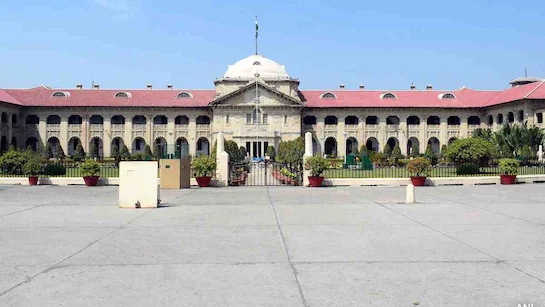
Prayagraj: In a significant ruling, the Allahabad High Court has made it clear that relying solely on a handwriting expert’s report is not sufficient to establish guilt or justify dismissal from service. The court set aside the termination of three clerks employed with the State Bank of India (SBI) and permitted the bank to conduct a fresh departmental inquiry. It also observed that the employees may be suspended again if required during the course of the new investigation.
Alone handwriting report cannot become the final word in a dismissal case
The judgment was delivered by Justice Vikram D. Chauhan while hearing a petition filed by Sachin Kumar and two others from Meerut. The case dates back to 2009, when SBI had announced recruitment for clerical positions. The petitioners were selected and appointed in 2010 and, after successfully completing their probationary period, were confirmed in service.
However, the bank later received complaints alleging that the employees had indulged in impersonation and unfair means during the written examination. Based on these allegations, a departmental inquiry was initiated. In 2014, the bank dismissed all three employees, relying primarily on a handwriting expert’s report. Their appeals were subsequently rejected in 2015.
FCRF Returns With CDPO, Its Premier Data Protection Certification for Privacy Professionals
Found serious procedural lapses
During the hearing, the High Court found serious procedural lapses in the departmental inquiry. The court noted that no direct witnesses were presented, and crucially, the handwriting expert whose report formed the basis of the action was not produced for cross-examination. Additionally, the invigilator present during the examination was not examined as a witness, despite being a key figure who could have clarified the circumstances.
Crucial evidences were ignored
The court further observed that important identification evidence—such as photographs on call letters, thumb impressions, and signatures—was not properly considered. According to the bench, when multiple reliable methods of identification were available, relying solely on handwriting analysis indicated a one-sided and incomplete investigation.
Emphasizing the principles of natural justice, the court stated that the right to cross-examination is fundamental. “If an expert’s opinion is used against an employee, the expert must be made available for scrutiny and questioning,” the court observed. It clarified that merely accepting a document’s authenticity does not mean its conclusions cannot be challenged.
The court also remarked that the bank’s action raises questions about its own examination and verification systems. If robust identity verification mechanisms were already in place during recruitment, then dismissing employees later on the basis of a single technical report undermines the credibility of the entire process.
High Court clears the clerks for now, but leaves the door open for a fresh SBI inquiry
Setting aside both the dismissal orders and the rejection of appeals, the High Court directed SBI to conduct a fresh and fair departmental inquiry. It stressed that all relevant evidence must be properly examined, and the employees must be given a full opportunity to present their defense.
This ruling not only provides relief to the affected employees but also reinforces the importance of fairness, transparency, and due process in disciplinary proceedings. The court’s stance sends a clear message that severe actions like dismissal must be backed by strong, multi-dimensional evidence rather than a solitary expert opinion.
Legal experts believe that this judgment will serve as an important precedent in cases where disciplinary actions are taken without adhering to proper procedures. It underscores that maintaining procedural integrity is essential to ensure justice and prevent arbitrary decisions in employment matters.
