

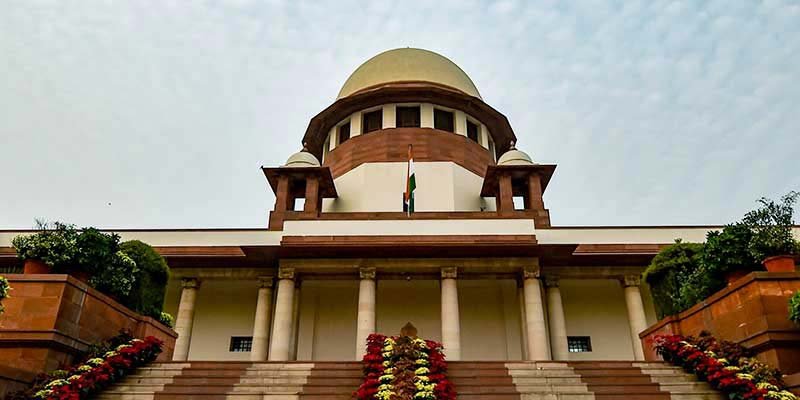
The Supreme Court has observed that medical seats in government institutions are a “precious national resource” and must not be left vacant under any circumstances, especially when they become unoccupied due to fraud or administrative delay. The Court made these remarks while upholding the admission of a NEET-UG candidate in a case involving forged documents and cancelled admissions.
The judgment came in a matter where two MBBS seats in government medical colleges in Himachal Pradesh fell vacant after it was discovered that two admitted students had submitted forged mark sheets. The cancellation of their admissions triggered a legal dispute over whether the vacant seats could be filled after the counselling deadline had expired.
The bench comprising Justices J.K. Maheshwari and Atul S. Chandurkar was hearing a challenge filed by the National Medical Commission (NMC) against a High Court order that directed admission of a waitlisted candidate to one of the vacant seats.
FCRF Returns With CDPO, Its Premier Data Protection Certification for Privacy Professionals
Fraudulent admissions led to vacant seats
According to the case records, the two students were initially admitted during NEET-UG 2022 counselling to Pt. Jawahar Lal Nehru Government Medical College and Indira Gandhi Medical College, Shimla. However, their admissions were later cancelled after verification revealed that their scorecards and supporting documents were forged and did not match records available on the NMC portal.
Following this discovery, the Atal Medical and Research University informed the authorities that one seat in each college had become vacant. The university also sought permission to fill the seats at the earliest possible stage.
However, the National Medical Commission responded after several months, stating that since the counselling schedule had already concluded, no further admissions could be made beyond the notified timeline.
Student approached court for justice
The affected candidate, who had secured 508 marks in NEET-UG 2022 under the general category and was placed on the merit/waiting list, approached the High Court seeking admission against the vacant seat. The petitioner argued that she was a meritorious candidate and should not be denied admission due to delays in detecting fraud and administrative inaction.
The High Court accepted the plea and directed that the student be admitted in the next academic cycle, along with compensation for the delay. The order was later challenged by the NMC before the Supreme Court.
Supreme Court examines merit and delay
During the hearing, the Supreme Court noted that the candidate had approached authorities promptly after learning about the vacant seat. The Court also observed that the delay in identifying forged documents and subsequent communication lapses were entirely attributable to the institutions involved.
Rejecting the argument that admissions cannot be granted beyond the counselling schedule, the bench referred to earlier rulings, including Asha vs. Pt. B.D. Sharma University of Health Sciences and S. Krishna Sradha vs. State of Andhra Pradesh, emphasizing that equity must prevail in exceptional cases.
“Seats cannot be wasted,” says Court
In its observations, the Court strongly underlined the public importance of medical education seats.
It stated that a government medical seat is not merely an individual benefit but a national asset held in public trust. The bench noted that when such a seat becomes vacant due to fraud, authorities are duty-bound to ensure it is allotted to the next eligible candidate in the merit list.
The Court further remarked that allowing seats to remain unfilled due to administrative negligence undermines the purpose of NEET-UG, which is designed to ensure fair and structured medical admissions across the country.
Schedule not above merit, says SC
Addressing concerns raised by the NMC regarding adherence to counselling timelines, the Court clarified that procedural schedules cannot override merit in exceptional circumstances. It observed that when delays occur due to institutional failure, equity demands corrective admission in the next available academic cycle.
The bench ultimately upheld the High Court’s decision but modified the admission year, directing that the student be admitted in the 2026–2027 academic session instead of the earlier direction.
Final ruling and significance
Concluding the matter, the Supreme Court held that the High Court’s order was justified and required no interference. It also noted that prolonged litigation had delayed relief to the candidate for several years.
The judgment reinforces the principle that merit must be protected even in cases involving procedural lapses, and that public education resources, especially in the medical field, must be efficiently utilized.
The case is being seen as a significant reminder for regulatory bodies to ensure timely verification, strict monitoring, and prompt action in admission processes to prevent fraud and avoid wastage of critical educational resources.
About the author – Ayesha Aayat is a law student and contributor covering cybercrime, online frauds, and digital safety concerns. Her writing aims to raise awareness about evolving cyber threats and legal responses.
