

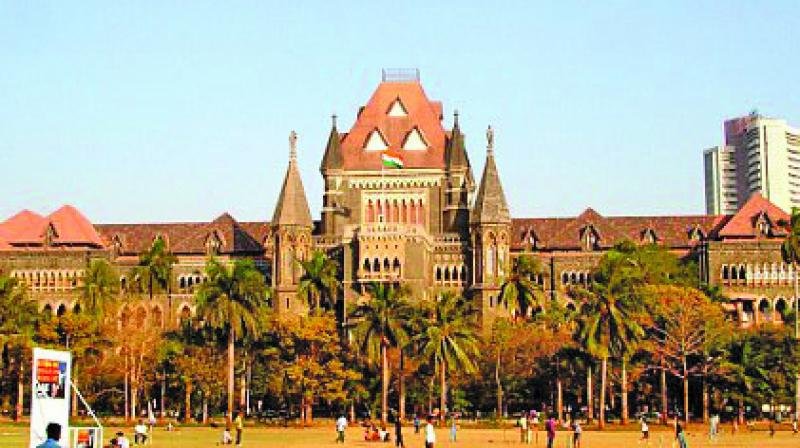

On March 25, 2026, the Bombay High Court ruled that a housing society can refuse membership to a homebuyer where flats sold by a builder do not legally exist, holding that the admission of such a member would violate statutory limits under the Maharashtra Co-operative Societies Act.
Court Finds Flats Were Non-Existent Refuge Areas
The court examined records including floor plans annexed to agreements and found that the areas sold to Sewadsha had consistently been designated as refuge spaces rather than residential apartments. Municipal records also reflected this classification, as no property tax had been levied on these units, indicating they were not recognised as legitimate flats.
The dispute arose after Sewadsha purchased five units in a Bhandup housing project, later discovered to be refuge areas intended as vacant safety spaces. The builder had executed sale agreements for these units on April 30, 2019, despite no constructed residential flats existing in those locations.
The court also noted that the Occupancy Certificate contained an error, as it depicted portions of vacant space on the 8th and 15th floors as residential flats. However, in reality, no such constructed units fit for occupation were present.
FCRF Launches Premier CISO Certification Amid Rising Demand for Cybersecurity Leadership
Erroneous Documents and Invalid Membership Claim
The housing society had earlier issued a statutory notice dated October 10, 2022, seeking rectification of the plan annexed to the Occupancy Certificate. Despite this, Sewadsha sought membership in the society based on the purchased units.
A certificate from a private architect, relied upon by the Divisional Joint Registrar, claimed that the flats did not fall within refuge areas. The High Court rejected this position, stating that the certificate was contrary to official records and was based on the erroneous Occupancy Certificate.
The court held that refuge areas cannot be treated as flats or even unfinished units for the purpose of granting society membership. It distinguished a prior judgment cited by Sewadsha’s counsel, observing that such a principle would not apply where the subject matter itself does not exist.
Violation of Statutory Limits and Final Order
The High Court ruled that admitting Sewadsha as a member would breach Section 154B-5 of the Maharashtra Co-operative Societies Act, which restricts societies from admitting members beyond the number of flats available for allotment.
It further observed that after deemed conveyance, the builder had no authority to execute sale agreements for such spaces, rendering the transactions non-binding on the housing society.
Accordingly, the court allowed the writ petition, quashed the orders directing admission of Sewadsha as a member along with related execution proceedings, and restored the earlier decision rejecting the membership application.
A separate civil case concerning cancellation of the sale agreements for the five units remains pending and was not addressed in the present ruling.
Follow for daily updates on cybercrime, corporate fraud, DFIR, hacking, investigations, and digital forensics
