

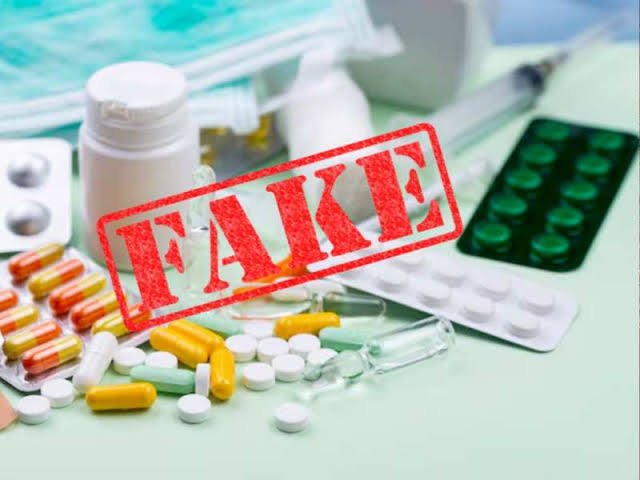

A counterfeit medicine racket operating in New Delhi has been uncovered, revealing a network that manufactured drugs at negligible cost and sold them at inflated prices, while concealing large quantities of stock underground to evade detection.
The investigation led to the arrest of the alleged mastermind, Nikhil Arora, also known as Sonu. Based on his interrogation, authorities tracked other members of the operation. Initial searches yielded little, but further questioning led to a disclosure by another accused, Shivam Tyagi, who admitted to burying a substantial stock of medicines nearly 10 feet underground.
Excavation Uncovers Hidden Stockpile
Acting on the information, officials carried out an excavation using heavy machinery at the identified location. The operation led to the recovery of more than 40,000 tablets and capsules buried beneath the surface.
Investigators said the scale of the seizure indicated a structured and large-scale operation rather than isolated activity. The concealment method suggested deliberate attempts to avoid enforcement action while continuing distribution through other channels.
FCRF Launches Premier CISO Certification Amid Rising Demand for Cybersecurity Leadership
Low-Cost Production, High Market Profits
During the investigation, authorities found that the accused were manufacturing drugs at extremely low costs. A medicine with a market price of ₹100 was reportedly produced for as little as 30 paise.
These counterfeit products were then supplied to wholesalers at 20 to 25 percent of the maximum retail price, allowing significant profit margins. Officials said the packaging closely resembled that of established pharmaceutical brands, making it difficult for buyers and smaller traders to distinguish between genuine and fake products.
The accused also admitted to producing counterfeit versions of medicines across multiple known brands, further complicating detection in the supply chain.
Network Spread Across States
Investigators identified links between the accused and wholesale markets in the Bhagirath Palace area of Delhi, a major hub for pharmaceutical trade. Authorities said the network extended beyond the capital, with supply chains reaching multiple states.
The operation relied on shell companies to create the appearance of legitimate trade. These entities were used to generate invoices and maintain records, masking the illegal nature of the business. Officials found that nearly 150 such firms were linked to the racket, some of which were acquired for relatively small amounts and repurposed for fraudulent transactions.
Further inquiries revealed that certain individuals involved had prior criminal records, including earlier cases related to narcotics and other offenses. Despite previous legal action, they are alleged to have continued operating within the illegal pharmaceutical trade.
Authorities are continuing efforts to identify additional individuals involved at various levels of the network, including manufacturing, distribution and financial operations.
Experts have warned that counterfeit medicines pose serious risks to public health, as they may be ineffective or harmful. The case has drawn attention to gaps in oversight within the pharmaceutical supply chain and the need for stronger enforcement to prevent similar operations from expanding.
Follow for daily updates on cybercrime, corporate fraud, DFIR, hacking, investigations, and digital forensics
