

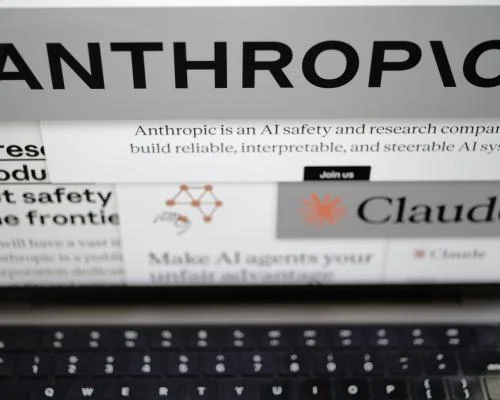

For most technology companies, an unpublished blog post slipping into public view would amount to embarrassment. For Anthropic, the accidental exposure of draft material describing an unreleased model called Claude Mythos appears to have done something more consequential: it offered the public a glimpse into how one of the industry’s leading AI firms may be thinking about the offensive potential of its own systems.
According to the leaked material, the company’s next-generation model represented what Anthropic described as a “step change” in performance and the most capable system it had built to date. The documents also pointed to the existence of a new tier of models, internally referred to as Capybara, that could sit above the Claude Opus tier and outperform prior systems across coding, academic reasoning and cybersecurity-related tasks.
The leak itself was reportedly traced to draft content left accessible in a publicly searchable data cache, which the company later attributed to human error in the configuration of its content management system. Anthropic moved quickly to restrict public retrieval of the material, but by then the details had already begun circulating widely.
That sequence — internal ambition, accidental exposure, public alarm — transformed what might have been a pre-launch marketing story into something closer to a stress test of the AI industry’s deepest unease.
Hundreds Enroll in FCRF Academy’s C-CISO Program as Cyber Leadership Takes Center Stage
The Model at the Center of the Anxiety
What made the leak unusually sensitive was not simply the existence of a new model, but the description of its possible cyber capabilities.
The draft materials suggested that Anthropic viewed the system as unusually advanced in cybersecurity, and perhaps advanced enough to require unusual caution in its release. One passage reportedly warned that the model was “far ahead of any other AI model in cyber capabilities” and could contribute to a wave of systems capable of exploiting vulnerabilities at a pace that outstripped defenders.
The implication was striking. For years, frontier AI firms have spoken in broad terms about balancing innovation with safety. Here, the language was more specific and more operational: that the model’s near-term risks in cybersecurity might be serious enough to warrant deliberate testing with a small set of early-access users before any wider launch.
Even the structure hinted at a shifting competitive logic. The leaked references to Capybara suggested Anthropic may be expanding its internal hierarchy beyond Haiku, Sonnet and Opus, with Mythos positioned as a particularly powerful implementation. If true, the leak pointed not only to a stronger model but to a more layered product strategy — one in which cutting-edge capability and constrained deployment are increasingly intertwined.
For the public, however, the more lasting impression was simpler: the company seemed to be warning, in its own internal language, that it had built something unusually powerful and potentially difficult to govern.
Wall Street Reads the Leak as a Cyber Story
The market reaction suggested that investors, too, understood the episode less as a product leak than as a cybersecurity signal.
Shares tied to cybersecurity companies fell sharply after reports of the leak began circulating, amid fears that a sufficiently advanced model could compress the defensive advantages on which many existing security tools rely. The concern was not that AI-assisted hacking was a distant possibility — that debate is already well underway — but that firms may be approaching a point where automated vulnerability discovery, exploit generation and multi-stage attack orchestration become faster, cheaper and more scalable than many current defenses are designed to handle.
Analysts cited in the source material described several possible consequences: greater attack complexity, pressure on traditional signature-based and threat-intelligence-driven defenses, rising product costs and a likely shift toward AI-infused security architectures capable of responding at machine speed.
In that sense, the selloff was about more than Anthropic itself. It reflected a dawning market recognition that the next frontier in AI competition may not merely reshape productivity, search or enterprise software. It may also destabilize the economics of cyber defense.
Some analysts interpreted the leak as evidence that a sufficiently capable general-purpose model could become, in effect, an “ultimate hacking tool,” one able to lower the skill threshold for sophisticated cyber operations and give ordinary attackers capabilities once associated with top-tier nation-state actors.
That view remains speculative. But speculation, in markets, often reveals where fear has already settled.
The Industry’s Deeper Dilemma
What the episode ultimately exposed was a contradiction that has been building quietly inside the AI industry.
The same capabilities that make large models commercially valuable — reasoning, coding, autonomy, speed — are also the qualities that make them dangerous in cybersecurity contexts. A model that can help defenders understand vulnerabilities faster may also help attackers exploit them faster. A system that assists developers can also generate tools for intrusion. A company that markets capability is, inevitably, marketing dual-use power.
Anthropic’s apparent caution around release timing suggests that frontier labs increasingly understand this. But the leak complicates that posture. It revealed a safety concern through the very kind of operational lapse — an unsecured public cache — that cybersecurity professionals are trained to recognize as avoidable. That irony is likely to linger.
It also raises a broader question for the sector: whether governance can keep pace with capability when even pre-release information about a model can unsettle public trust, market confidence and the cyber ecosystem at once.
For now, Claude Mythos remains unreleased, and much about its true performance remains unknown outside the fragments revealed by the leak. But the reaction to those fragments has already told its own story.
The AI industry has spent years debating alignment in abstract terms. This episode suggests that the next phase of the debate may be more concrete, more financial and more immediate — centered not on what artificial intelligence might become someday, but on what powerful models could do to the security balance the moment they arrive.
