

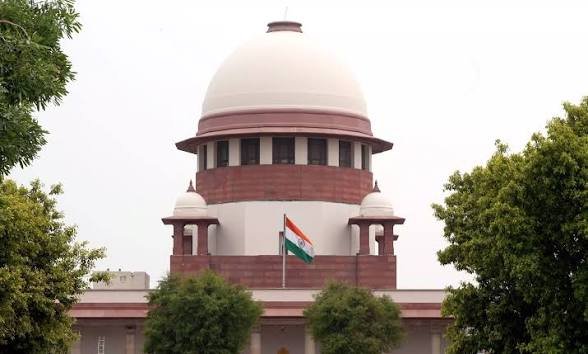

New Delhi: The Supreme Court has raised serious concerns over a growing trend involving the use of Artificial Intelligence (AI) to generate fake judicial decisions that are being cited in courts despite having no existence in official records. The top court observed that this practice poses a significant threat not only to India’s legal system but also to judicial processes worldwide.
AI as a Tool—and a Risk
The observation came during the hearing of a Special Leave Petition filed by a private company director seeking removal of certain remarks made by the Bombay High Court. Those remarks were recorded after a purported judgment—later found to be AI-generated and non-existent—was cited during proceedings.
A bench of the Supreme Court noted that the increasing reliance on AI tools to create “fictional judgments” and present them as legal precedents is a disturbing development. It emphasized that such practices can undermine the credibility of the judicial process and adversely affect the administration of justice.
FCRF Launches Premier CISO Certification Amid Rising Demand for Cybersecurity Leadership
A Global Concern for Legal Systems
The court further pointed out that the issue is not confined to India alone but is emerging as a global concern. With the rapid expansion and accessibility of AI tools, generating and circulating misleading or fabricated legal content has become easier, making it imperative for courts, lawyers, and all stakeholders to exercise heightened caution.
While acknowledging that AI can be a useful technological aid, the bench stressed that its use must be responsible and subject to strict verification. Presenting AI-generated content in court without proper authentication, the court said, violates professional ethics and risks misleading judicial proceedings.
Call for Vigilance and Future Safeguards
During the hearing, the Supreme Court ordered the removal of the Bombay High Court’s remarks in the specific case but simultaneously highlighted the broader implications of such incidents. It indicated that stricter measures and possible guidelines may be considered in the future to address misuse of AI in legal practice.
Legal experts believe that as AI adoption grows, so does the potential for its misuse, particularly in sensitive domains like the judiciary where accuracy and authenticity are critical. Fake legal documents or judgments, if not detected in time, could have serious legal and institutional consequences.
For now, the court has advised all stakeholders—including judges, lawyers, and institutions—to remain alert and ensure that the integrity and transparency of the judicial process are not compromised.
Follow for daily updates on cybercrime, corporate fraud, DFIR, hacking, investigations, and digital forensics
