



Artificial intelligence has become a buzz word on internet. With every new day, new players and models are launched, which are intended to make work quicker, perfect and world-class.
AI has the capability to do execute work of hundreds of experts in one go. In India and across the world, with the rising cybercrime cases, Law Enforcement agencies are overloaded with investigations. With the rising technology, investigations are becoming technically complex. Judicious AI utilization in investigations and forensics will definitely aid in quality investigations.
FCRF Launches Premier CISO Certification Amid Rising Demand for Cybersecurity Leadership
Let us look into some utilities that can be used by Police officers for Free.
“Prompt” is the most important part in dealing with AI Chatbots. Unless you are clear in what you want with proper english / prompt — there are high chances, AI will hallucinate.
1. ChatGPT
Commonly used in India, Lets see some use cases:
Sections research while FIR : Digital Arrest (Law Enforcement Impersonation Scam) —
Stronger legal sections will result in increasing of weightage of the case. In case you are not conversant with Law, AI is best to use.
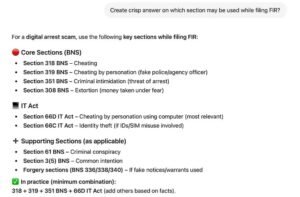
Sometimes there will be act which are not known; however since AI has pre-fed information, it can be utilized.
2. Awareness Content on Cybercrime Prevention for Social Media Handle:
Police stations may not have budget or availability of designers and content creators; however awareness through social media is very much important. Image generation feature may be used to create graphics.

Based on Modus Operandi in concerned District, content may be created in different forms.
Content can be too technical for Senior Citizens. Prompts can be adjusted and relevant content can be created.
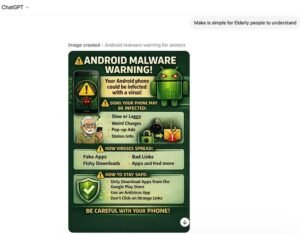
Scheduler option is available in social media. Entire week’s post can be scheduled to post the content. Post Hashtags and Content may also be created.

3. ADVANCED : ChatGPT Projects
After having looked at the basic use of AI, let us now look on advanced utilities. ChatGPT provides “Project” feature on left pannel. This feature can be used to research on any set of documents or subject.
As shown in figure, go to New Projects → Create Project (Give name to project → Add Source
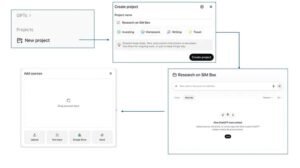
What are sources? Consider sources as ‘knowledge’ or documents which you want to do research on.
For Example, if you have some documents, news article, press release and want to summarize or deep dive on the subject, as shown below, upload all documents which are not confidential by clicking on “Add Sources”
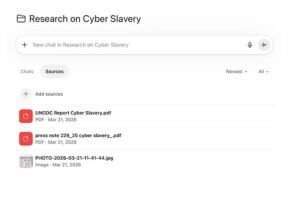
Now, ChatGPT will answer from the documents uploaded.
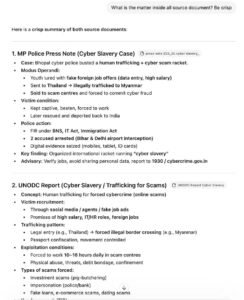
This feature is particularly helpful when AI is not able to understand context and we want to research on a particular subject with lot of study materials to proceed with investigation.
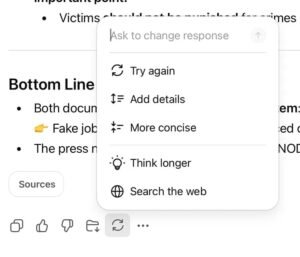
In case you are not satisfied with reply, there is a button available, pressing it gives more option. Web Reference may also be taken if you want to cross check the sources with internet references.
4. Custom GPTs
This is a facility available to create your own GPT or use someone else’s GPT version which is ‘specialized.
For example, a refund SOP GOT is shared below:
ChatGPT – 1930 SOP AI – Assistant (Money Refund)
ChatGPT is your AI chatbot for everyday use. Chat with the most advanced AI to explore ideas, solve problems, and learn…chatgpt.com

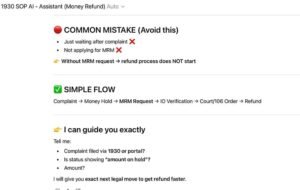
Custom GPTs can be accessed from below menu. Any field related ‘specialized’ GPTs can be accessed. You can also create your own GPTs by uploading knowledge. This will be covered in future series.

Privacy & Confidentiality
In Settings, turning off the “Improve the model for everyone” will ensure your data is not being used to train the ChatGPT and will reduce the risk of your data exposure.
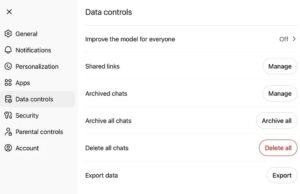
It is therefore important to use only non-critical information
Tip: “Export Data” feature may be used to extract information after approval from suspect.
Same functionalitiy is also available with other versions of AI like Gemini, Grok, Sarvam (Partly), which will be discussed in next version of series of articles
AI can help solve problems if used judiciously, will explore the same in upcoming articles…
Author: Rushi Mehta
Follow for daily updates on cybercrime, corporate fraud, DFIR, hacking, investigations, and digital forensics
