
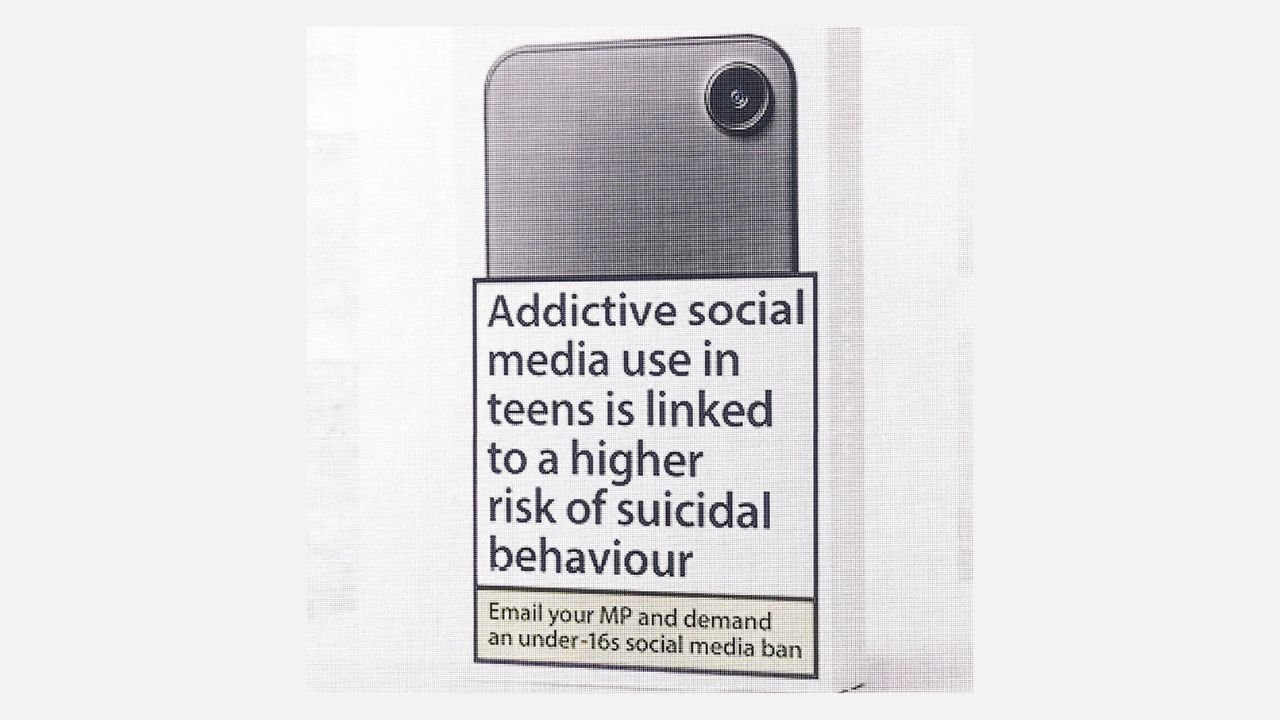

New Delhi: A fresh debate has emerged in the United Kingdom over the growing impact of social media on young people. The well-known parenting platform Mumsnet has launched a national campaign demanding a complete ban on social media use for children under the age of 16. The campaign uses strong warning messages similar to the health warnings printed on cigarette packs to highlight the potential harms of excessive social media use.
Through billboards and digital advertisements, the campaign warns that prolonged use of social media can have serious consequences for teenagers’ mental health.
FCRF Launches Flagship Certified Fraud Investigator (CFI) Program
More than three hours of daily use may increase risk of self-harm
Advertisements linked to the campaign claim that teenagers who spend three hours or more per day on social media may face a higher risk of self-harm. The campaign also states that smartphone addiction can double the risk of anxiety among adolescents.
The messages further warn that excessive social media use can increase the likelihood of eating disorders and, in some cases, may also be associated with serious risks such as suicide.
As part of the initiative, people are being encouraged to email their Members of Parliament to support an “Under-16 Social Media Ban.”
Growing concern among families
The campaign was announced by Mumsnet founder Justine Roberts, who said many families are witnessing the negative effects of social media on a daily basis.
According to Roberts, the issue is not simply about parental monitoring or discipline. Rather, it is linked to the way digital platforms are designed to keep users engaged for as long as possible.
She noted that many parents report seeing uncontrolled phone use, lack of sleep, rising anxiety, and declining self-esteem among their children, while companies continue to profit from these platforms.
Roberts emphasized that better parenting alone cannot fully solve the problem, because the challenge is rooted in a digital model that actively encourages users to spend more time online.
Part of the “Rage Against the Screen” initiative
The campaign is part of Mumsnet’s broader “Rage Against the Screen” initiative, which calls for stricter regulations on young people’s use of social media.
In a 2025 survey of Mumsnet users, 92 percent of parents expressed concern about the impact of social media on children’s mental health, while over 60 percent said they believe their child is addicted to their phone or social media.
Government may introduce stricter rules soon
The UK government is also considering tougher measures on this issue. Recently, the British Prime Minister indicated that rules limiting social media use for children under 16 could be introduced within weeks.
However, it remains unclear whether the government will impose a full ban or introduce stricter regulatory controls. A government spokesperson said that parents’ concerns are valid and the government is committed to ensuring children’s online safety.
Global trend toward tighter regulations
Several countries around the world are increasingly moving toward stricter controls on children’s social media use.
Australia implemented the Online Safety Amendment Act in December 2025, introducing a complete ban on social media for children under 16.
Similarly, France has passed a bill restricting social media access for children under 15, while Denmark is also considering similar regulations.
Countries including Malaysia, Spain, Greece, and Slovenia are also exploring measures to limit young people’s use of social media.
Rising concern in India as well
In India, concerns about social media addiction among children and teenagers are also growing. The Economic Survey 2026-27 highlighted the issue and emphasized the need for stronger safeguards.
The survey suggested that social media platforms should implement clear age-based restrictions and that companies should face stricter regulations to ensure the online safety of children.
Experts believe that in the coming years, stricter global regulations on children’s digital and social media use are likely to emerge.
Follow for daily updates on cybercrime, corporate fraud, DFIR, hacking, investigations, and digital forensics
