
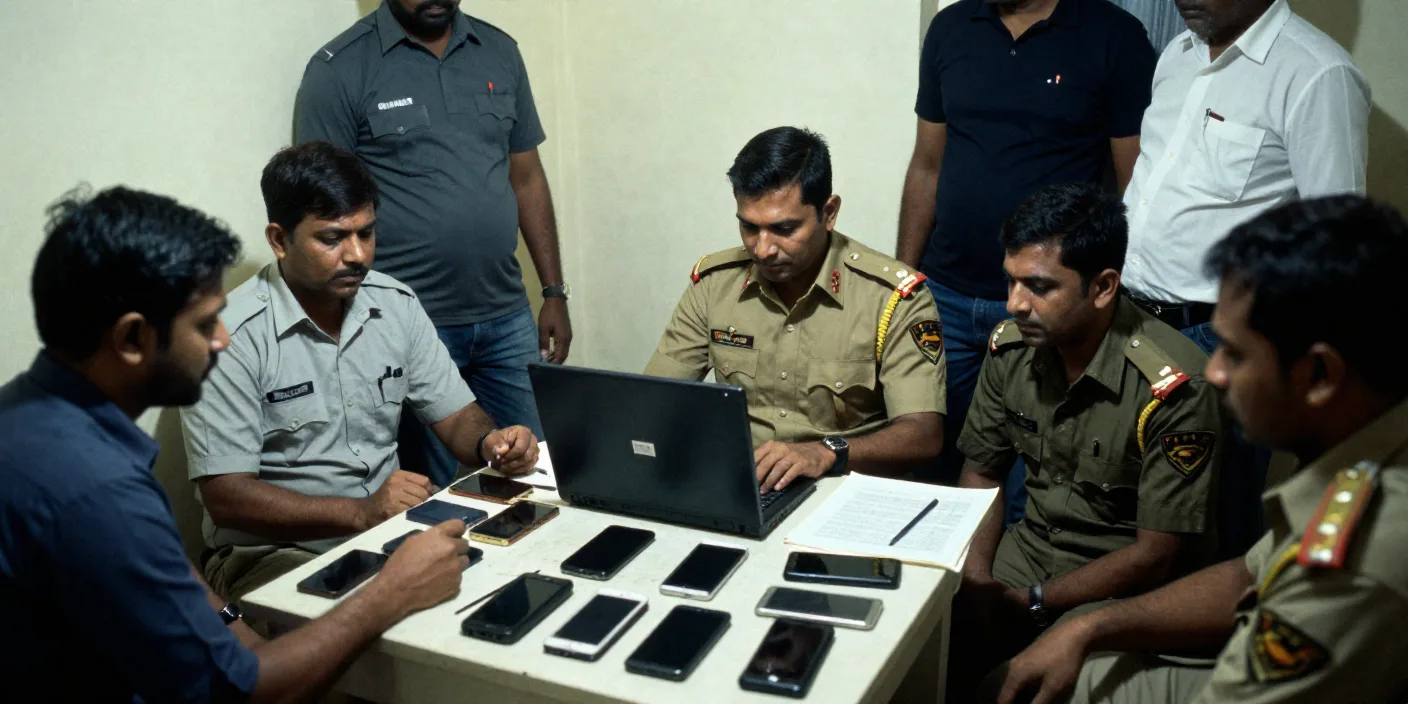
A cybercrime racket involved in honey trap fraud and impersonation of government officials through WhatsApp calls has been busted. The Crime Branch arrested four members of the interstate gang, including one woman. Police said the gang has allegedly cheated victims of crores of rupees by making calls from a mobile number that had been inactive for nearly two years.
Gang’s Fraud Tactics: Impersonation and Intimidation
During the investigation, it was found that the accused used to pose as employees of agencies such as the Income Tax Department, Customs Department, police, or other central law enforcement bodies. They would intimidate victims by claiming that legal action was being taken against them and pressurize them to immediately transfer money.
Technical Tracking Leads to Lakhimpur Kheri
Police monitoring of cybercriminal activities revealed repeated complaints linked to a single mobile number. Technical analysis helped authorities obtain data from the WhatsApp headquarters in the United States. The IP address mapping showed the location to be in Lakhimpur Kheri, after which police conducted raids and exposed the gang.
FCRF Launches Flagship Certified Fraud Investigator (CFI) Program
30+ Mule Accounts and Honey Trap Operations
Investigations revealed that the accused operated more than 30 mule bank accounts through which the fraud money was transferred. Account holders were reportedly given a commission of five to ten percent for allowing their accounts to be used in the illegal transactions. Police are now probing the source and flow of money through these accounts.
Officials said the gang used VPNs and other technical methods to hide their identity. The female member of the gang was involved in trapping victims by establishing fake romantic or personal relationships through honey trap tactics.
Police investigations further revealed that the gang leader is a resident of Madhavpur area in the Murtihya region of Bahraich. His brother and other associates helped in withdrawing cash obtained through illegal transactions and managing the network operations. The female accused was assigned the task of gaining victims’ trust, while another member generated fake barcodes to carry out online payment frauds.
Raids were conducted in several cities including Unnao, Gonda and Bahraich, following which all four accused were arrested.
Ongoing Probe and Public Safety Advisory
Cybersecurity experts said that GIS-based tracking systems like the ‘Pratibimb Portal’ help law enforcement agencies monitor cybercriminals by mapping suspicious mobile numbers and identifying their real-time locations.
Police officials stated that the investigation is continuing to uncover other members of the network and possible links to more fraud cases. The accused are being interrogated to determine how many people were targeted in the scam.
Authorities have urged citizens not to share personal or financial information with unknown WhatsApp callers and avoid transferring money under fear of legal action. People are advised to verify the identity of anyone claiming to be a government official before taking any action.
Officials emphasized that public awareness and caution are the most effective ways to prevent cyber fraud.
About the author – Rehan Khan is a law student and legal journalist with a keen interest in cybercrime, digital fraud, and emerging technology laws. He writes on the intersection of law, cybersecurity, and online safety, focusing on developments that impact individuals and institutions in India.
