
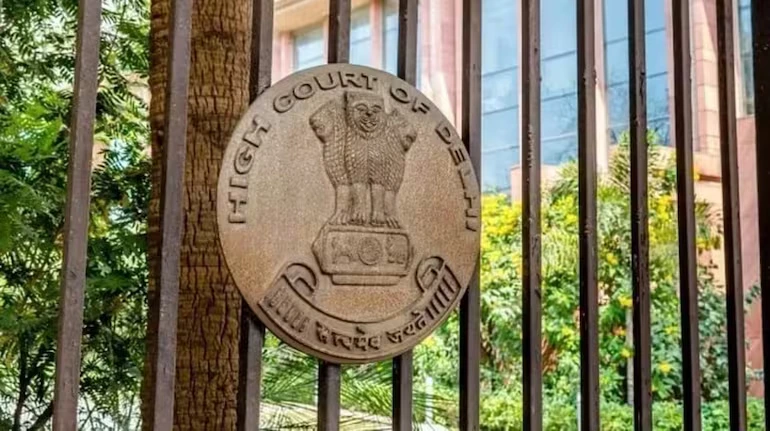
In a significant observation on the legal threshold for abetment of suicide, the Delhi High Court has held that a mere breakup in a relationship does not automatically constitute instigation under criminal law. The court made the remark while granting bail to a man accused of abetting the suicide of his former partner, who died five days after his marriage to another woman.
Justice Manoj Jain passed the order while hearing the accused’s bail plea. The woman allegedly died by suicide in October 2025, and the accused was arrested in November the same year.
In its February 24 order, the court underlined that for a charge of abetment of suicide under Section 108 of the Bharatiya Nyaya Sanhita (BNS) to stand, the alleged instigation must be of such gravity that it leaves the deceased with no option but to take the extreme step.
“Though broken relationships and heartbreaks have become common these days, mere breaking-up of relationship may not per se constitute instigation so as to make it a case of abetment,” the court observed.
The judge added that it would ultimately be for the trial court to determine whether the woman’s death was the result of provocation or instigation by the accused, or whether it stemmed from hypersensitivity or other personal reasons.
FCRF Launches Flagship Certified Fraud Investigator (CFI) Program
No Dying Declaration, Eight-Year Relationship
The court noted that there was no dying declaration left by the deceased. It also recorded that the couple had been in a relationship for nearly eight years, during which no formal complaint was made by the woman against the accused.
A key factor considered by the court was the “considerable time gap” between February 2025 — when the accused allegedly stopped communicating with her — and the date of her death later that year.
“Apparently, it seems to be a case of a broken relationship and quite possibly, the deceased, having come to know that the applicant has got married to someone else, has chosen to finish herself,” the order stated.
Claims of Religious Pressure
The woman’s father alleged that his daughter had been pressured by the accused to convert to his religion for marriage and that such coercion drove her to take her life. He claimed she died by hanging herself with a chunni.
However, the court noted that statements from the woman’s friends did not mention any allegation regarding forced religious conversion. Instead, they indicated that she was emotionally distressed.
The accused, in his defence, submitted that the relationship had been cordial for years but was opposed by the woman’s parents as they belonged to different religions. He claimed that it was her family that compelled her to end the relationship.
Bail and Legal Clarification
Considering the overall circumstances and the stage of investigation, the court granted bail to the accused on a personal bond and a surety bond of ₹25,000 each.
The High Court clarified that its observations were limited to the bail stage and would not influence the merits of the trial. Whether the essential ingredients of abetment are made out, the court said, would be decided after evaluation of evidence during trial.
The ruling once again underscores the judiciary’s consistent position that emotional turmoil or a failed relationship, by itself, may not satisfy the stringent legal requirements needed to establish abetment of suicide under criminal law.
About the author – Ayesha Aayat is a law student and contributor covering cybercrime, online frauds, and digital safety concerns. Her writing aims to raise awareness about evolving cyber threats and legal responses.
