
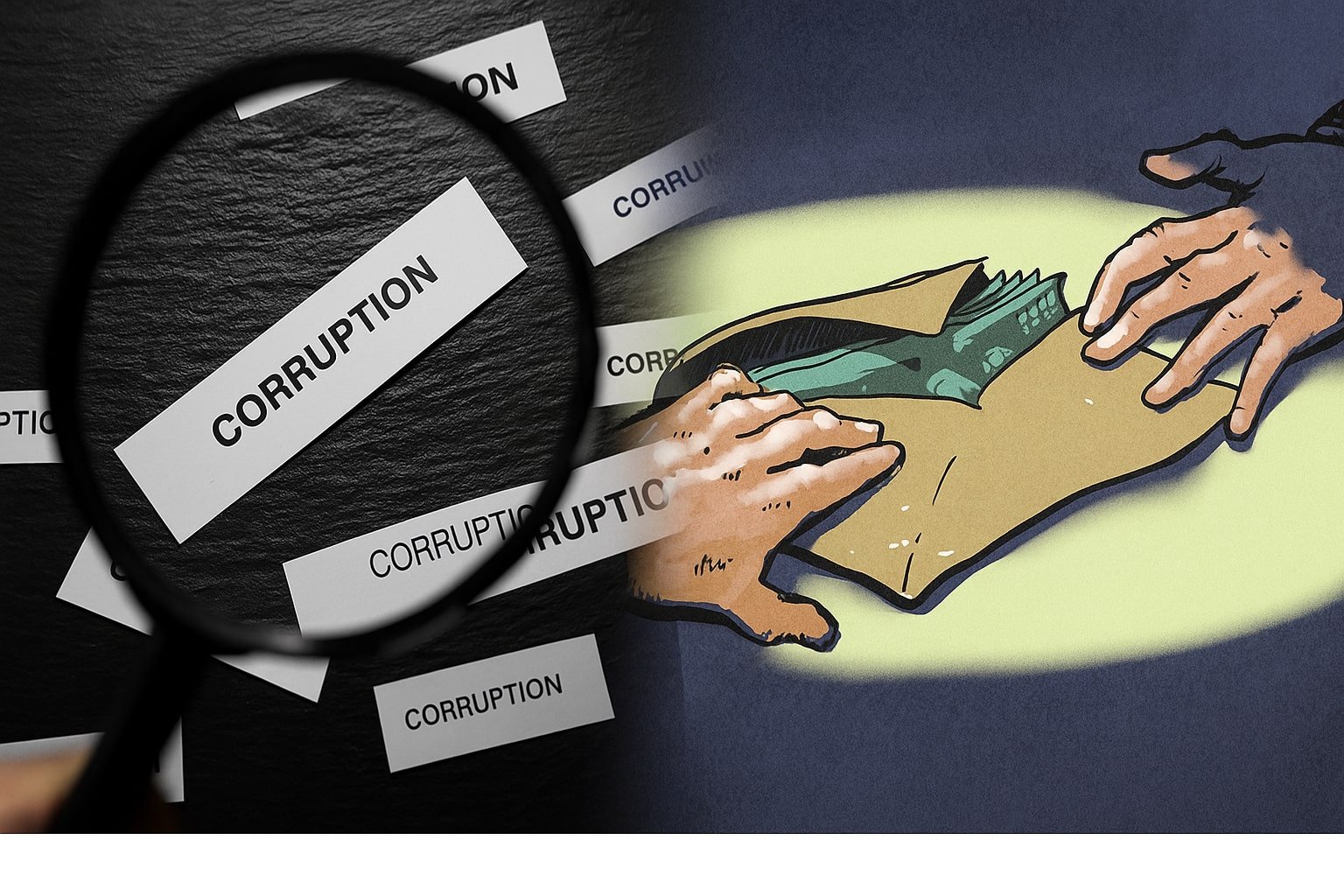
A case has been registered against a Jal Kal Department employee in Prayagraj for the alleged embezzlement of ₹73.61 lakh collected from residents towards water and sewerage charges, after an internal departmental probe found large-scale discrepancies between consumer payments and bank deposits.
The accused has been identified as Saurabh Nishad, a resident of Daraganj, who was working as a khalasi with the Jal Kal Department. An FIR has been lodged at Khuldabad police station following the completion of a preliminary inquiry that held him prima facie responsible for misappropriation of public money.
According to the complaint submitted to the police, the alleged embezzlement relates to collections made at a tax counter operated by the department at the Smart City building located within the municipal corporation premises. The counter is used for receiving water and sewer tax payments from residents across multiple wards of the city.
Certified Cyber Crime Investigator Course Launched by Centre for Police Technology
Departmental records indicate that Saurabh Nishad was entrusted with the responsibility of depositing the cash collected at the counter into designated Jal Kal Department bank accounts. However, during an internal audit, officials found that a significant portion of the collected amount never reached the department’s accounts.
The probe revealed that between July 2, 2024, and January 9, 2025, consumers deposited a total of ₹1,38,03,954 at the tax counter. Of this amount, only ₹64,42,907 was actually deposited in the department’s bank accounts, leaving ₹73,61,047 unaccounted for.
The discrepancy came to light after routine reconciliation of daily collections with bank deposit statements raised red flags. Following this, the Jal Kal Department initiated an internal inquiry to determine responsibility for the missing funds.
As part of the inquiry, payment receipts issued to consumers were matched with deposit records. The investigation found that payments made by 878 consumers were recorded through receipts but were never deposited in the official accounts, indicating systematic diversion of funds over several months rather than an isolated lapse.
After the irregularities were established, the department suspended Saurabh Nishad and ordered a detailed departmental inquiry. The inquiry report, submitted in early December, concluded that the employee had deliberately withheld the funds and failed to deposit them despite repeated procedural requirements.
Based on the findings, the department’s senior management authorised the filing of a criminal complaint. The FIR invokes provisions related to criminal breach of trust, misappropriation of public funds and cheating.
Officials said the investigation has also pointed to possible involvement of other employees, whose roles in facilitating or overlooking the irregularities are now under scrutiny. The police are expected to examine transaction logs, duty rosters and internal controls at the tax collection centre to determine whether the offence was committed with assistance or due to supervisory lapses.
Police sources said statements of departmental officials, audit staff and affected consumers will be recorded as part of the investigation. Bank records and receipt books linked to the period under review are also being examined to trace the movement of funds and identify any additional beneficiaries.
The case has raised concerns over internal controls in civic revenue collection systems, particularly at high-volume counters handling cash payments. Officials said steps are being taken to strengthen monitoring mechanisms, including tighter reconciliation protocols and enhanced digital tracking of payments.
Authorities indicated that further action, including arrests and recovery proceedings, will depend on the outcome of the police investigation. If evidence of collusion or organised misappropriation emerges, additional charges may be invoked.
The case adds to a growing list of financial irregularities being unearthed in urban local bodies, highlighting vulnerabilities in cash-based collection systems and the need for stricter oversight of public funds.
About the author – Rehan Khan is a law student and legal journalist with a keen interest in cybercrime, digital fraud, and emerging technology laws. He writes on the intersection of law, cybersecurity, and online safety, focusing on developments that impact individuals and institutions in India.
