
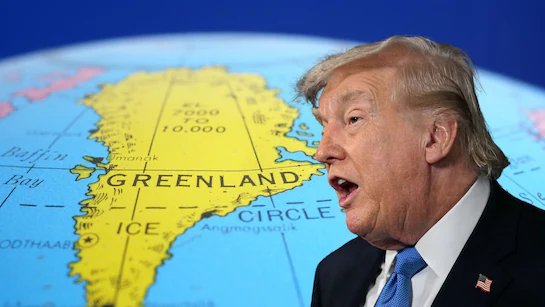
Against the backdrop of rising geopolitical friction over Greenland and the Arctic region, the United States has released a new National Defence Strategy, signalling a significant recalibration of its global security posture. The central message of the revised doctrine is unambiguous: American allies can no longer rely indefinitely on Washington for their defence and must take primary responsibility for safeguarding their own security interests.
The 34-page document, made public late Friday, marks the first major overhaul of US defence strategy since 2022. It arrives at a time when relations between Washington and several long-standing partners have grown increasingly strained over issues ranging from defence spending to trade and strategic priorities. Together, these shifts point towards a more transactional and burden-sharing approach to global security.
Certified Cyber Crime Investigator Course Launched by Centre for Police Technology
End of an era of dependency
The strategy explicitly notes that for decades, countries across Europe and Asia have depended heavily on American military power and strategic cover. That arrangement, the document suggests, is no longer sustainable in an era defined by simultaneous threats from multiple fronts. Going forward, allies are expected to invest more in their own defence capabilities and prepare to confront challenges posed by countries such as Russia, China and North Korea with reduced direct US involvement.
While reaffirming its commitment to cooperation and coordination, the United States has made it clear that security partnerships will be reshaped around shared responsibility rather than unilateral protection. Analysts say this could fundamentally alter the dynamics of alliances such as NATO and partnerships in the Indo-Pacific.
Greenland and strategic choke points
A notable feature of the new policy is its emphasis on strategically critical regions, including the Arctic, Greenland and the Panama Canal. The document stresses the need for “credible options” to ensure continued American military and commercial access to these areas, reflecting growing concern over expanding Russian and Chinese activity.
Greenland, in particular, has emerged as a focal point in the evolving Arctic competition. Melting ice caps have opened new maritime routes and increased access to untapped natural resources, turning the region into a new theatre of strategic rivalry. Experts say the renewed focus on Greenland goes beyond territorial interest and signals a broader contest for influence in the High North.
A calibrated stance on China
The defence strategy adopts a carefully balanced tone on China. It states that the objective is not to dominate or humiliate Beijing, but to prevent it from achieving regional or global dominance that could undermine the security of the United States and its partners. However, observers have noted the absence of any explicit reference to Taiwan, a departure from the 2022 strategy, which clearly supported Taiwan’s self-defence.
Strategic analysts believe this omission may be deliberate, reflecting a shift towards strategic ambiguity or a reassessment of priorities amid competing global pressures.
Unease among allies
The new doctrine has generated unease among several US partners. In Europe, debates around increased defence spending and military self-reliance have already intensified in recent years. Similar reassessments are underway in the Asia-Pacific, where countries are re-evaluating their security frameworks in light of shifting American commitments.
Supporters of the strategy argue that it is a necessary wake-up call, forcing allies to invest seriously in their own defence rather than free-riding on US power. Critics, however, warn that the approach could weaken collective security arrangements and expose smaller nations to greater risk.
Implications for the global order
The revised defence policy comes at a moment of profound global instability. The ongoing war in Ukraine, persistent turmoil in the Middle East, rising tensions in the Indo-Pacific and intensifying competition in the Arctic have combined to create a complex and volatile security environment.
Experts suggest the new US stance could reshape alliances over the coming decade. While greater self-reliance may strengthen some partners, questions remain over how effective collective defence mechanisms will be during major crises if responsibilities become more fragmented.
For now, the new defence strategy stands as more than a policy document. It reflects a broader shift in how the United States views its role in the world—one where cooperation continues, but the burden of security is no longer borne by Washington alone.
About the author – Rehan Khan is a law student and legal journalist with a keen interest in cybercrime, digital fraud, and emerging technology laws. He writes on the intersection of law, cybersecurity, and online safety, focusing on developments that impact individuals and institutions in India.
