

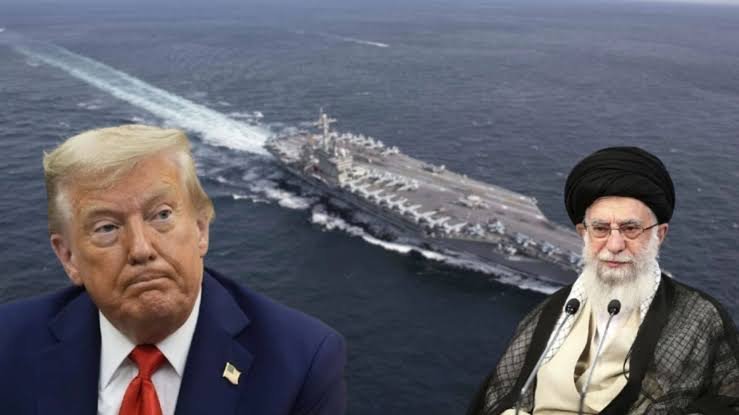

Tensions in the Middle East escalated sharply after Iran warned that any military strike against it would be treated as an act of “all-out war,” following a visible expansion of United States military assets in the region. The warning comes amid the movement of American naval and air forces toward strategic locations in the Persian Gulf and surrounding waters, signalling a heightened state of readiness as regional volatility deepens.
Tehran Signals Readiness for Large-Scale Retaliation
Iranian officials said the country’s armed forces have been placed on high alert in response to what they described as a growing military build-up. Tehran indicated that while it does not seek confrontation, it would respond decisively to any form of attack, regardless of its scale or intent. The statement reflects increasing concern within Iran that recent deployments could mark preparation for direct military action.
Certified Cyber Crime Investigator Course Launched by Centre for Police Technology
US Expands Naval and Air Presence in the Region
The United States, meanwhile, has confirmed the repositioning of significant military hardware. A carrier strike group, including an aircraft carrier and accompanying destroyers, has been dispatched toward the region and is expected to integrate with existing naval forces operating in the Gulf and nearby waters. The deployment adds thousands of additional personnel to an already substantial American presence in the Middle East.
Washington Describes Deployments as Deterrent Measures
In addition to naval movements, fighter aircraft have been deployed to reinforce air capabilities in the region. Allied forces have also taken precautionary steps, with partner nations sending combat aircraft to Gulf states in what has been described as a defensive posture. Analysts note that the scale and pace of the deployments mirror previous episodes that preceded major regional escalations.
Backdrop of Earlier Strikes and Strategic Tensions
The renewed tension follows a period of sustained hostility linked to earlier strikes aimed at Iran’s nuclear and missile infrastructure. Those actions, which Tehran has repeatedly condemned, have left relations between Iran and Western powers strained. The current military movements have revived fears of a wider confrontation that could draw in multiple actors across the Middle East.
Complicating the situation further is Iran’s internal unrest. The country has witnessed widespread protests in recent weeks, triggered by economic hardship and political grievances. Human rights groups and activists claim the crackdown on demonstrations has resulted in thousands of deaths and mass detentions, figures that are significantly higher than official accounts released by Iranian authorities.
Iran Blames Foreign Interference, Warns of Regional Fallout
Iranian leadership has repeatedly linked the unrest to foreign interference, accusing external powers of exploiting domestic tensions to weaken the state. Military commanders have warned that any attack on Iran would result in retaliation against American assets and interests across the region, including military bases and allied infrastructure.
Risk of Wider Conflict and Global Implications
The convergence of external pressure and internal instability has made the situation particularly volatile. Regional experts caution that miscalculations on either side could rapidly spiral into a broader conflict, with severe consequences for global energy markets and international security. The Middle East remains a critical corridor for oil and trade, and any disruption could have far-reaching economic implications.
Diplomatic efforts to de-escalate tensions appear limited at present, with both sides maintaining firm public positions. While back-channel communication is believed to be ongoing, there are few visible signs of a breakthrough that could ease the standoff.
