

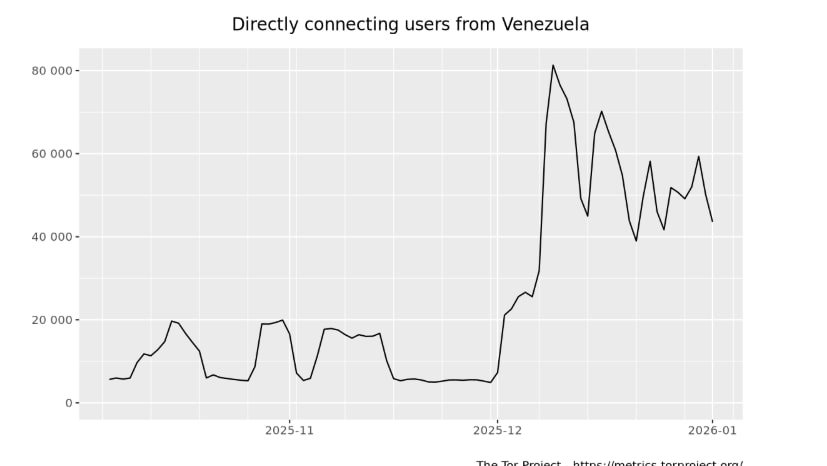

As power outages rippled across Caracas and state systems faltered, Venezuelans quietly altered how they moved through the digital world. A spike in encrypted, anonymous internet use coincided with cyber disruptions, political upheaval and a rare public acknowledgment of U.S. cyber capabilities, offering a fragmented but revealing portrait of a country under acute informational strain.
A Cyber Incident at the Center of the Oil State
In mid-December, Venezuela’s state-owned oil company, Petróleos de Venezuela S.A. (PDVSA), disclosed that it had been hit by a cyberattack that disrupted elements of its export operations. Company officials said the intrusion affected only administrative systems and did not halt oil production or shipments. Security protocols, PDVSA added, prevented supply interruptions.
The company framed the incident as more than a technical breach. In official statements, PDVSA described the cyberattack as an act of aggression, linking it to what it called longstanding U.S. efforts to seize Venezuelan oil assets. It went further, directly accusing the U.S. government of carrying out the attack—an allegation Washington has not publicly confirmed.
The episode unfolded against a backdrop of heightened geopolitical tension, with Venezuela’s oil sector long at the center of sanctions, legal disputes and diplomatic standoffs.
Darkness in Caracas and a Rare Admission
Weeks later, reports emerged of a far more dramatic intervention. According to a report published by POLITICO, President Donald Trump suggested that the United States had used cyber or other technical capabilities to cut power in Caracas during strikes that led to the capture of Venezuelan President Nicolás Maduro.
“If confirmed, it would be a rare public use of U.S. cyber power,” the report noted. Trump, speaking at a press conference at Mar-a-Lago, described the capital being plunged into darkness due to American “expertise.” “It was dark, the lights of Caracas were largely turned off due to a certain expertise that we have,” he said. “It was dark, and it was deadly.”
The United States subsequently announced that Maduro and his wife had been taken to New York to face federal charges, which Maduro denies. Trump said the U.S. would temporarily oversee Venezuela and restore oil production.
Independent internet monitoring group NetBlocks reported confirmed losses of internet connectivity in parts of Caracas, corresponding with power cuts during the U.S. military operation.
The Turn to Anonymity Online
As these events unfolded, a quieter shift appeared in Venezuela’s digital behavior. Analysis of Tor Metrics data showed a sharp and sustained rise in the number of users accessing the Tor network from within the country during the period of power disruptions and political upheaval.
Such patterns have been observed in other crises. When ordinary communication channels are perceived as unsafe or compromised, citizens often migrate toward tools that offer anonymity and resistance to surveillance. Tor, which routes traffic through multiple relays to obscure users’ identities, has historically seen usage spikes during protests, post-election unrest and internet crackdowns.
Reports of blocking, throttling or selective disruption of social media platforms, messaging apps and independent news sites further pushed users toward alternative pathways to information, including foreign media and diaspora networks.
A Behavioral Shift, Not a Glitch
The Tor data did not show a brief anomaly, but a sudden jump to several times the previous baseline, sustained over time. Analysts say this pattern is consistent with a behavioral change rather than a temporary technical disruption.
In similar situations elsewhere, activists, journalists and ordinary users turn to encrypted networks to avoid profiling, organize safely, leak evidence or simply read the news without being monitored. Digital rights groups and exile communities often amplify this shift by circulating guides and tutorials, accelerating adoption once a critical mass is reached.
In Venezuela’s case, the surge suggested tens of thousands of people attempting to regain some measure of control over what they could see, say and share online—at a moment when doing so through conventional channels had become risky.
