

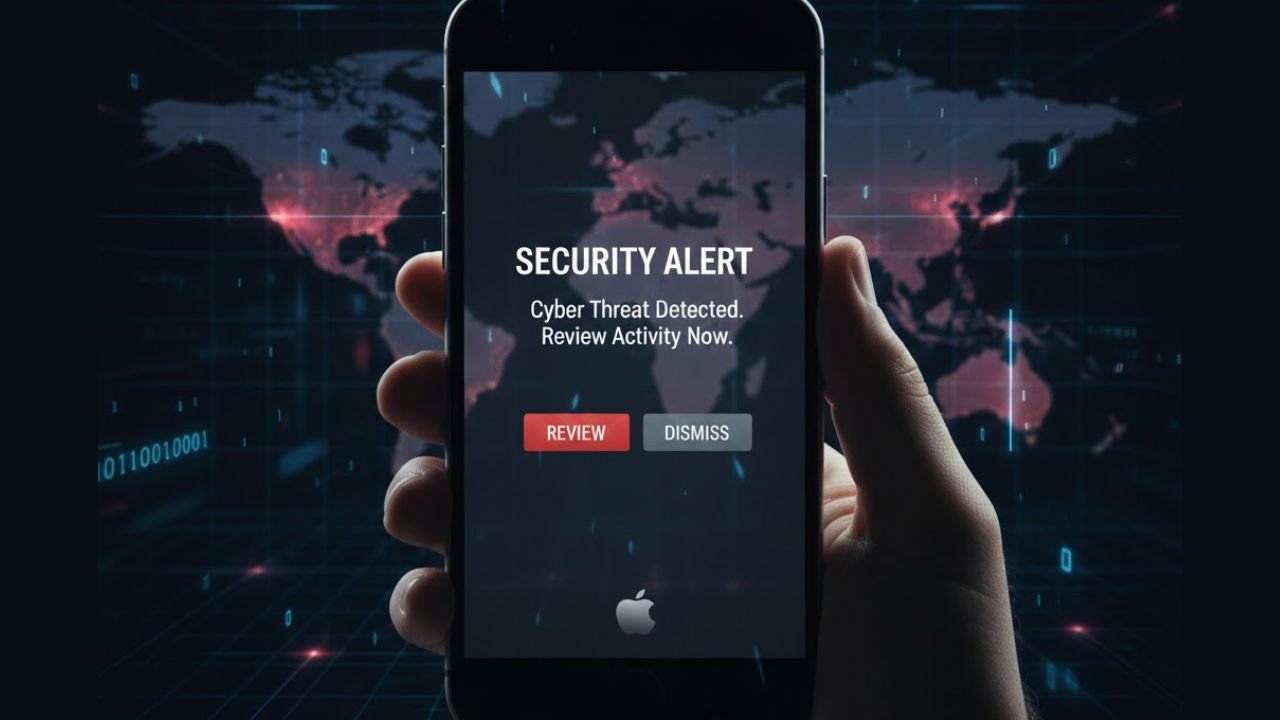

Apple has sent a new round of cyber threat notifications to users in 84 countries, marking one of its most extensive warning cycles yet as the company intensifies efforts to defend customers from state-aligned hacking groups.
The alerts, issued on December 2, notified recipients that their devices may have been singled out by government-linked actors—campaigns that Apple, like several other major tech companies, has been tracking for years. While the company has grown more proactive in flagging such threats, the latest statement offered few specifics: no details on the number of affected users, the nature of the attempted intrusions, or the states believed to be behind them.
Apple’s caution reflects a broader challenge in the cybersecurity arena, where visibility into highly specialized espionage operations often remains partial and attribution is fraught.
A Pattern of Escalating State-Linked Intrusions
The Cupertino-based company is one of several firms, including Meta and Google, that have developed internal threat intelligence units dedicated to identifying when users may be targeted by advanced intrusion tools. Apple typically issues its warnings when its analysts believe an attack bears the hallmarks of a state-backed campaign—high sophistication, narrow targeting, and the use of methods not commonly deployed by cybercriminal groups.
Previous rounds of notifications from Apple have drawn sharp attention from governments and rights organizations. The European Union, for instance, launched inquiries after several senior officials were notified that they may have been targeted by spyware. Those investigations highlighted how commercial hacking tools—Pegasus being among the most infamous—have reshaped the geopolitical and domestic landscape of digital surveillance.
Apple’s latest notification drive suggests that such activity remains widespread and perhaps intensifying.
Growing Pressure on Tech Platforms to Respond
As governments expand digital monitoring capabilities, global tech platforms have increasingly found themselves in the role of sentry—detecting signs of espionage campaigns and notifying individuals who may not otherwise realize they were under surveillance.
Apple, in particular, has sharpened its public posture on these issues. In recent years, it has sued NSO Group, the Israeli firm behind Pegasus spyware, and introduced technical features designed to harden devices against sophisticated exploitation. The company also rolled out its “Lockdown Mode” for high-risk users, including journalists, activists and political dissidents.
Despite these measures, the notifications continue to span a striking geographic range. Apple said that since it began issuing such alerts, it has notified users in more than 150 countries—an acknowledgment of how widely such tools have spread, and how many actors now wield them.
Surveillance, Secrecy and the Limits of Public Awareness
For security analysts, the absence of detailed information in Apple’s latest warning is not surprising. Public disclosures can tip off adversaries to detection capabilities or risk exposing users whose identities are protected for safety reasons. Yet the lack of transparency also means that targeted individuals—sometimes journalists, political opponents, or civil society leaders—are often left without clear avenues for recourse.
The tension between discretion and accountability continues to shape debates around digital surveillance. Rights groups have long argued that the expansion of state-backed hacking demands stronger international norms, more oversight, and firmer restrictions on spyware vendors. Governments, meanwhile, often maintain that national security imperatives justify tight secrecy.
Apple’s latest wave of notifications serves as a reminder that the underlying landscape remains largely unchanged. The tools of digital intrusion continue to proliferate, their operators remain difficult to trace, and the responsibility for alerting potential victims still rests heavily with private companies.
For users across 84 countries, the warnings may be the only indication that someone—somewhere—attempted to reach into their digital lives.
