

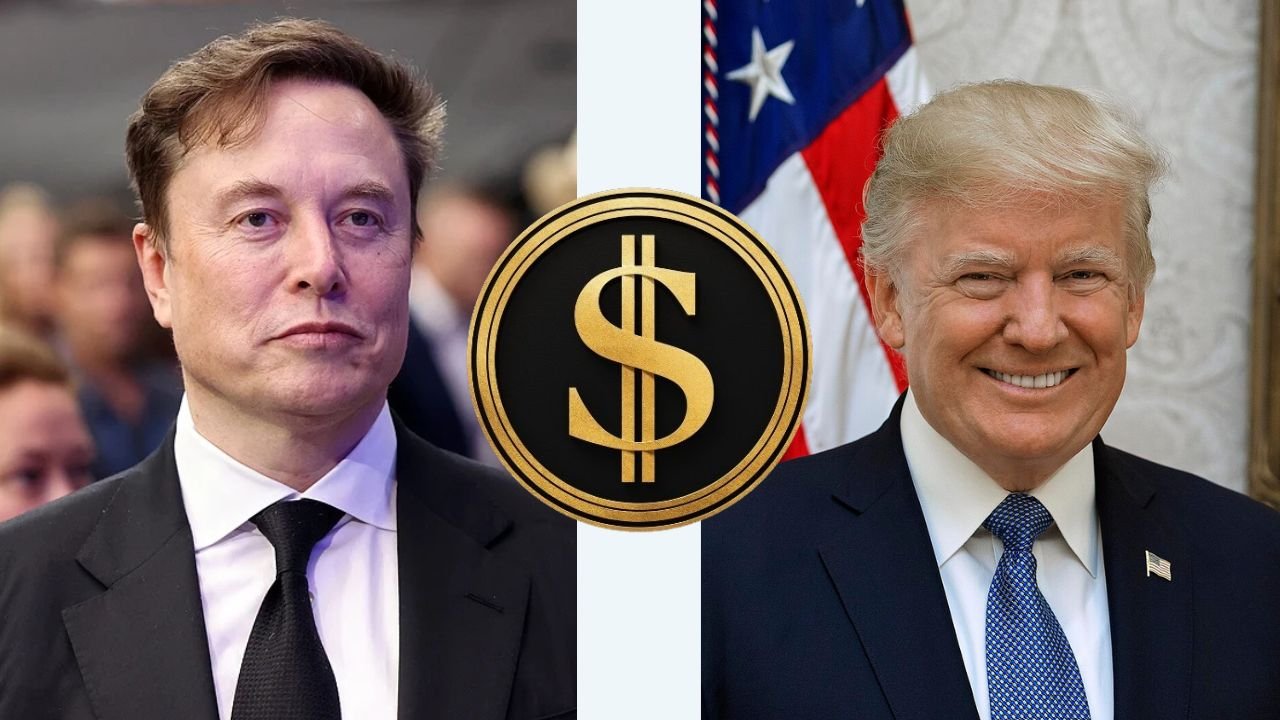

Washington, D.C. — The Department of Government Efficiency, the high-profile cost-cutting venture championed by President Donald Trump and billionaire Elon Musk at the outset of Trump’s second term, has been quietly dismantled eight months before its mandate was set to expire. The move, confirmed by senior administration officials, effectively ends one of the most unusual political experiments in modern federal governance — a venture that fused Silicon Valley ambition with Trump-era disruption, and promised to “chainsaw bureaucracy” at unprecedented scale.
Algoritha Prepares You for Seamless DPDP Compliance — Contact Us for Complete Implementation Support
“That doesn’t exist,” Office of Personnel Management Director Scott Kupor told Reuters when asked about DOGE’s status, explaining that its remaining functions had been absorbed into existing federal structures. With no formal announcement, the agency’s dissolution appears to be both a political coda and, perhaps, the administration’s most literal cost-saving measure.
A High-Velocity Vision Built on Unverified Savings
Created by executive order in January, DOGE was conceived as a lean, aggressive unit designed to remake government operations through deep budget cuts, rapid staff reductions, and sweeping reorganizations. At its peak, Musk — who served as the department’s figurehead in its early months — touted DOGE as a landmark effort to modernize federal operations and eliminate bureaucratic waste. At February’s Conservative Political Action Conference, he brandished a chainsaw and declared the unit “the chainsaw for bureaucracy,” an image that came to define DOGE’s ethos.
Yet behind the theatrics, independent analysts struggled to verify the agency’s bold claims. DOGE’s website continues to cite approximately $214 billion in savings, figures that a Politico review found were based on theoretical maximum contract values rather than actual reductions. No comprehensive public accounting was ever released, and the absence of detailed documentation has left many economists unconvinced that the agency achieved even a fraction of what it advertised.
By May, the department had overseen more than 200,000 federal layoffs and facilitated 75,000 buyouts, disruptions that reverberated across agencies and generated criticism from unions, career officials, and budget experts. Whether those reductions translated into meaningful long-term savings remains unclear.
Leadership Fractures and a Sudden Disappearance
DOGE’s unraveling began after a public rupture between Trump and Musk in May, prompting Musk to leave Washington and sever formal ties with the department. His close aide, Steve Davis, departed soon after. What followed was a rapid dispersal of DOGE’s personnel — not into unemployment, but into new, often influential roles across the administration.
Joe Gebbia, the Airbnb co-founder recruited to work on DOGE’s design initiatives, is now leading Trump’s new National Design Studio, overseeing digital remodeling efforts that include law enforcement recruitment platforms and the president’s drug pricing campaign. Edward Coristine, a DOGE staffer known internally as “Big Balls,” has joined him.
Others have migrated into critical policy domains:
- Amy Gleason, DOGE’s acting administrator, is now an adviser to the Secretary of Health and Human Services.
- Zachary Terrell has become the department’s chief technology officer.
- Rachel Riley now works at the Office of Naval Research.
- Jeremy Lewin, who helped Musk dismantle USAID, now oversees foreign assistance at the State Department.
- Scott Langmack has taken on a role developing AI tools to analyze federal regulations for elimination.
The diffusion of personnel — many without traditional policy backgrounds — has raised questions about how much DOGE’s ethos may continue to shape federal decision-making even after the agency’s demise.
A Legacy of Disruption Without Closure
Despite its dramatic introduction, DOGE’s end arrived without ceremony. The government-wide hiring freeze that accompanied its early months has lifted, and Kupor confirmed there is no longer any workforce-reduction target. Trump himself has begun referring to DOGE in the past tense, and spokespeople have offered only broad assurances that the president continues to “deliver on reducing waste and fraud.”
For an agency that promised radical transformation, its quiet dissolution has amplified debates that have defined the Trump-Musk partnership from the start: Can Silicon Valley methods be imposed on sprawling government institutions? Can “efficiency” be measured without verifiable accounting? And what becomes of a project driven as much by personality as by policy?
Inside Washington, DOGE’s disappearance feels less like the end of a reform experiment than a pivot — a redistribution of its operatives across the government, carrying with them the disruptive ambitions of the short-lived agency Musk once led with showmanship and zeal.
A Broader Reckoning Still to Come
With DOGE gone, budget analysts, federal employee groups, and congressional overseers expect future inquiries into how the agency calculated its savings, how decisions about layoffs were made, and how much authority was delegated to outside technology leaders.
For now, the administration appears content to let DOGE fade from the foreground, replaced by more traditional governance structures. Yet the questions it generated — about transparency, accountability, and the limits of private-sector management philosophy in public service — continue to linger.
Whether DOGE will be remembered as a bold, if flawed, disruption or a cautionary tale of governance experimentation remains, much like its final months, an unresolved question.
