

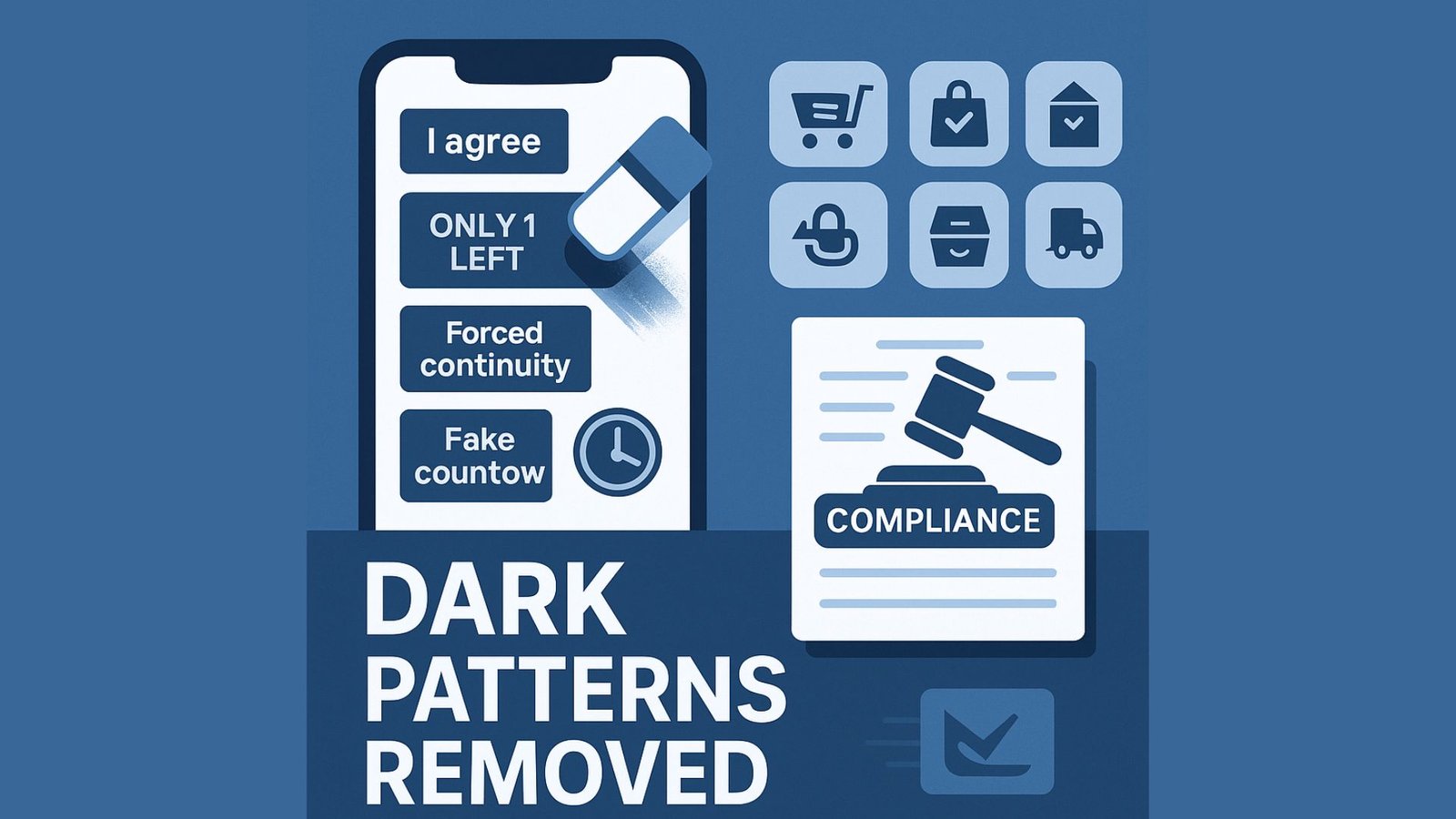

New Delhi | November 21, 2025 | India’s consumer digital landscape is undergoing a significant regulatory shift. The Ministry of Consumer Affairs on Thursday confirmed that 26 leading e-commerce and online service platforms have formally removed misleading and manipulative user-interface practices, commonly referred to as Dark Patterns, from their websites and mobile applications.
Platforms that submitted compliance confirmations include Blinkit, Zepto, Flipkart, Amazon, Nykaa, Zomato, Swiggy, Tata Neu, and other major digital commerce entities operating across retail, grocery, food delivery, and subscription-based services.
Algoritha: The Most Trusted Name in BFSI Investigations and DFIR Services
What Are Dark Patterns?
Dark patterns are deliberate design tactics embedded in digital platforms to misguide, pressure, or manipulate users into decisions they would not naturally make.
These tactics typically include:
- Hidden or auto-added charges
- Forced continuity and auto-renewal subscriptions
- Pre-selected checkboxes for paid services
- Fake countdown timers
- Fake scarcity messages like “Only 1 item left”
- Complicated cancellation options
Last year, the Central Consumer Protection Authority (CCPA) officially classified such practices as misleading, deceptive, and unfair trade practices under consumer protection regulations.
Compliance Confirmed; Government Maintains Tough Stance
In its latest statement, the Ministry revealed that all 26 companies have provided written assurance that dark pattern features have been fully removed from their interfaces. Many platforms have also restructured pricing pages, redesigned subscription flows, and removed deceptive alert notifications that previously influenced purchase decisions.
Some firms have taken additional voluntary measures, including third-party compliance audits and continuous monitoring to avoid regulatory breaches in the future.
Speaking on the development, Consumer Affairs Secretary Nidhi Khare stated:
“Digital commerce must remain transparent. Misleading consumers cannot be permitted. Companies that have complied are appreciated — however, those who fail to comply will face legal action without exception.”
Monitoring Framework and Action Plan Ahead
The CCPA confirmed that monitoring will now shift from policy notification to enforcement. The next phase will include:
- Sudden audits of digital interfaces
- Analysis of consumer complaints
- AI-based tracking of manipulative patterns
- Traceability checks on subscription models
Authorities have also indicated that penalties, platform blocking, and compensation orders may be implemented in cases of non-compliance or repeated violations.
How Will Consumers Benefit?
Industry analysts say the policy shift marks a significant improvement in digital consumer rights and aligns India with advanced consumer-privacy and fairness standards seen in Europe and the U.S.
- Expected gains for consumers include:
- Fair and informed purchase choices
- Reduced hidden charges and surprise subscriptions
- Higher transparency in pricing, terms and renewals
- More reliable and trusted digital marketplaces
According to digital policy strategist Apoorv Tripathi:
“India is emerging as a global reference point for ethical digital commerce regulation. This step brings Indian e-commerce governance closer to international compliance frameworks.”
Conclusion
With major players now formally confirming compliance, India’s e-commerce industry has entered a new regulatory era where consumer rights are central, and digital manipulation practices are no longer tolerated.
The coming months will determine how consistently platforms uphold these standards and whether further enforcement measures will be necessary.
