

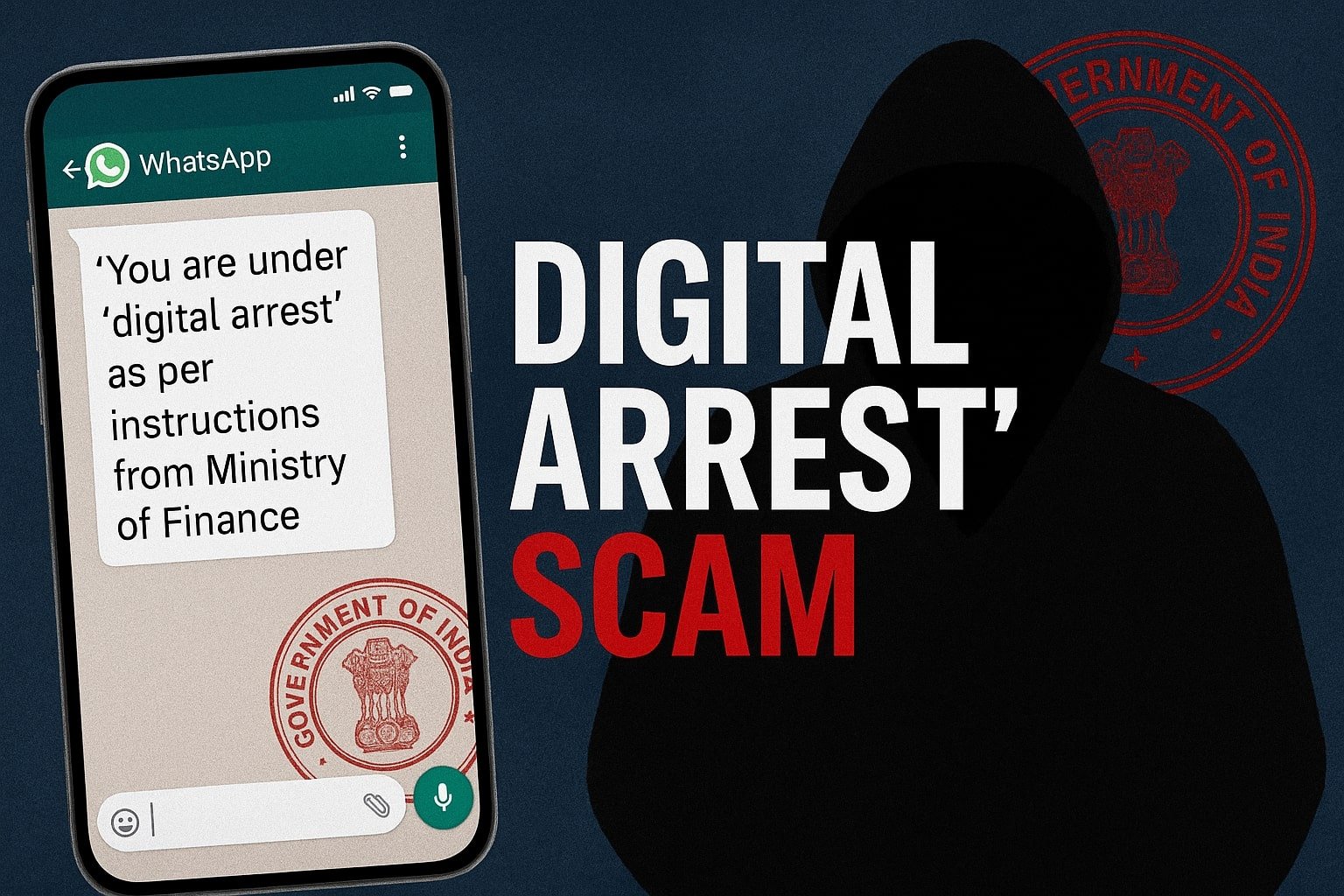

In a shocking case of cyber fraud, a 62-year-old retired Life Insurance Corporation (LIC) officer from Pune was duped of ₹99 lakh by scammers impersonating senior government officials. The fraudsters used the name of Finance Minister Nirmala Sitharaman, forged arrest warrants with fake signatures, and fabricated official seals to lend credibility to their deception.
The case has once again raised serious concerns about the rising trend of impersonation-based cybercrimes in India, where con artists exploit fear and official identity to target unsuspecting citizens, particularly senior citizens.
How the Deception Began
The fraud began in October when the victim received a call from a person claiming to be an officer from the “Data Protection Agency.” The caller alleged that the woman’s Aadhaar-linked mobile number was involved in illegal financial transactions.
Moments later, the call was transferred to another person posing as “Senior Police Officer George Mathew,” who accused her of money laundering and warned that all her bank accounts would be frozen.
Using a combination of threats and fabricated official communication, the fraudsters convinced the woman that she was under criminal investigation.
Fake Arrest Warrant and the ‘Digital Arrest’ Threat
To intensify the fear, the scammers sent a forged arrest warrant via WhatsApp. The document bore fake signatures of Finance Minister Nirmala Sitharaman and a counterfeit government seal. The criminals told her that, due to her age, she was being placed under “digital arrest” — meaning she could not step out or contact anyone until her “verification” with the Reserve Bank of India (RBI) was complete.
Under pressure and terrified of potential legal consequences, the woman followed the scammers’ instructions and transferred ₹99 lakh in multiple installments to several bank accounts, believing it was for RBI scrutiny.
Within hours, the funds were siphoned through multiple accounts, making tracing extremely difficult.
Discovery and Complaint
The fraud came to light when the victim tried to contact the callers later, only to find all numbers switched off. Realizing she had been conned, she immediately lodged a complaint with the Pune Cyber Police.
Preliminary investigation revealed that the cyber gang was operating from Thane near Mumbai. Police have begun tracking the linked bank accounts, phone numbers, and communication patterns to identify and apprehend the culprits.
Police Advisory and Citizen Awareness
Pune Cyber Police have issued a strong warning to citizens, emphasizing that no government agency, the Reserve Bank of India (RBI), or telecom authority such as TRAI ever asks individuals for personal or financial details over WhatsApp, video calls, or messages.
Authorities clarified that the concept of “digital arrest” is completely fictitious — a psychological tactic designed by fraudsters to instill fear and manipulate victims into obedience.
Citizens have been urged to report any suspicious call or message immediately to the national cyber helpline 1930 or through the official portal cybercrime.gov.in.
Changing Nature of Cybercrime
Experts note that cybercriminals have evolved from simple phishing to more complex, emotion-driven manipulation. By invoking the authority of high-profile government officials, they exploit victims’ fear of legal trouble.
The elderly and retired individuals are increasingly being targeted, as they tend to trust official communication and are often less familiar with digital fraud tactics.
This case is one of several recent instances where scammers used government names and symbols to create fake narratives of arrests, tax violations, or regulatory investigations.
What Needs to Be Done
Financial experts believe stronger safeguards within the banking ecosystem are urgently required. Banks must proactively educate customers through regular SMS alerts, workshops, and public campaigns about emerging online fraud patterns.
At the policy level, cybersecurity professionals have recommended setting up a centralized national task force to coordinate investigations and crack down on these organized cybercrime networks that operate across multiple states.
Conclusion
The Pune incident serves as a stark reminder of how fear, authority, and technology can combine to devastate unsuspecting citizens. Even the name of the country’s Finance Minister was exploited to give the scam legitimacy.
Law enforcement agencies have registered a case against unidentified suspects and launched a detailed investigation. Officials say the network has already been partially identified, and arrests are expected soon.
In an age of increasing digital dependence, the rule remains simple yet vital — never trust unsolicited calls demanding money transfers, no matter how official they may sound.
