

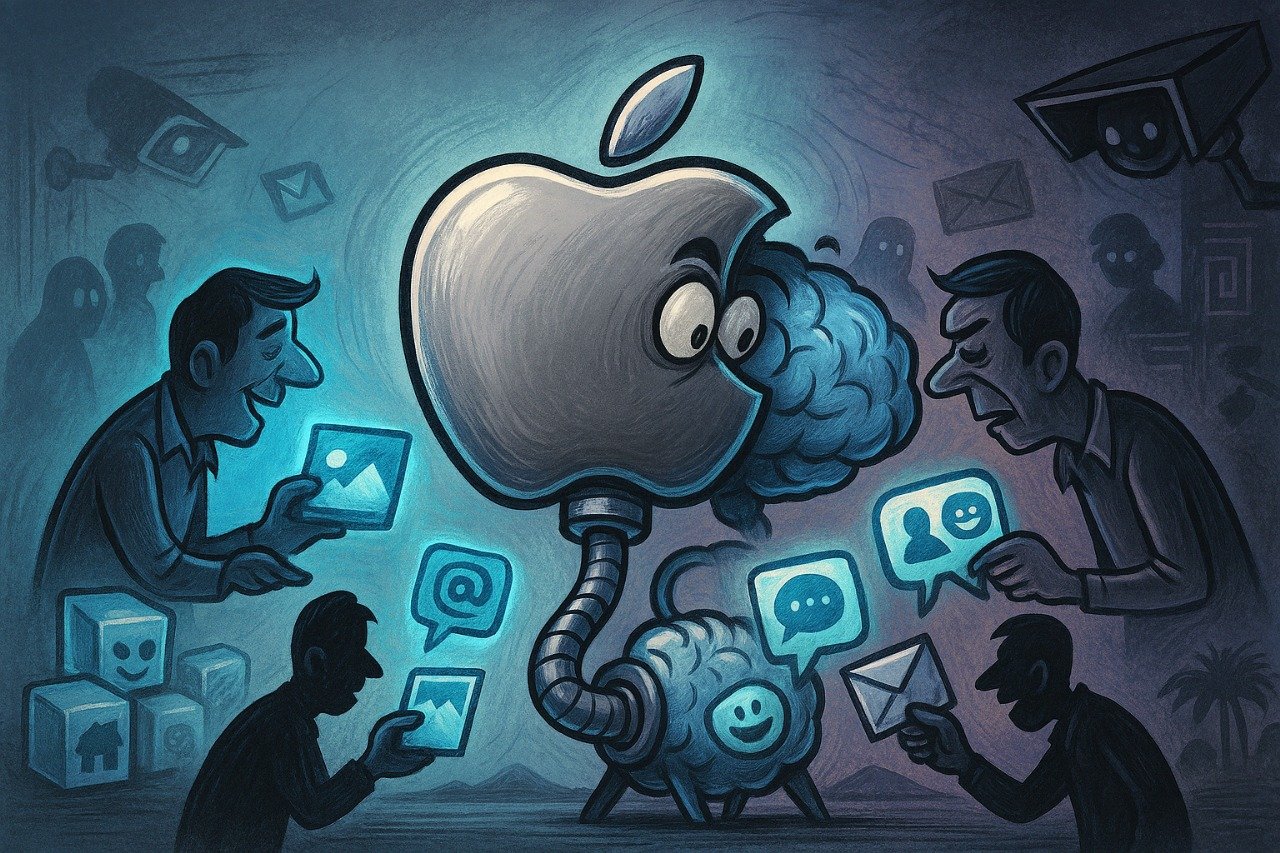

Apple has revealed its plan to incorporate user data into AI training while maintaining its hallmark focus on privacy. According to a detailed blog post from the company, Apple will enhance “Apple Intelligence” features by analyzing user behavior patterns without directly accessing or storing personal content.
The technique involves comparing synthetic data—artificially generated samples that mimic the structure of real-world content—with actual user data, but crucially, only on the user’s device. By doing so, Apple believes it can improve the realism and relevance of AI-driven outputs like summarizations, writing tools, and personalized suggestions.
The Role of Synthetic Data in Training AI
Currently, Apple’s AI systems rely on synthetic data that mimic real conversations, emails, and interactions. These synthetic examples are generated in ways that resemble real user behavior but contain no actual user-generated content. While useful for initial training, Apple acknowledged a key limitation—synthetic data lacks the nuanced context of real-world trends.
ALSO READ: Call for Cyber Experts: Join FCRF Academy as Trainers and Course Creators
To address this, Apple devices that participate in its Device Analytics program will compare synthetic messages against small samples of the user’s own messages. The AI does not see the content but identifies which types of messages are most similar, allowing Apple to refine future data generation without invading privacy.
“Differential Privacy” Gets a Functional Upgrade
The process is grounded in Apple’s commitment to “differential privacy”—a cryptographic approach that allows the company to collect useful patterns without identifying individuals. This ensures data remains anonymous even when analyzed at scale. Apple plans to expand the use of this approach to various Apple Intelligence tools including Genmoji (custom emoji creation), Image Playground, Visual Intelligence, and more.
In one practical example, Apple may train its systems using synthetic messages like “Would you like to play tennis tomorrow at 11:30AM?”—which are then embedded and compared against user behavior. These embeddings capture metadata such as topic, length, and tone, but not the actual text itself.
A Privacy-Preserving AI Future
Apple’s hybrid approach—fusing synthetic and user-specific data insights—could set a new precedent in ethical AI development. While companies like Google and Meta have faced scrutiny over aggressive data usage, Apple’s transparency and user-controlled mechanisms provide a path toward personalization without surveillance.
As Apple prepares to roll out these refined models, the industry will be watching closely to see if privacy-preserving intelligence can truly deliver on its promise without trade-offs.
