
Stay ahead with our breaking stories and exclusive coverage prioritized on Google.
Add The420 on Google →China has successfully launched four satellites into orbit, including two designed to test space-based cloud technology, marking another step in the country’s efforts to expand its computing and Earth-observation capabilities beyond the ground.
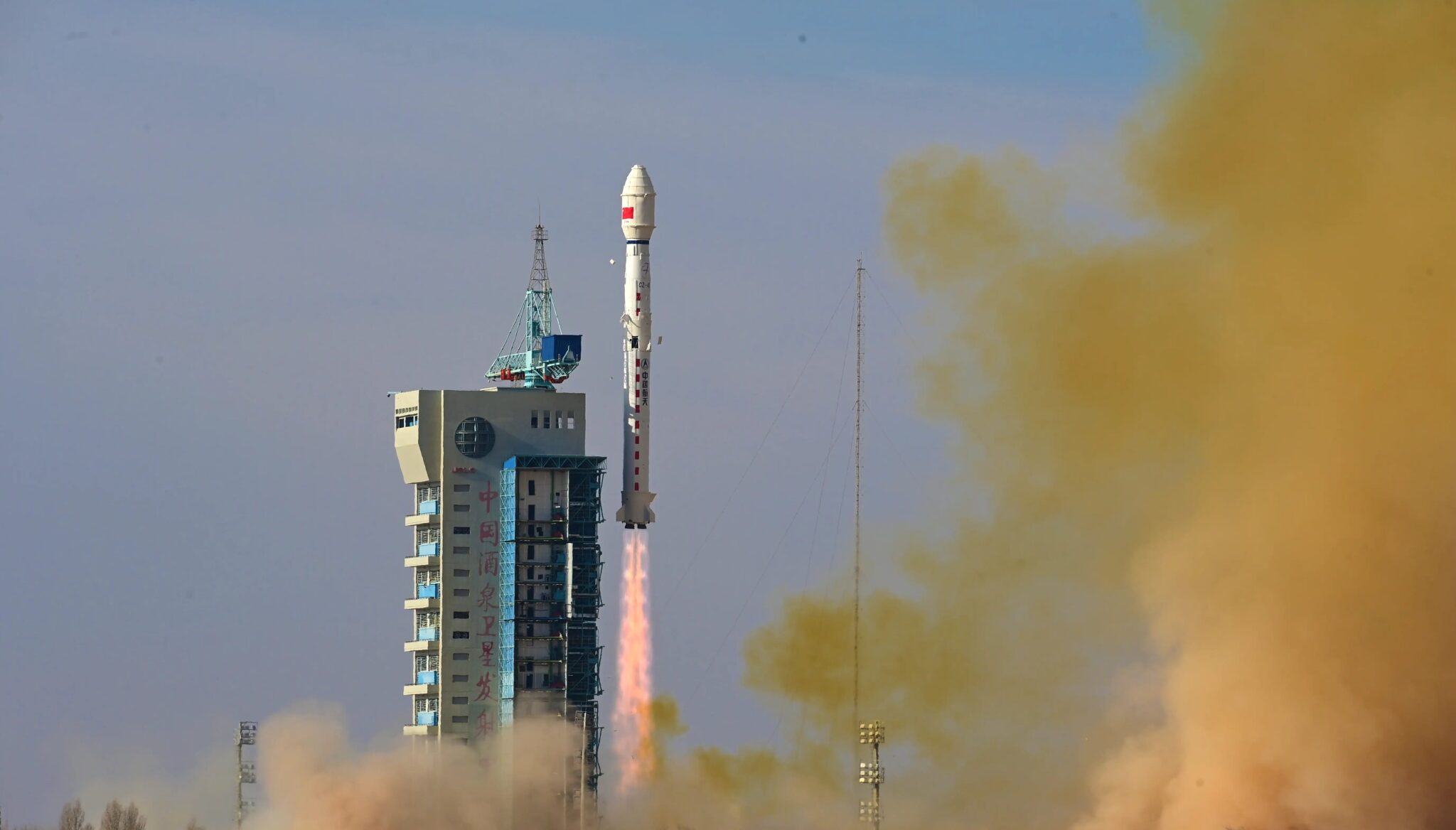
The satellites were carried aboard a Long March-6C rocket, which lifted off from the Taiyuan Satellite Launch Centre in northern China’s Shanxi province at 11:53 AM local time on Sunday, November 29, 2026.
According to Chinese state news agency Xinhua, all four satellites entered their planned orbits, and the launch mission was declared successful.
The payload included two space-based cloud technology verification satellites, designated 01 and 02, alongside the AIRSAT-12 and AIRSAT-13 Earth-observation satellites.
The mission marked the 683rd flight of China’s Long March rocket family, highlighting the country’s continuing investment in satellite technology and space infrastructure.
FCRF Launches Certified Chief Risk Officer (CRO) Program for India’s Risk Leaders
Four Satellites Placed Into Orbit In Single Mission
The Long March-6C rocket carried four satellites during Sunday’s launch, combining technology demonstration equipment with Earth-observation systems.
Two satellites were identified as Space-Based Cloud Technology Verification 01 and 02.
The remaining spacecraft, AIRSAT-12 and AIRSAT-13, are associated with China’s expanding Earth-observation capabilities.
China Central Television (CCTV) independently confirmed the successful launch and the deployment of all four spacecraft into their designated orbits.
The mission was conducted from Taiyuan, one of China’s principal satellite launch centres, which regularly supports launches into orbits suitable for observing the Earth.
The Long March-6C is a medium-lift launch vehicle developed by the Shanghai Academy of Spaceflight Technology, part of the state-owned China Aerospace Science and Technology Corporation.
The rocket made its first successful flight in May 2024, when it also carried four satellites into orbit.
Its latest mission demonstrates continued use of the launch vehicle for deploying multiple spacecraft during a single flight.
However, placing satellites into orbit is only the initial stage of a mission. Their operational performance must be established through subsequent testing.
What Is Space-Based Cloud Computing And Why Does It Matter?
One of the most interesting aspects of Sunday’s launch involves the two experimental cloud technology satellites.
Cloud computing normally relies on large data centres on Earth. These facilities contain servers that store information, run applications and process digital workloads.
Space-based cloud computing explores whether some of these functions can be performed using computing systems installed aboard satellites.
For example, conventional Earth-observation satellites may collect images and transmit substantial amounts of information to ground stations for processing.
With more advanced onboard computing, certain information could potentially be analysed before being transmitted to Earth.
This could reduce the amount of raw data requiring transmission and help deliver useful information more efficiently.
Researchers are also exploring whether groups of interconnected satellites could share computing tasks, creating distributed processing networks in orbit.
However, such technology faces considerable engineering challenges.
Satellites must operate with limited electrical power, manage heat in the space environment and maintain reliable communication links.
Equipment also needs protection against radiation and other conditions that can damage electronic components.
The two Chinese satellites are intended to verify aspects of space-based cloud technology, but the announcement did not disclose their computing capacity, detailed experiments or expected operational lifespan.
Their launch should therefore not be interpreted as proof that China has already established a fully operational orbital cloud-computing network.
Earth-Observation Satellites Expand China’s Space Capabilities
The mission also deployed AIRSAT-12 and AIRSAT-13, two satellites associated with remote sensing.
Remote sensing involves collecting information about the Earth’s surface from satellites or aircraft without directly touching the objects being observed.
Such systems can support environmental monitoring, agricultural analysis, disaster response and infrastructure planning.
The AIRSAT spacecraft are identified in space-launch tracking records as radar Earth-observation satellites.
Radar satellites transmit signals towards the Earth’s surface and analyse the returning signals to generate information about terrain and other features.
Unlike conventional optical cameras, certain radar systems can gather useful observations at night and through cloud cover.
This makes radar imaging valuable for monitoring floods, changes in land use and areas where ordinary satellite photography may be limited by weather.
However, Chinese authorities have not published detailed technical specifications or confirmed the operational performance of AIRSAT-12 and AIRSAT-13 following Sunday’s deployment.
The launch builds on China’s earlier expansion of commercial Earth-observation and satellite technology programmes.
During the Long March-6C’s debut flight in May 2024, the rocket also carried a combination of remote-sensing and experimental satellites.
The latest mission continues that approach by deploying different types of spacecraft together.
China’s Growing Investment In Satellite Infrastructure
China has increasingly invested in satellite communications, Earth observation and technologies intended to support more advanced activities in orbit.
The deployment of space-based computing experiments reflects interest in processing information closer to where satellite data is collected.
At the same time, additional remote-sensing satellites could expand the availability of Earth-observation data.
These developments have potential applications in scientific research, commercial services and disaster management.
However, the latest mission’s long-term contribution will depend on whether the experimental satellites achieve their technical objectives and whether the Earth-observation spacecraft perform as intended.
For now, the confirmed achievement is the successful placement of four satellites into their planned orbits.
What this means for you:
Space-based computing and improved Earth observation could eventually support faster satellite-data services, including disaster monitoring and environmental analysis. However, Sunday’s launch does not establish any immediate new consumer service or publicly available cloud platform.