
Follow us on Google News

Nearly 2.39 million vehicles in Kerala have failed mandatory Pollution Under Control (PUC) tests over the past five years, highlighting a major challenge in curbing vehicular emissions in the state. According to data from the Kerala Transport Department, a total of 57.4 million PUC tests were conducted between the 2021 financial year and September 30, 2026. While roughly 55 million vehicles met the required emission standards, 2.39 million failed to clear the mandatory checks.
These figures were disclosed in a report submitted by the Kerala Transport Department to the National Green Tribunal (NGT). The tribunal is currently hearing a petition seeking measures to reduce vehicular emissions and promote an eco-friendly transport system across the state. In its submission, the department provided comprehensive data covering PUC testing, traffic rule violations, and fine collection. Between March 2026 and September 30, 2026 alone, about 5.75 million PUC tests were conducted, out of which 187,000 vehicles failed to meet the prescribed emission norms. Officials noted that owners of vehicles that fail the test must rectify the technical defects and undergo re-testing before being permitted back on the road.
Low Recovery Against Rs 43.2 Crore Imposed in Fines
Joint enforcement drives by the Motor Vehicles Department and the state police against emission rule violators have resulted in heavy penalties over the last four years. From 2022 to September 30, 2026, authorities imposed fines totaling 43.2 crore rupees for offenses such as driving without a valid PUC certificate and exceeding permissible emission limits.
However, official figures reveal a substantial gap between the penalties levied and the actual revenue collected. By September 2026, enforcement agencies had recovered only 11.96 crore rupees, leaving approximately 31.24 crore rupees in unpaid fines. This shortfall has raised questions regarding the effective enforcement of emission norms and the mechanisms used to recover penalties from offenders.
Aadhaar-Based Verification Introduced to Curb Fake Certificates
To enhance transparency in testing and prevent the issuance of fraudulent certificates, the Transport Department has upgraded its digital infrastructure. Pollution testing centers across Kerala have been integrated with the Vahan and Parivahan portals. Additionally, an Aadhaar-based mobile OTP verification system has been implemented to minimize fake applications and unauthorized certificate generation.
Officials stated that the digital integration helps verify the identity of both the vehicle and its owner accurately. By maintaining online records of every PUC test, the department aims to eliminate procedural irregularities and track down non-compliant vehicles more efficiently.
Health Experts Warn of Cancer and Severe Illnesses From Diesel Exhaust
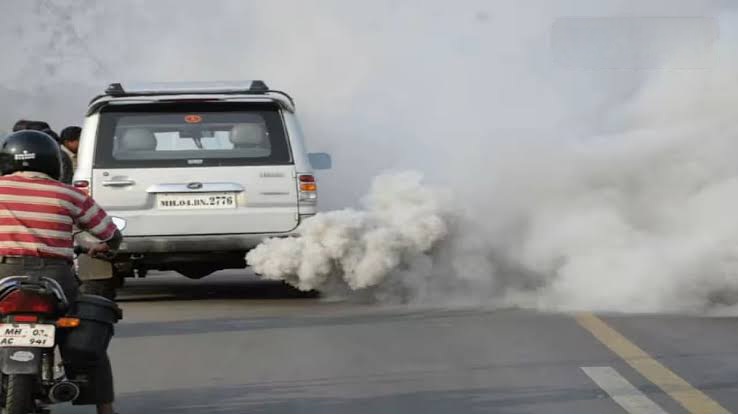
Medical professionals have warned that unchecked vehicular emissions pose severe risks to public health. Dr. Rajeev Jayadevan, convener of the Indian Medical Association (IMA) Kerala Research Cell, noted that the International Agency for Research on Cancer (IARC) classifies diesel exhaust as a Group 1 carcinogen, meaning prolonged and heavy exposure increases the risk of cancer in humans.
He explained that the impact of air pollution extends well beyond the lungs, adversely affecting physical growth in children and worsening symptoms in individuals with pre-existing respiratory conditions. Pregnant women also face heightened risks, including a greater likelihood of preterm birth. Experts added that air pollution is closely linked to non-communicable diseases such as heart disease, heart attacks, strokes, high blood pressure, and diabetes, making emission control a critical public health priority alongside environmental protection.