
Follow us on Google News

New Delhi: Serious security concerns have emerged over the demand for Chinese-origin products and components in drone procurement tenders issued by the Indian Army and government security agencies. Industry body Drone Federation India (DFI) has claimed that 689 tenders published on the Government e-Marketplace (GeM) over the past six years explicitly mentioned Chinese-origin drones or spare parts. Flagging the issue as a national security risk, the organisation has sought intervention from senior Ministry of Defence officials, urging them to prioritise Indian companies and indigenous technology in military drone acquisitions.
DFI submitted a formal representation on Friday to Defence Secretary Rajesh Kumar Singh and Chief of Defence Staff (CDS) General NS Subramani. According to a review of GeM tenders issued between March 10, 2021, and November 19, 2026, the body identified 689 instances where Chinese drones or components were specified. Of these, 84 percent, or 580 tenders, were floated by various units of the Indian Army. The remaining tenders were linked to other military branches, security forces, and government agencies.
Sharp Rise in Tenders During 2026
Data compiled by DFI shows that 355 tenders referencing Chinese drones or parts were issued in 2026 up to November 19. This figure is nearly double the 190 such tenders recorded across the entire year of 2025. Calling the surge alarming, the federation stated that the country of origin for equipment and critical components used in military procurement must be clearly identified.
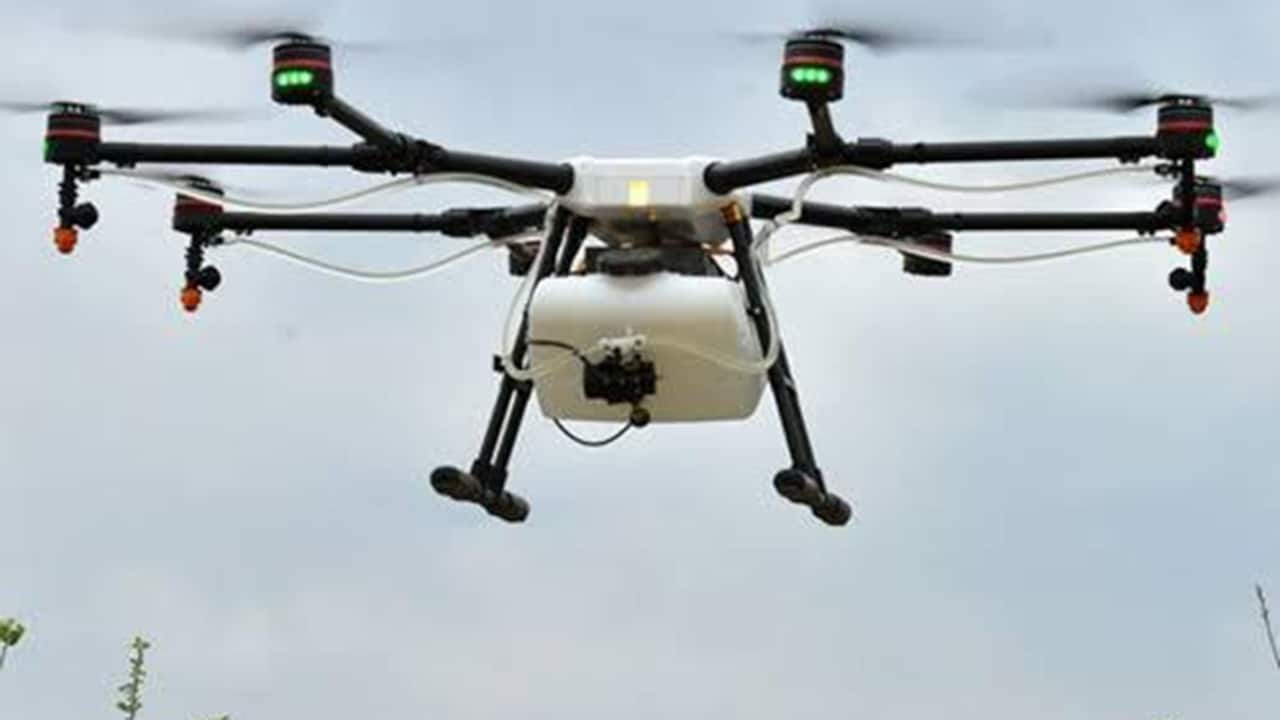
DFI noted that drones are not merely flying devices, as they rely on critical technologies including communication systems, control software, navigation units, cameras, and data transmission hardware. If these components and software originate from countries or companies that raise security concerns, sensitive information and military operations could be exposed to risk. The organisation warned that merely naming a Chinese component in a tender introduces potential vulnerabilities into the procurement process.
Sixteen Chinese Brands Flagged in Review
In its review, DFI listed 16 brands whose names repeatedly appeared in procurement tenders. These include DJI, RadioMaster, SpeedyBee, HGLRC, GEPRC, Skydroid, T-Motor, EMAX, RunCam, Caddx, Hobbywing, Holybro, Foxeer, iFlight, FlySky, and SIYI. According to the federation, all these brands are linked to companies headquartered in China.
DFI claimed that DJI or RadioMaster were mentioned 450 times across the 689 tenders. The group stated that motors, cameras, controllers, transmitters, and other electronic parts used in drones directly affect operational performance as well as data security. Therefore, checking only the final assembly location of a drone is insufficient to guarantee a secure supply chain.
Defence Officials Cite GeM Procurement Rules
Responding to DFI’s complaint, defence officials clarified that GeM is a neutral government procurement portal that connects buyers and sellers. Officials stated that Army units are not free to select a specific vendor or brand on the platform. Instead, buyers define technical specifications based on operational requirements, and sellers submit bids matching those parameters.
Officials added that high-value procurements follow a reverse auction process among vendors to ensure transparency and competition. GeM does not permit any buyer to favour a particular brand or product. At the Army level, verification and control mechanisms are in place to ensure that procured items meet prescribed technical standards. According to defence officials, if a vendor provides false information regarding the use of Chinese components and it is detected during checks, the Army can ban the supplier.
Meanwhile, DFI has demanded a ban on Chinese-origin parts in defence procurement and urged mandatory disclosure of the country of origin for both products and components in every government bid. Representing over 1,000 members in India’s growing drone and counter-drone sector, the organisation stressed that supply chain transparency must accompany indigenous manufacturing. The Ministry of Defence now faces the challenge of balancing GeM’s transparent procurement framework with the national security requirements of military hardware.