
Follow us on Google News

Serious questions have emerged over the purity and authenticity of hallmarked gold in India, prompting industry bodies to seek urgent regulatory intervention. Amid a dip in gold prices that has drawn buyers to the market, the India Bullion and Jewellers Association (IBJA) has filed a formal complaint with the Bureau of Indian Standards (BIS) alleging widespread irregularities in the gold testing and certification framework. The association has raised concerns regarding alleged collusion between jewellers and hallmarking centres, issuance of fake purity reports, commission-based fee arrangements, and suspected adulteration of gold using rhenium powder to increase weight.
Following IBJA’s representation, the BIS has convened a crucial meeting on November 23 to examine the complaints and associated technical challenges in detail. The association warned that persistent gaps in monitoring hallmarking and refining operations could lead to financial losses for consumers and erode public trust in the government-backed certification system.
Discrepancies Flagged in HUID Data
In its complaint, IBJA pointed to anomalies in the Hallmark Unique Identification (HUID) data displayed on the BIS Care app. The association expressed apprehension that collusion between certain jewellers and hallmarking centres could result in purity reports that differ from the actual metal quality. Alleged commission practices in testing fees and procedural lapses were also flagged as major hurdles for effective oversight.
IBJA has urged the BIS to conduct surprise inspections of hallmarking centres and refineries, tighten testing protocols, and take strict penal action against rule violators. The body noted that any laxity in the certification chain directly jeopardizes consumer confidence and household savings.
Call to Regulate 4,000 Unregistered Refiners
The association has also demanded that nearly 4,000 unregistered gold refiners operating across the country be brought under the regulatory purview of the BIS. According to IBJA, a large number of these units are neither registered with the BIS nor accountable to any other regulatory authority, preventing effective quality checks.
IBJA National Secretary Surendra Mehta stated that many operators identify themselves as gold refiners even though their work is largely limited to melting gold. Without proper refining, impure metal can enter the supply chain and eventually reach consumers through jewellers in the form of bars, coins, and ornaments.
To curb this risk, IBJA has sought a mandate restricting jewellers to purchasing gold bars and coins exclusively from refiners accredited by the BIS and the National Accreditation Board for Testing and Calibration Laboratories (NABL). It has also advised retail buyers and investors to procure gold bars and coins only from accredited refiners.
Suspected Adulteration With Rhenium Powder
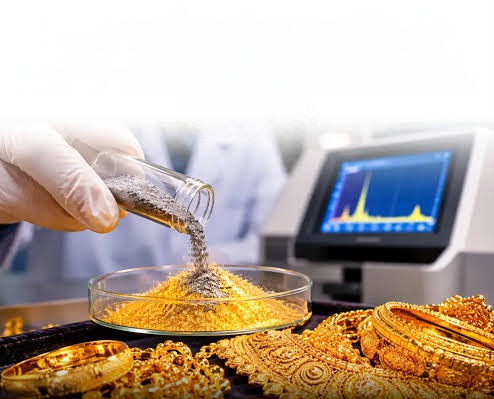
Concerns have further intensified over allegations that rhenium powder, reportedly sourced from China, is being mixed with gold to artificially boost its weight. Industry stakeholders have questioned whether standard hallmarking tests can detect such adulteration, though these claims have not yet been independently verified.
The Gem and Jewellery Export Promotion Council (GJEPC) has also examined the technical aspects of the issue and written to the BIS, seeking clarity on whether rhenium can be used to adulterate gold and whether existing hallmarking centres need to upgrade their testing technology.
Rhenium is a highly heat-resistant metal with a melting point exceeding 3,100 degrees Celsius, whereas jewellery manufacturing typically takes place at temperatures between 1,050 and 1,100 degrees Celsius. At these temperatures, rhenium neither melts nor dissolves easily into gold, raising technical questions about its alleged use and the detection capabilities of current testing methods. With India consuming roughly 800 to 850 tonnes of gold annually, attention now turns to the November 23 BIS meeting to address refinery oversight, hallmarking audits, and testing safeguards.