
Follow us on Google News

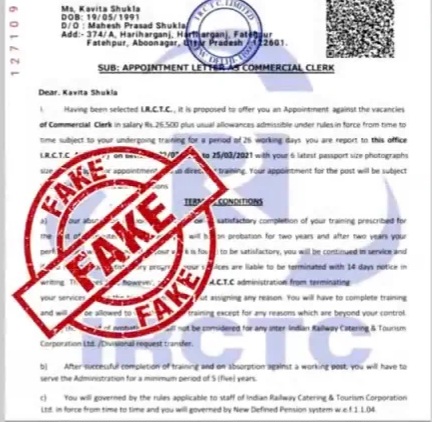
A 24-year-old university student in Hyderabad has been booked for allegedly using ChatGPT to create a fake police notice in the name of Hyderabad SHE Teams to intimidate her estranged boyfriend. Saifabad police have also registered a case against her 21-year-old friend, who allegedly helped forward the forged document through WhatsApp.
The incident came to light after the recipient approached SHE Teams officials, who examined the notice and found it to be fake.
How Was the Fake Notice Discovered?
On November 17, SHE Teams Sub-Inspector G Venkatesh lodged a complaint with Saifabad police against the university student and her friend.
According to the complaint, V Tiruneshwar, a 24-year-old private-sector employee from Kukatpally, received a notice through WhatsApp that appeared to have been issued by Hyderabad SHE Teams, the women’s safety unit. The document instructed him to appear at the unit’s office in HACA Bhavan.
FCRF Launches Certified Chief Risk Officer (CRO) Program for India’s Risk Leaders
After receiving the notice, Tiruneshwar visited the SHE Teams office and presented the document to officials. Upon examining it, officials discovered that the notice had not been issued by the unit and was fraudulent.
How Was ChatGPT Used?
SHE Teams officials subsequently contacted the individual who had forwarded the notice to Tiruneshwar. During questioning, he reportedly revealed that he had received the document from Tiruneshwar’s estranged girlfriend.
According to Saifabad division Inspector N Rajender, the woman admitted during questioning that she had used ChatGPT to create the fake notice with the intention of intimidating Tiruneshwar. She had allegedly asked a mutual friend to forward the document to him.
The alleged misuse of artificial intelligence to fabricate an official police communication subsequently led to criminal proceedings against both individuals.
What Charges Have Been Filed?
Based on the complaint lodged by the SHE Teams sub-inspector, Saifabad police registered a case against the woman and her friend under multiple provisions of the Bharatiya Nyaya Sanhita (BNS) and the Information Technology Act.
The provisions include Sections 204 (impersonating a public servant), 319(2) (cheating by personation), 336(3) (forgery) and 340(2) (using a forged document as genuine) of the BNS. Sections 66(C) and 66(D) of the Information Technology Act have also been invoked.
The incident highlights the potential misuse of generative artificial intelligence tools to fabricate official documents, impersonate law enforcement authorities and intimidate individuals in personal disputes. It also underlines the importance of independently verifying police notices received through messaging platforms.
No arrests have been made in connection with the case so far.