
Follow us on Google News

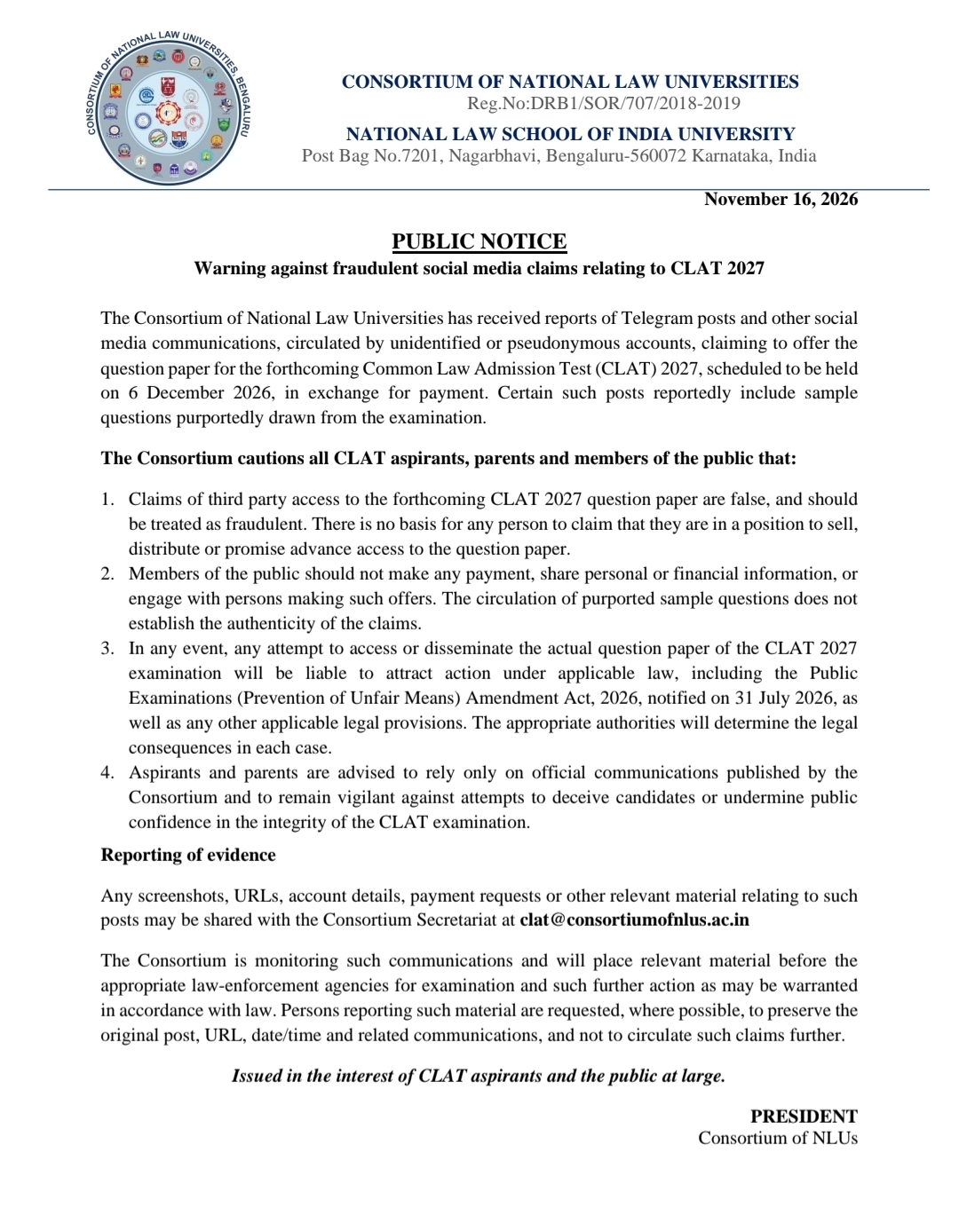
The Consortium of National Law Universities has dismissed CLAT 2027 paper leak claims and warned candidates against fraud.
What Triggered the Warning?
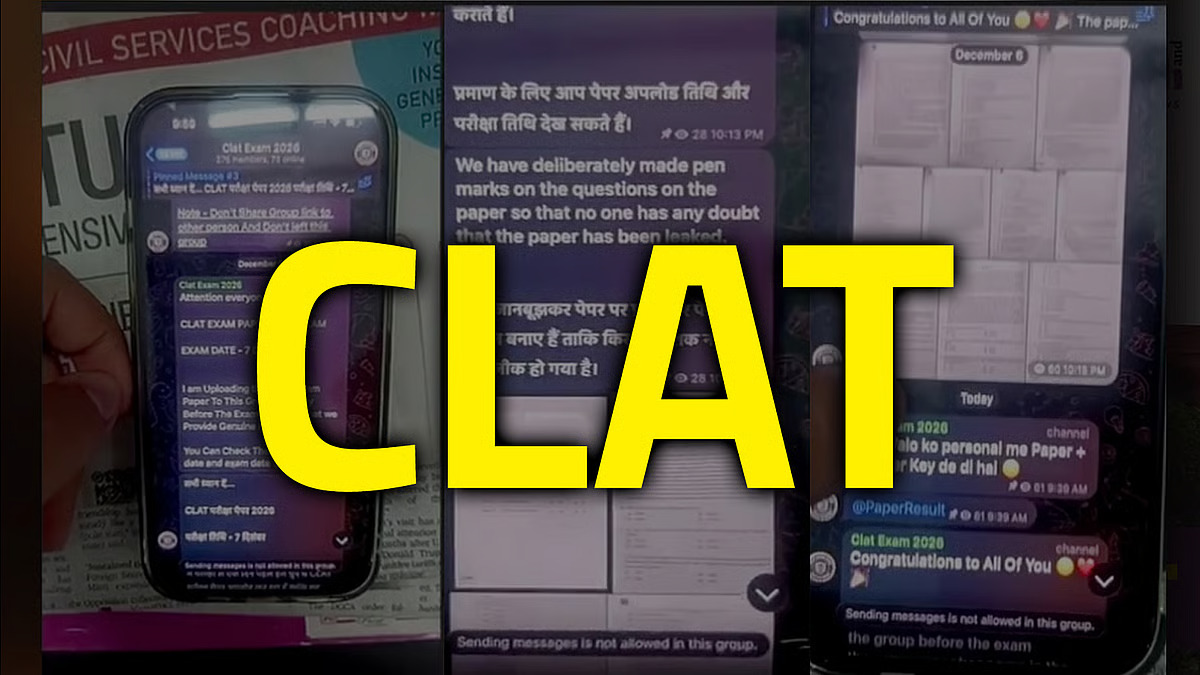
The consortium issued a public notice on November 16, 2026, following the circulation of fraudulent claims on Telegram and other social media platforms. Several unidentified users claimed to have obtained the CLAT 2027 question paper and offered to provide advance access to candidates in exchange for payment. Some posts reportedly contained sample questions claimed to be part of the upcoming examination.
The consortium clarified that claims of third-party access to the question paper were false and had no factual basis. It maintained that individuals circulating such messages were not in a position to sell, distribute or provide advance access to the examination paper.
FCRF’s Chief AI Officer Certification Returns on November 14 to Prepare Future AI Leaders
What Has the Consortium Advised?
Candidates, parents and members of the public have been advised against making payments to individuals claiming to possess the examination paper. The consortium has also cautioned against sharing personal information, financial details or engaging in any communication involving such fraudulent offers.
The warning comes ahead of CLAT 2027, scheduled to be conducted on December 6, 2026. The national-level entrance examination will be held offline across approximately 68 cities for admission to undergraduate and postgraduate law programmes. CLAT scores are accepted by 26 National Law Universities, IIULER Goa and affiliated law colleges.
What Legal Action Could Follow?
The consortium has warned that individuals found engaging in fraudulent activities related to the examination could face legal proceedings. Those attempting to obtain or distribute the purported question paper may also face action under applicable legal provisions.
The notice referred to the Public Examinations (Prevention of Unfair Means) Amendment Act, 2026, notified on July 31, 2026, among the legal provisions under which action could be initiated. The consortium said it was actively monitoring suspicious communications and would take appropriate legal action against those involved.
How Can Fraudulent Activities Be Reported?
Members of the public who encounter suspicious posts, payment requests or messages offering access to the examination paper have been encouraged to report them to the consortium. Individuals possessing relevant evidence have been advised to preserve screenshots, original posts, URLs, account details, timestamps and related communications.
Such evidence can be submitted to the consortium secretariat at clat@consortiumofnlus.ac.in. The consortium has also urged individuals to refrain from further circulating fraudulent claims and unverified examination material on social media. Candidates and their parents have been advised to remain vigilant and rely exclusively on official communications issued by the consortium.