
Follow us on Google News

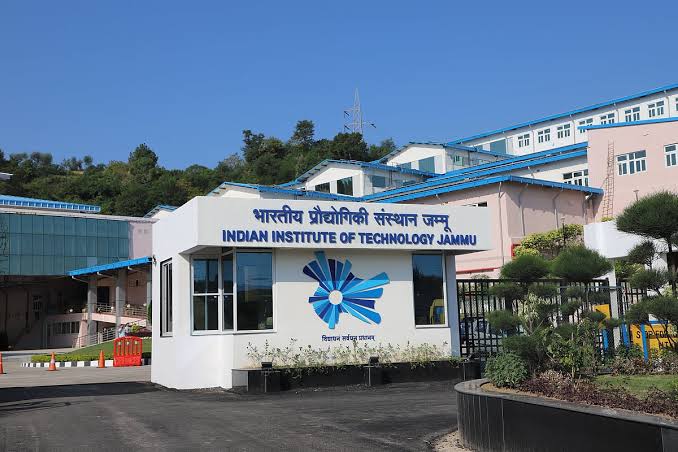
Global technology services company NTT DATA and the Indian Institute of Technology Jammu have partnered to establish an Artificial Intelligence Centre of Excellence, with a focus on flood forecasting, landslide preparedness and digital services in regional languages.
The initiative will explore how artificial intelligence, sensor-based technologies and digital models of physical environments can help address disaster management and infrastructure challenges in Jammu and Kashmir.
The partnership will also support research into Indian languages, including Dogri, while helping students and researchers develop technologies that could eventually be commercialised or used by public institutions.
AI Research To Focus On Tawi And Chenab River Basins
One of the centre’s principal research areas will involve developing technologies for climate and disaster resilience in Jammu and Kashmir.
The region’s mountainous terrain and extensive river systems present considerable challenges for infrastructure development, flood management and emergency response.
The proposed research will examine how artificial intelligence can support flood monitoring and early warnings in the Tawi and Chenab river basins.
Researchers will also explore sensor-based approaches to identifying landslide and flood risks. Such systems could potentially help authorities monitor environmental changes and prepare for emergencies before conditions become dangerous.
For example, information collected through rainfall sensors, river-level monitoring equipment and other environmental observations could help researchers develop models for identifying unusual changes in water levels.
However, the effectiveness of such systems would depend on the quality of available data, the accuracy of predictions and their integration with existing disaster management mechanisms.
The partnership builds on India’s wider efforts to incorporate advanced computing into flood forecasting.
In July 2025, the Ministry of Jal Shakti inaugurated C-FLOOD, a digital platform developed through collaboration between the Centre for Development of Advanced Computing, the Central Water Commission and the National Remote Sensing Centre.
The platform provides flood inundation forecasts up to two days in advance, including village-level maps and predicted water levels.
The Central Water Commission has also been developing AI and machine learning models to improve short-range flood forecasting across its monitoring network.
Digital Twins And Physical AI Could Improve Infrastructure Monitoring
The new centre will also examine applications of digital twins, a technology increasingly used in infrastructure management, industrial operations and environmental monitoring.
A digital twin is a computer-generated representation of a physical object, system or environment. It can incorporate information from sensors and other data sources to help researchers understand how the actual environment behaves under different conditions.
For example, a digital representation of a river basin could help researchers examine how changing rainfall patterns might affect water levels and surrounding infrastructure.
Similarly, digital models of buildings, roads or campuses could support maintenance planning and help identify potential operational problems.
NTT DATA and IIT Jammu intend to explore these technologies for applications including smart campuses, infrastructure management and climate resilience.
Another research area will involve physical AI, which combines artificial intelligence with technologies such as robotics, computer vision, connected sensors and edge computing.
Edge computing allows certain information to be processed close to where it is collected, rather than transferring everything to a distant computer server.
This could be useful for monitoring equipment or environmental conditions in remote areas where internet connectivity may be limited.
The partners have identified public safety and infrastructure monitoring as potential applications of this research.
Dogri Language AI Could Make Digital Services More Accessible
The collaboration will also explore artificial intelligence applications tailored to regional languages, including Dogri.
Language remains an important consideration in the development of digital public services. Many existing AI tools perform better in languages with extensive digital training material than in languages with comparatively limited online resources.
Developing AI systems capable of understanding regional languages could help make digital information more accessible to people who prefer communicating in their mother tongue.
Potential applications could include voice-based interfaces, translation services and tools that help users access information without relying entirely on English or Hindi.
For disaster management, regional-language technologies could eventually support more accessible communication of safety instructions and emergency information.
However, the partnership announcement does not confirm the launch of a specific Dogri-language AI model or application.
Researchers would need to address challenges involving language datasets, accuracy, regional variations and the reliable interpretation of user requests before such technologies could be deployed widely.
Research Partnership To Support Startups And Commercial Applications
The Centre of Excellence will organise its activities around four principal areas: secure and responsible AI, digital twins, physical AI, and a laboratory dedicated to research commercialisation and startup development.
The commercialisation laboratory will help researchers convert promising academic work into intellectual property, products and potentially new businesses.
Avinash Joshi, Executive Managing Director for India at NTT DATA, said the collaboration would combine the company’s international technology expertise with local knowledge to develop solutions relevant to Jammu and Kashmir.
IIT Jammu Director Professor Manoj Gaur said the initiative would provide students, faculty and researchers with opportunities to address regional challenges while developing innovations that could have applications elsewhere in India.
The partnership’s emphasis on responsible AI is particularly important because disaster forecasting and public safety applications can have significant consequences when predictions are inaccurate.
Technologies developed through the centre would need appropriate testing, security safeguards and coordination with public authorities before being used in critical situations.
The partners have not disclosed the total investment, project implementation schedule or expected dates for deploying the proposed technologies.
What This Means For You:
Students and researchers interested in AI can look towards emerging opportunities in climate technology, regional-language computing and infrastructure monitoring. Residents in flood-prone areas should continue relying on official weather and disaster management advisories until any new AI-based warning systems are formally validated and introduced.