
Follow us on Google News

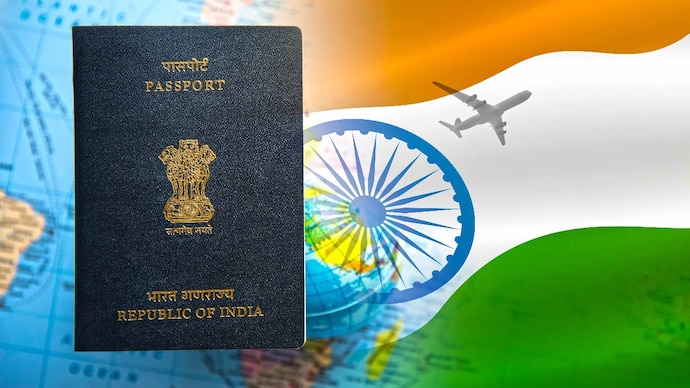
NEW DELHI: The central government is set to simplify the visa application process for foreign nationals travelling to India by cutting the number of columns in the application form by 65 to 70 percent. Alongside reducing paperwork, the government has trimmed the number of main visa categories from 13 to nine and reduced sub-categories from 49 to 23. According to the Ministry of Home Affairs, the changes are designed to make the visa regime clearer, simpler, and better aligned with the needs of international visitors.
The ministry is currently upgrading its information technology infrastructure to support the revised framework, with plans to begin issuing visas under the updated system by the end of this year. Removing redundant fields from the application form is expected to save applicants time and reduce procedural hurdles. The restructuring follows an earlier rationalisation exercise in October 2025, when main visa categories were brought down from 22 to 13 and sub-categories from 63 to 49. The latest revisions were formally introduced on August 27.
Visitor Visa Replaces Tourist Category
Under the revised framework, the nine main visa categories will be business, diplomatic, employment, journalist, medical, official, student, visitor, and miscellaneous. One of the most notable changes is the renaming of the tourist visa as the visitor visa, which now covers a wider set of approved activities beyond conventional sightseeing.
The visitor visa has been divided into two sub-categories, V-1 and V-2. The V-1 visa will be issued for a duration of 30 days and will permit multiple entries into the country. Under this sub-category, foreign nationals will be allowed to attend business meetings, seek medical consultations, join wellness retreats, undergo short-term treatment, and participate in short courses related to Indian languages, music, art, and crafts.
The V-2 visa will be granted for periods of one, five, or 10 years. In addition to all activities permitted under the V-1 category, the V-2 visa will cover mountaineering. Foreign nationals visiting India specifically for mountaineering expeditions will be eligible for a six-month multiple-entry visa under the updated rules.
New Rules for Business Travel
The government has also restructured business visas into two distinct sub-categories, B-1 and B-2, to differentiate between long-term and short-term commercial engagements. The B-1 visa will cater to long-term and licence-based business activities, including foreign nationals looking to establish industries or commercial enterprises in India.
The B-2 visa will apply to short-term and contract-based business assignments. The revised rules also extend procedural relief to foreign specialists, engineers, and technical personnel working for Indian companies, making entry norms clearer for skilled professionals.
Clearer Norms for Medical and Student Visas
Medical and educational visa categories have similarly been reorganised to reflect specific purposes of travel. In the medical segment, the M-1 visa will be granted for general medical treatment, while the M-3 visa will be designated for individuals seeking treatment under the AYUSH system. Both visas will generally be valid for one year and will allow multiple entries. Separate provisions have been created for attendants accompanying patients, with M-2 visas allocated for attendants of M-1 holders and M-4 visas for attendants of M-3 holders.
For international students, the student visa has been split into S-1 and S-2 categories. The S-1 visa will cover school, undergraduate, and postgraduate studies. The S-2 visa will apply to higher academic and research pursuits, including PhD programmes, research work, internships, exchange programmes, and visiting faculty assignments. Officials said the streamlined structure will help foreign travellers select the appropriate visa category with greater ease.