
Follow us on Google News

A Local Case Raises Alarming Questions About Trust and Financial Security
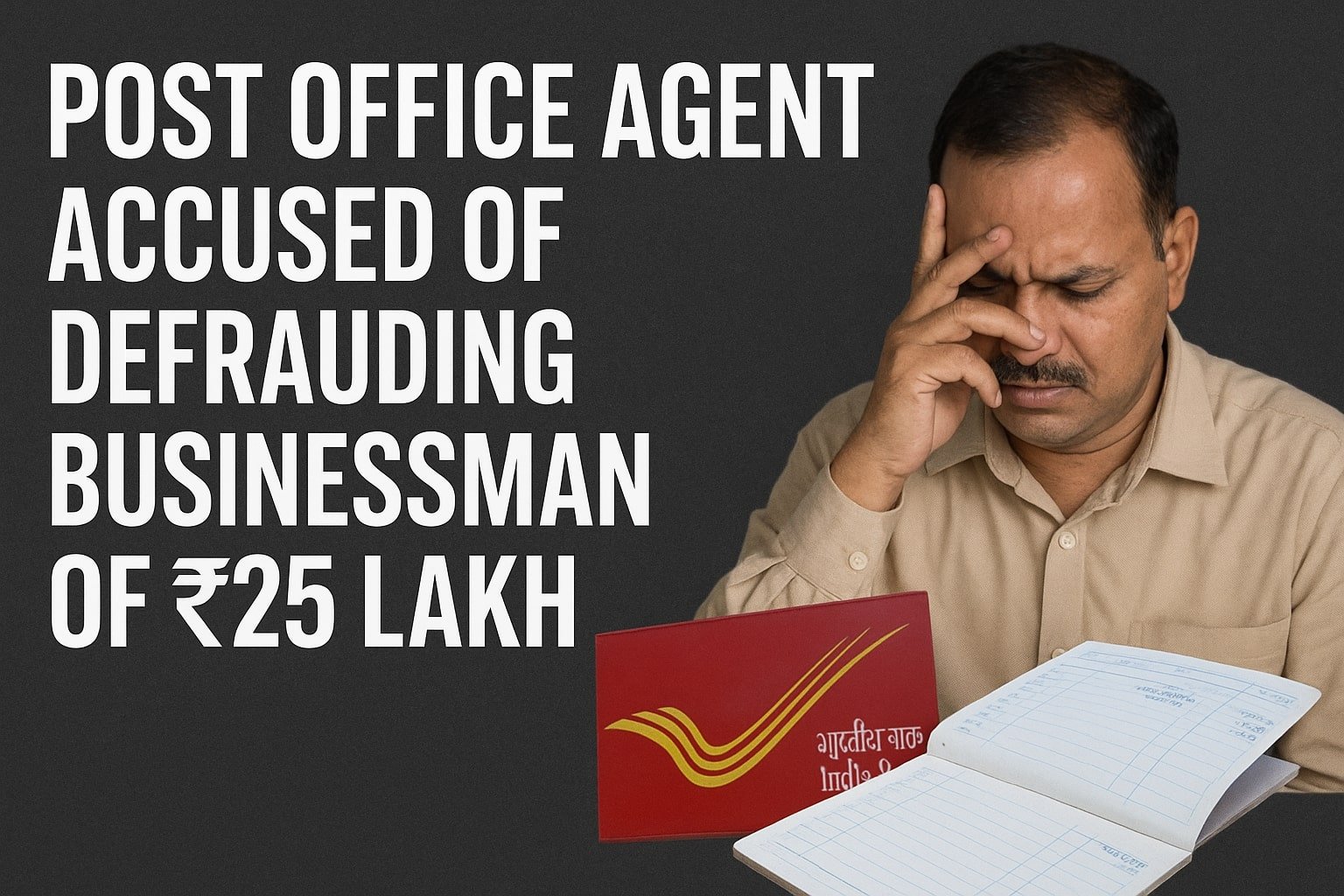
Kanpur, Bureau Report — In a small town of northern India, a businessman’s attempt to secure his family’s financial future has turned into a cautionary tale about trust and oversight. What began as a seemingly routine investment through a familiar face—a local post office agent—has ended in allegations of fraud amounting to ₹25 lakh.
The businessman claims the agent collected money over several years, issuing forged receipts and recording fictitious entries in a passbook to maintain an illusion of legitimacy. From 2019 through 2024, the agent allegedly reassured the client that his deposits were safe. But when the records were scrutinized, investigators found the funds had never reached the intended accounts.
FCRF Academy Invites Legal Experts to Shape India’s First Comprehensive Cyber Law Certification
How the Fraud Worked
According to the police report, the agent maintained confidence by updating the passbook regularly and providing receipts that appeared authentic. At one point, the businessman was even handed checks with forged signatures. When he began raising questions, he was threatened with “serious consequences” if he went public.
A criminal case has been registered under BNS sections
Police officials say further action will depend on the ongoing investigation.
A Larger Pattern
Local residents note that this case is not isolated. Over the past decade, multiple complaints have surfaced against post office agents accused of taking deposits while providing counterfeit receipts and failing to invest the money.
Analysts point out that in semi-urban and rural India, post office agents remain one of the most accessible financial intermediaries. The problem, they argue, is that personal trust, family ties, and local familiarity often outweigh formal verification processes, leaving citizens vulnerable to fraud.
Expert View
Cybercrime expert and former IPS officer Professor Triveni Singh says the case highlights a systemic weakness:
“The foundation of financial fraud in India is misplaced trust. People assume that an agent’s word or documents must be genuine. But today, producing fake receipts and forged passbooks is remarkably easy. This is not just about one businessman being cheated—it exposes serious gaps in oversight and accountability. Every investor must cross-verify transactions directly with authorized portals or branches. If this does not happen, such schemes will increasingly take the shape of organized fraud.”
A Crisis of Institutional Trust
Experts warn that the reputational damage could extend beyond one case. As banks and digital platforms struggle with scams of their own, post offices have long been regarded as reliable institutions for small savers. If even that trust erodes, ordinary citizens may find themselves with few safe avenues for their savings.