
Follow us on Google News

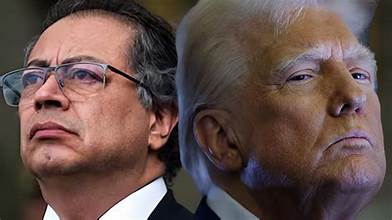
Colombian President Gustavo Petro has issued a stark and unusually blunt warning ahead of his proposed meeting with U.S. President Donald Trump, drawing global attention to growing geopolitical instability across South America. Petro said that unless current tensions are managed through sustained dialogue, regional flashpoints could spiral into a much larger global confrontation.
Certified Cyber Crime Investigator Course Launched by Centre for Police Technology
Regional Militarisation and Vulnerabilities
Speaking in an interview with CBS News, Petro said the core objective of his planned White House meeting was “to stop the world from moving toward war.” He warned that South America is witnessing rapid militarisation, the consequences of which could be far-reaching and devastating.
Petro’s remarks come at a time when the regional balance of power appears to be shifting following recent U.S. actions in Venezuela. According to the Colombian president, an increase in military activity, weapons deployments and hardline security postures is creating serious risks for countries with limited defence capabilities.
Referring specifically to Colombia, Petro said the country lacks a robust air defence system and would be highly vulnerable in the event of any military escalation. “I’m not going to say that I’m not afraid,” he said. “If the situation deteriorates, it will directly affect our country’s stability.”
Risks of Civil War and U.S. Policy Critique
Petro cautioned that any direct attack on Colombia’s leadership or sovereignty could push the country toward civil war. Such a scenario, he said, would not only destabilise Colombia but also fuel long-term hostility toward the United States. “That would not be in the interests of the United States,” Petro said. “It would be a wrong and foolish policy.”
Trump Era Shifts and Border Cooperation Appeals
Washington has, meanwhile, hardened its stance in Latin America in recent months. Following the change of power in Venezuela, the Trump administration has signalled a more aggressive approach against cross-border drug trafficking networks. Moves to assert control over Venezuelan oil exports and revive production through U.S.-backed investments have further heightened sensitivities in the region.
Against this backdrop, Petro has argued that regional cooperation, rather than confrontation, offers the only sustainable path forward. On Friday, he publicly appealed to Venezuela to work jointly with Colombia against criminal groups operating along their 2,200-kilometre shared border, a stretch long plagued by drug trafficking and violence.
In a post on social media platform X, Petro said he had invited Venezuela’s interim president Delcy Rodríguez to participate in coordinated action to ensure that narcotics gangs were “defeated through regional unity.”
The appeal followed a recent phone call in which Petro and Trump reportedly agreed on joint action against guerrilla groups involved in cocaine trafficking along the Colombia–Venezuela frontier. Colombian officials said Petro sought U.S. support for decisive action against the National Liberation Army (ELN), the country’s last major rebel group, which is believed to maintain rear bases inside Venezuelan territory.
The ELN has long been a source of tension between Bogotá and Caracas, with Colombia accusing the group of using Venezuelan soil as a safe haven for cross-border attacks and drug operations. Security analysts say any coordinated military campaign against the group could significantly alter the regional security landscape and strain relations among neighbouring states.
Upcoming Summit’s High Stakes
Trump has confirmed that Petro is expected to visit the White House in early February. The meeting is being closely watched as potentially pivotal not only for bilateral relations but also for the broader stability of South America. While U.S. officials are expected to prioritise counter-narcotics cooperation and energy security, Petro is pushing to place de-escalation and regional peace at the centre of the agenda.
Diplomats say the coming weeks will be critical. With multiple fault lines across the continent and competing strategic interests at play, the Petro–Trump talks could either ease mounting tensions or expose deeper divisions over the future of U.S. engagement in Latin America.
For now, Petro’s warning has underscored the gravity of the moment. His message was clear: the path of dialogue remains open, but ignoring it could carry consequences far beyond South America.
About the author – Ayesha Aayat is a law student and contributor covering cybercrime, online frauds, and digital safety concerns. Her writing aims to raise awareness about evolving cyber threats and legal responses.