

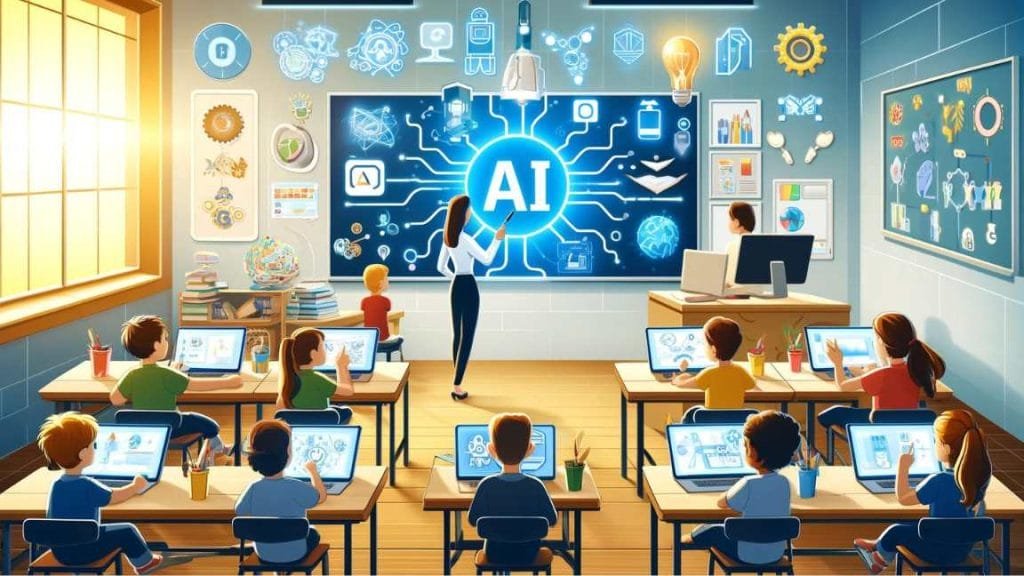
The NCERT has introduced a 20-hour AI learning module for students of Classes 9 to 12, covering deepfakes and digital safety.
The National Council of Educational Research and Training (NCERT) has developed the introductory module on computational thinking and artificial intelligence in consultation with IIT Madras and IIT Jodhpur. The activity-based curriculum aims to familiarise school students with AI applications, their limitations and the importance of responsible technology use.
FCRF’s Chief AI Officer Certification Returns on November 14 to Prepare Future AI Leaders
What Will Students Learn?
The module introduces students to artificial intelligence in everyday applications, explaining how machines learn from examples and how AI systems process information. It also covers computational thinking as a systematic method of understanding and solving problems.
Students will explore the possibilities and limitations of AI while developing critical thinking, creativity and problem-solving abilities. The curriculum is designed for learners without prior knowledge of artificial intelligence, making its basic concepts accessible to students across Classes 9 to 12.
How Will Deepfakes and Digital Safety Be Addressed?
A key component of the module concerns identifying deepfakes, understanding misinformation and protecting personal information. Students will learn why AI-generated content requires verification rather than automatic acceptance.
The curriculum also addresses data privacy, fairness, digital safety and ethical boundaries in using artificial intelligence. These subjects are intended to help students recognise the risks associated with emerging technologies and evaluate digital information more carefully.
How Will the Module Be Taught?
NCERT has adopted an experiential learning approach involving classroom discussions, practical exercises, experimentation and reflection. Instead of relying entirely on theoretical explanations, the module encourages students to understand AI through activities.
The exercises can be conducted with or without digital devices, allowing participation in schools with different levels of technological access. This approach is intended to make AI education practical while encouraging students to examine how technology functions.
Why Does Responsible AI Use Matter?
The module places particular importance on developing informed and responsible users of artificial intelligence. Students are encouraged to assess AI-generated responses independently and recognise situations where automated systems may produce inaccurate or misleading information.
NCERT has emphasised that human judgement, creativity and ethical responsibility must remain central to learning, even as artificial intelligence becomes more widely used.
The initiative brings technical understanding together with digital safety education, particularly in areas such as deepfake detection, misinformation and personal data protection.
The420 Insight: What Does This Mean?
Introducing deepfake detection and data privacy at the school level could help students develop stronger digital awareness. By combining AI literacy with independent verification and ethical decision-making, the module addresses skills relevant to navigating AI-generated information safely.
Follow for daily updates on cybercrime, corporate fraud, DFIR, hacking, investigations, and digital forensics
